Industries · Golf & Recreation
Participation is the growth opportunity.
Technology changes equipment, but changing people change the market. A sector-specific keynote explores how clubs, associations and operators earn the next generation of participation.
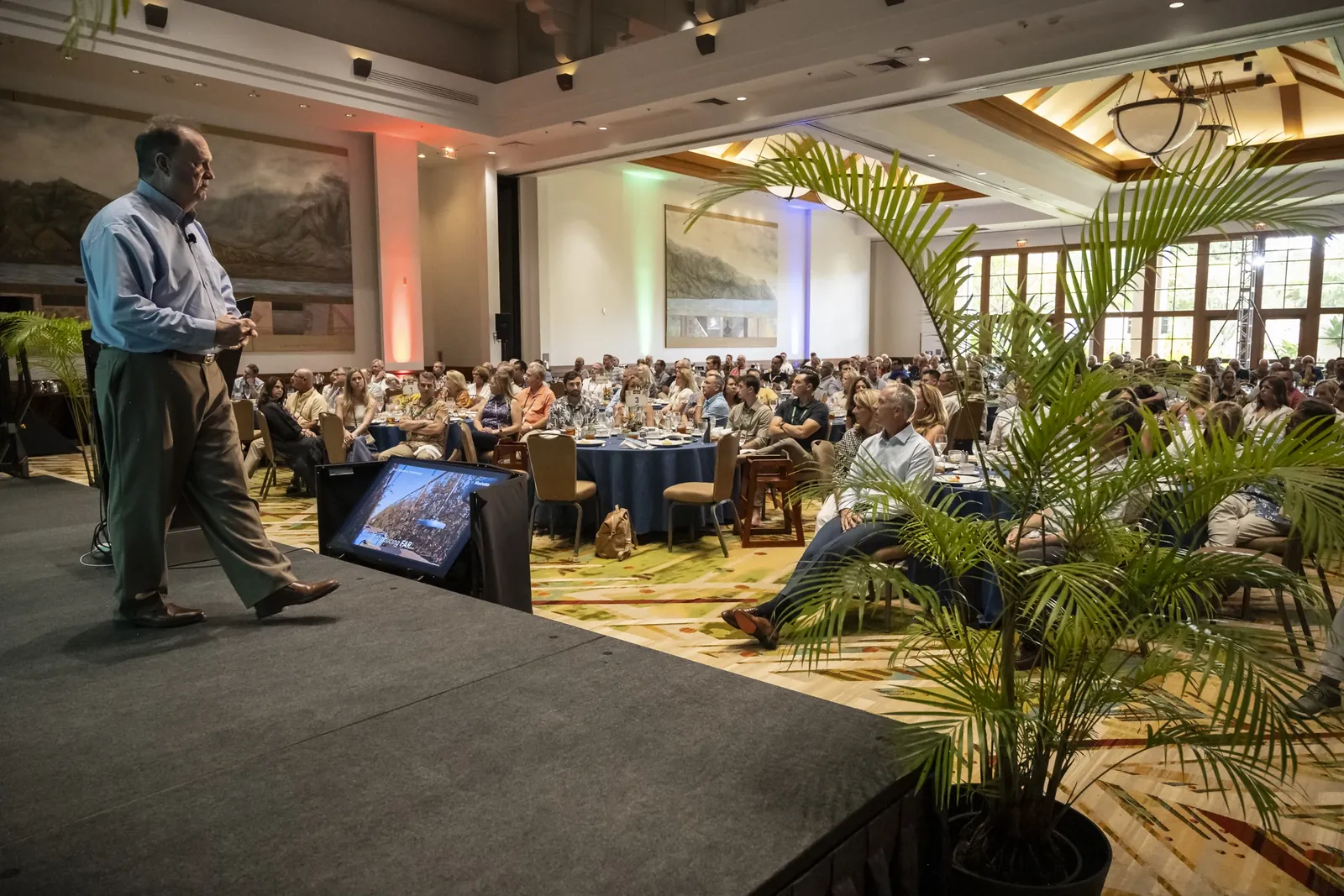
Begin with your audience
A conversation for golf & recreation.
Golf, sports, fitness, recreation and leisure leaders.
Technology changes equipment, but changing people change the market. A sector-specific keynote explores how clubs, associations and operators earn the next generation of participation. The final emphasis depends on who is attending, what they already understand, and the strategic choices your event is intended to support.
The shift
Tradition keeps the game meaningful. New players keep it alive.
Golf and recreation organizations are balancing enduring rituals with changing participation, technology and environmental pressures. Growth comes from making the experience accessible while preserving what people genuinely love.
The 12 forces ↓Golf & Recreation · 12 forces
The forces changing the decisions.
What this means for leaders: The following twelve shifts connect technology and market change to practical choices for organizations in golf & recreation. They are analysis, not claims that every development is universally deployed or inevitable.
These are the trends Jim is talking about with golf & recreation leaders right now.
The research lens
- New participants and leisure expectations
- Connected sports equipment
- Wellness and performance science
- New participation and entertainment models
These themes provide a direction for research, rather than a fixed set of slides. A leadership session can examine assumptions and investment priorities in depth. An industry conference can build a shared view of the changes affecting its members. A customer event can explore the future of the markets your customers serve.
New participants reshape the economics of the game
New players can arrive with different expectations about time, cost, technology and club culture. Golf operators should examine which traditions enrich the experience and which create unnecessary barriers. The strategic opportunity is to retain the game's character while making the first few visits welcoming enough to lead to sustained participation.
Technology changes fitting, coaching and practice
Launch monitors, fitting systems, video analysis and digital coaching can make practice more precise and engaging. The real question is whether technology improves learning and enjoyment rather than producing endless measurements. Clubs and teaching professionals should match tools to different levels of ability and preserve the human side of instruction.
Short-format golf expands participation pathways
Shorter rounds, flexible formats and entertainment-oriented golf can attract people who do not have four or five hours for the conventional game. These formats should be seen as additional entry points rather than threats to the original experience. Operators can experiment with programming and pricing that encourage progression and repeat visits.
Indoor simulators challenge the meaning of a golf facility
Simulators and indoor facilities make golf less seasonal and introduce the game to urban participants. They also compete for discretionary leisure spending that might previously have gone to the course. Successful operators can connect indoor and outdoor experiences while recognizing that convenience, social interaction and coaching may matter as much as virtual realism.
Water and climate pressure reshape course operations
Water availability, extreme weather and maintenance costs can change how courses are designed and operated. Precision irrigation and new turf practices can help, but adaptation also requires capital planning and community sensitivity. Golf businesses need an honest operating strategy for environmental pressure rather than assuming past maintenance standards can continue indefinitely.
Autonomous maintenance equipment changes groundskeeping
Autonomous mowers and smart groundskeeping tools offer ways to redeploy scarce labor toward higher-value work. Courses must account for reliability, terrain, safety and service support before adoption. The goal is a consistently better playing surface and more resilient operations, not a technology showcase for its own sake.
Recreation becomes an experience and community business
Recreation businesses increasingly compete on belonging, service and shared experience rather than the transaction alone. Golf clubs can benefit from social programming, family participation and flexible membership structures. Leaders should understand the community they actually serve instead of relying only on historical membership models.
Accessible entry points are essential for younger players
Younger and first-time participants may be deterred by cost, equipment, etiquette or uncertainty about how to begin. Lessons, rental programs, welcoming formats and digital communication can reduce friction. The best growth strategy makes the early experience enjoyable and gives a clear path toward becoming a regular participant.
Customer data helps operators personalize retention
Booking, lessons, food, events and membership interactions create information that can improve the customer relationship when used responsibly. The advantage is understanding individual preferences and reasons for leaving, not intrusive tracking. Clubs should use data to improve service and retention while preserving the social trust that makes recreation enjoyable.
Golf travel changes with demographics and lifestyle
Golf travel reflects changing demographics, disposable income, family structures and interest in destination experiences. Clubs and destinations should think beyond the conventional annual buddies' trip. The opportunity is to design packages around different lifestyles and durations while remaining realistic about climate, access and value.
Professional entertainment models affect amateur expectations
Professional golf, creator media and new entertainment formats can influence what casual players expect from the game. Operators should identify which innovations make participation more enjoyable and which are spectator trends unlikely to improve their own operation. A modern golf strategy learns selectively rather than copying every headline from the professional circuit.
Tradition and innovation must coexist
Golf thrives because its rituals, skill and history matter. Innovation should therefore strengthen access, enjoyment and business resilience without stripping away what loyal players value. The leadership challenge is to distinguish a tradition worth protecting from a habit that only feels inevitable because it has been around for decades.
From forecast to decision
This is not a fixed slide deck. The right keynote starts with the audience, the current evidence, the genuine opportunities and the choices leaders must make. These forces are research directions; the specific examples and action framework are customized for the organization at the event.
Every golf & recreation keynote pairs these forces with what the sector’s fastest innovators are doing about them. What world-class innovators do ↗
From the archive: dated engagements and retrospectives
From the industry brief
A possible keynote storyline.
The sample guide develops five connected movements. The emphasis and examples are refined around the actual audience and event objectives.
- 01
The rapidly changing recreational consumer
- 02
Technology and hyperconnected sports equipment
- 03
Wellness, bio-connectivity and personal performance
- 04
New golf-entertainment, fitness and participation models
- 05
The innovation playbook for associations, clubs and operators
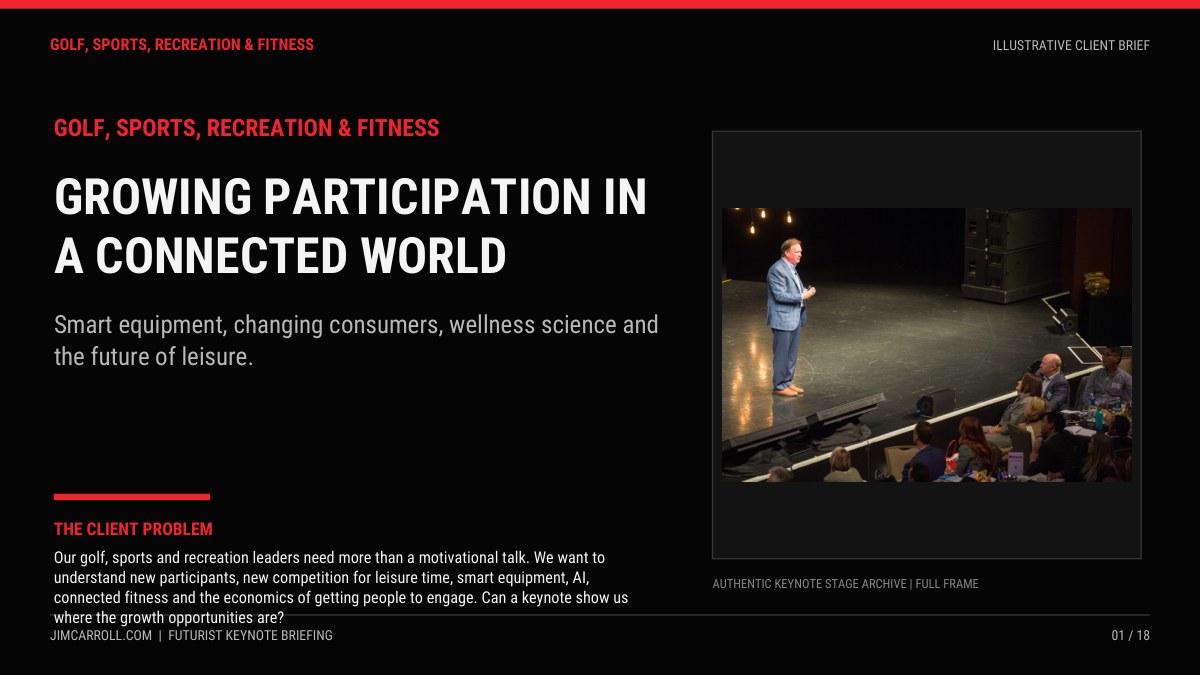
Illustrative industry brief · 18 pages
See the proposed thinking.
The complete guide develops the client challenge, relevant forces of change, keynote direction and industry experience. It is an illustrative briefing scenario, not a quotation from an actual client inquiry; the live proposal is shaped around your audience, priorities and objectives.
Read the golf & recreation brief (PDF) ↗All 21 briefs ↗Documented golf & recreation engagements

 Sports & Fitness Industry Association
The published record
Experience you can explore.
Relevant published engagements from JimCarroll.com. Cross-industry examples show adjacent markets and questions; the specific scope of each assignment is described in its original story.
From the research archive
Earlier thinking and historical forecasts.
- 2015What Will Golf Do With the Arrival of The Drones?
- 2013How will golf deal with the arrival of drones?
- 2011Why golf is THE most important word you need to know for 2011!
- 2016Keynote: PGA Merchandise Show, Orlando - Growing Golf & Sports Through Technology and Leading Edge Innovations
- 2011Live text message polling - on stage for the PGA!
- 2012The Revolution That is Mobile Health & Fitness
- 2012Trend Report: The Future of Health, Fitness and Wellness!
- 2016It was this far...
- 2014My son Tom and Vice President Joe Biden!
- 2013Hell, yes, I'm motivational!
- 2012When science speeds up!
- 2012Report from a keynote: "Dare to be groundbreaking!"
Other industries
- Agriculture & Food
- Automotive & Mobility
- Commercial Real Estate
- Construction & Infrastructure
- Consumer Products & CPG
- Education & Workforce
- Energy & Utilities
- Financial Services
- Food & Grocery
- Government & Public Sector
- Healthcare & Life Sciences
- Hospitality & Tourism
- Insurance & Risk
- Manufacturing & Industrial
- Media & Entertainment
- Professional Services
- Retail
- Technology & AI
- Transportation & Logistics
- Leadership & Disruption
Make it about your audience
Let’s build a keynote around the future of your industry.
Bring the event objectives, the people attending and the questions you want them discussing afterward.