1999-2000
Consumers Energy / CMS
Electronic bill presentment, web self-service and new customer communication models in deregulated energy markets.
Industries · Energy & Utilities
Electrification, AI demand, storage and distributed generation challenge assumptions about infrastructure. The story brings technology and leadership decisions together.
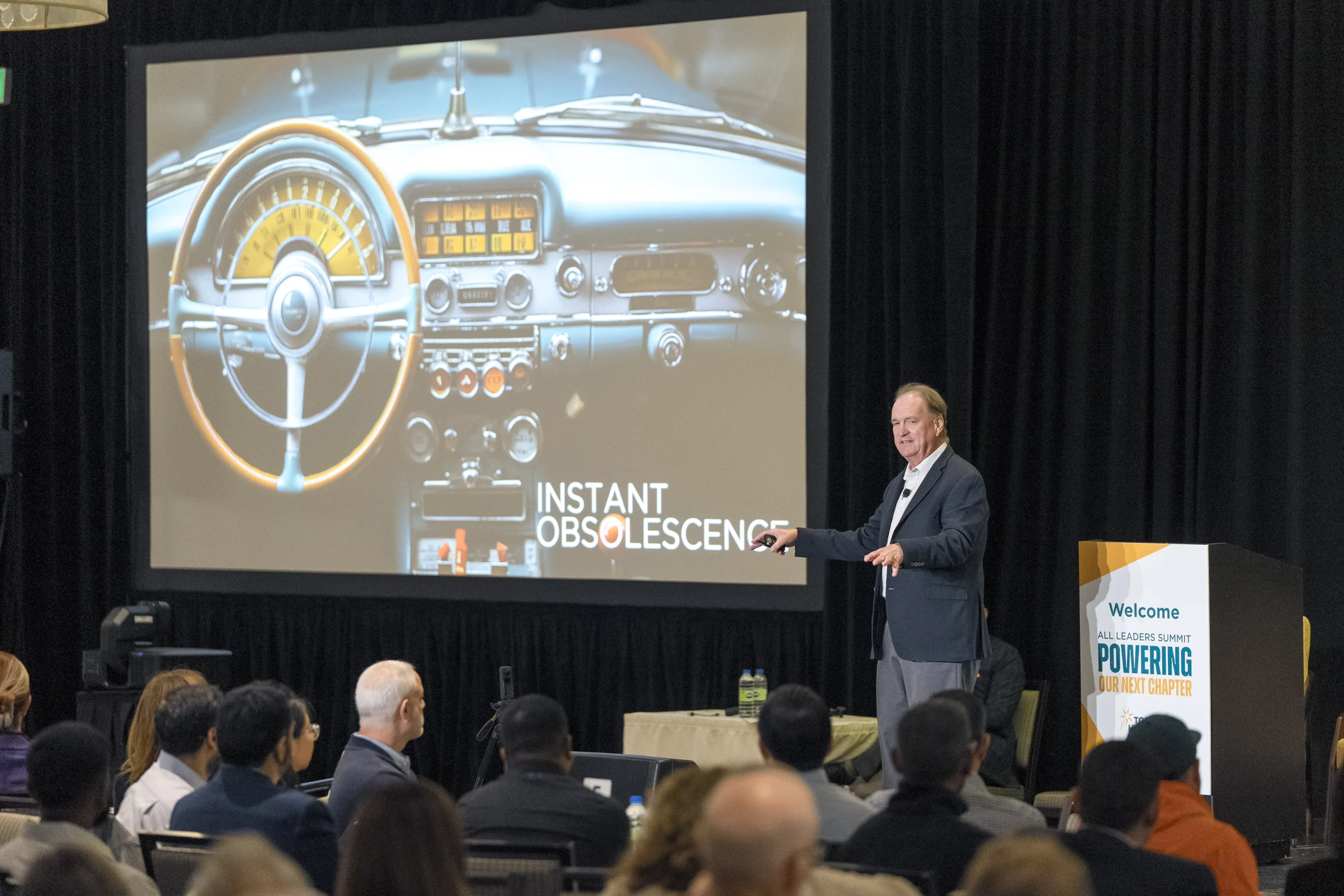
Begin with your audience
Utility leaders, grid operators, energy executives and industry suppliers.
Electrification, AI demand, storage and distributed generation challenge assumptions about infrastructure. The story brings technology and leadership decisions together. The final emphasis depends on who is attending, what they already understand, and the strategic choices your event is intended to support.
The research lens
These themes provide a direction for research, rather than a fixed set of slides. A leadership session can examine assumptions and investment priorities in depth. An industry conference can build a shared view of the changes affecting its members. A customer event can explore the future of the markets your customers serve.
From the industry brief
The sample guide develops five connected movements. The emphasis and examples are refined around the actual audience and event objectives.
AI data centres, industry, transportation and buildings reshape load forecasts.
Storage, distributed energy, V2G, smarter meters and two-way coordination.
Infrastructure constraints, interconnection, procurement and new capacity transparency.
Predictive maintenance, software-defined operations, cyber resilience and skilled teams.
Foresight, realistic experimentation and making 2027 decisions with 2027 assumptions.
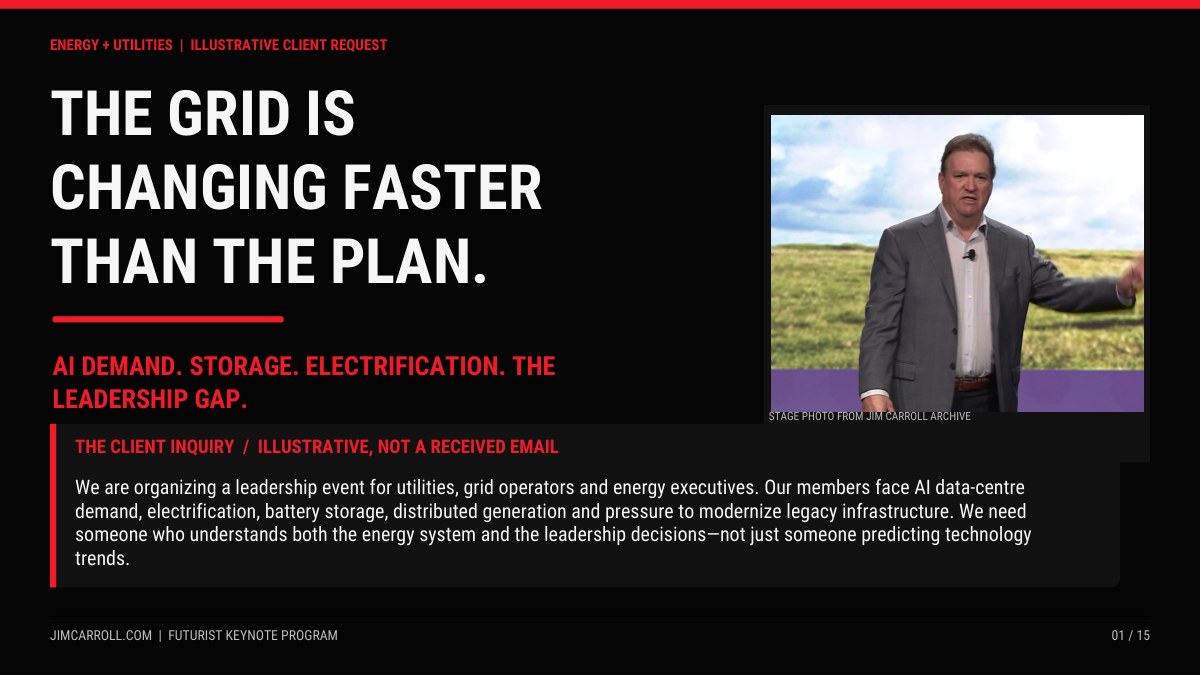
Illustrative industry brief · 15 pages
The complete guide develops the client challenge, relevant forces of change, keynote direction and industry experience. It is an illustrative briefing scenario, not a quotation from an actual client inquiry; the live proposal is shaped around your audience, priorities and objectives.
Read the energy & utilities brief (PDF) ↗All 21 briefs ↗Documented energy & utilities engagements



Selected clients
A sampling of the utilities, energy and grid organizations Jim has worked with.









Representative client experience
Generation, utilities, cooperatives, grid technology, customer systems, infrastructure and energy-intensive industry.
The published record
Relevant published engagements from JimCarroll.com. Cross-industry examples show adjacent markets and questions; the specific scope of each assignment is described in its original story.
The deep dive
Connected. Intelligent. Distributed. Accelerating.
For more than two decades, Jim Carroll has helped utility executives, energy companies, infrastructure firms and technology leaders understand what comes next - from deregulation, interval meters and the 2003 blackout to distributed generation, smart grids, storage, electrification, AI data centres and the capacity economy.
Before smart grid had a name
Jim was already working with utilities and energy companies in the late 1990s and early 2000s on deregulation, web self-service, interval metering, distributed generation, grid communications, resilience and the digital oilfield.
Distributed generation was the Internet of power: decentralized, resilient and built from many connected nodes.
1999-2000
Electronic bill presentment, web self-service and new customer communication models in deregulated energy markets.
2000-2004
Interval metering, remote bill presentment and the idea that utility customers would actively manage consumption and price.
2002
Thousands of rural electric cooperative leaders challenged not to let a downturn stall investment in community technology, distributed generation and modern grid infrastructure.
2003
After the massive North American blackout, Jim focused on backup power, microgrids, local generation and resilience against transmission failure.
2004
Real-time reservoir surveillance and IT-enabled oilfield operations aimed at higher production and lower operating expense.
2005-2006
Utility telecom, SCADA, smart grid communications, conservation culture, wind, solar, bio-energy and the changing economics of petroleum.
The structural shift
The transformation is bigger than renewables. It is a simultaneous shift in generation, storage, demand, intelligence, ownership and the very relationship between the utility and the customer.
01
Millions of smaller energy resources increasingly complement and challenge large central generation.
02
Transportation, buildings and industry electrify as the economics of generation and storage change.
03
Power and data increasingly flow in both directions between utilities, customers and distributed resources.
04
Sensors, smart meters, AI and software make the grid more visible, predictive and adaptive.
05
Customers increasingly generate, store, manage and sell energy rather than simply consume it.
06
The utility relationship evolves from selling kilowatt-hours toward delivering reliability, intelligence and energy services.
Early themes that became today's infrastructure
Distributed generation as the Internet of power. Localized generation would strengthen resilience and change the architecture of the grid.
Interval meters and the empowered customer. Better information would turn passive ratepayers into active managers of consumption and cost.
Complexity partners. No utility could master the convergence of telecom, software, grid hardware and customer technology alone.
The long view
Jim was already speaking to utilities and energy organizations about digital customer care, distributed generation, interval meters, blackout resilience, bio-energy and networked field operations in the late 1990s and early 2000s.
Distributed generation was the Internet of power: more nodes, more intelligence, more resilience, and less dependence on a single path.
1999–2000
Consumers Energy / CMS Energy, Toronto Hydro and Nova Scotia Power: electronic bill presentment, web self-service, changing customer expectations and the implications of deregulated markets.
2001–2004
SaskPower, SaskEnergy and utility audiences: interval metering, remote energy management and the idea that customers would become active managers of their own consumption.
2002
NRECA annual meeting: do not let a market downturn stall investment in community technology, localized generation and the infrastructure required for the next grid.
2003
After the North American blackout, Jim focused on backup generation, microgrids, distributed generation and local energy systems as a hedge against transmission failure.
2004
Shell’s “Smart Fields” vision, real-time reservoir surveillance, and centralized biogas systems that turned manure and organic waste into electricity.
2005–2006
Utility Telecom Council, BC Hydro Power Smart and CAPPA: SCADA, utility communications, energy conservation, wind, solar, bio-energy and the changing economics of petroleum.
Leadership in acceleration
Demand is accelerating. Technology is accelerating. Science is accelerating. Yet permitting, infrastructure, regulation and capital planning still move on very different clocks.
That mismatch is becoming one of the defining leadership issues in energy and utilities. AI data centers, electrification, grid modernization, extreme weather and new generation technologies are increasing the pressure to make large decisions faster without sacrificing safety, reliability or discipline.
Good energy leaders do not manufacture certainty. They create clarity when certainty is impossible.
Leadership agenda
The technology story matters. But the executive challenge is deciding how quickly to move, where to place bets, which assumptions have expired and what capabilities the organization must build next.
Track the real economics of storage, renewables, AI, grid software, electrification and distributed resources.
Challenge legacy assumptions, accelerate decision-making and create innovation discipline in a safety-critical industry.
Turn foresight into capacity, infrastructure, customer, workforce and technology decisions that can scale.
Potential keynote directions
These are directions, not canned speeches. They are selected and blended around the audience, leadership agenda, utility model and strategic issues in the room.
01
Connected. Intelligent. Distributed. Accelerating.
02
Grid intelligence, demand forecasting, reliability and the new load economy.
03
From one-way infrastructure to a software-defined, two-way energy system.
04
Storage, renewables, nuclear, electrification and the next grid architecture.
05
Reliability, extreme weather, cybersecurity and adaptive infrastructure.
06
How to lead when demand and technology move faster than the system.
The acceleration stack
No single technology defines the future. The disruption comes from many trends arriving together.
01
Solar and wind continue to reshape generation economics and capacity planning.
02
Storage changes intermittency, peak management, resilience and the economics of distributed power.
03
Forecasting, balancing, predictive maintenance and asset optimization move deeper into software.
04
Vehicles, buildings and industry create new loads and new infrastructure requirements.
05
Local generation and storage create more resilient, flexible and increasingly autonomous energy systems.
06
Smart meters, homes, buildings, vehicles and industrial assets become part of one hyperconnected system.
Demand shock
The AI economy is creating extraordinary new electricity demand at the same time AI becomes essential to planning and operating the grid that must serve it.
Data centers compress timelines. Large loads can appear faster than traditional utility planning cycles. The result is a strategic race involving generation, transmission, interconnection, storage, permitting and speed-to-power.
The biggest grid problem may no longer be finding demand. It may be delivering power fast enough.
The empowered energy customer
It becomes an information device.
Long before smart meters became routine, Jim was telling utility audiences that interval metering and real-time consumption information would turn passive ratepayers into active managers of their own energy use. That prediction now extends into connected homes, demand response, dynamic pricing, batteries, EV charging and automated energy management.
Complexity partners
The future utility becomes an orchestrator of capabilities, not simply an owner of assets.
Utilities increasingly operate at the intersection of power engineering, telecom, software, cybersecurity, storage, mobility, customer data and distributed generation. Jim was already urging energy organizations in the early 2000s to build specialized partnerships because the convergence was becoming too complex for any single organization to master alone.
The intelligent grid
This is not an upgrade to the old model. It is a different architecture.
The inherited grid was designed largely for one-way power flow from central generation to passive customers. Smart meters, sensing, distributed resources, software and AI turn it into an interactive system where both energy and information move in multiple directions.
Storage
As storage becomes more capable and economical, the assumptions underlying generation, peak load, backup power, microgrids and resilience shift with it.
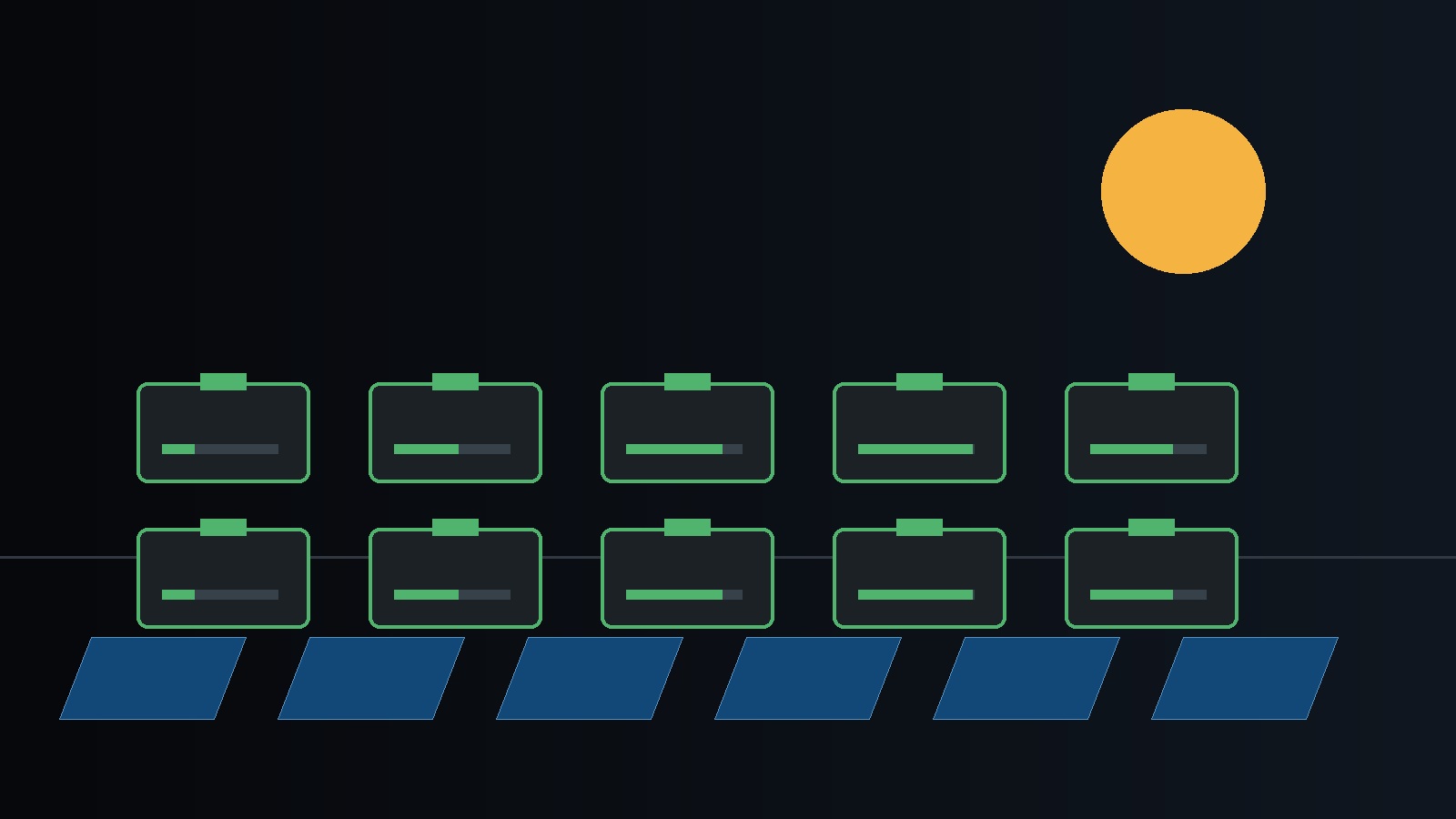
Energy generated now can increasingly be used later, changing the relationship between production and consumption.
Storage improves the ability to integrate variable renewable generation.
Homes, businesses, campuses and communities can gain new levels of local energy continuity.
Distributed energy
The rise of the prosumer changes the utility relationship.
Rooftop generation, storage, smart inverters, community microgrids and energy-management systems create a world in which customers increasingly participate in the energy system rather than simply receive power from it.
Mobility meets energy
Electrification rewrites the boundary between the utility industry and the automotive industry.
Electric vehicles are not merely a transportation trend. They are load, storage and infrastructure. Vehicle-to-grid systems turn mobile batteries into grid assets while charging networks pull utilities deeper into transportation planning.
Speed-to-power
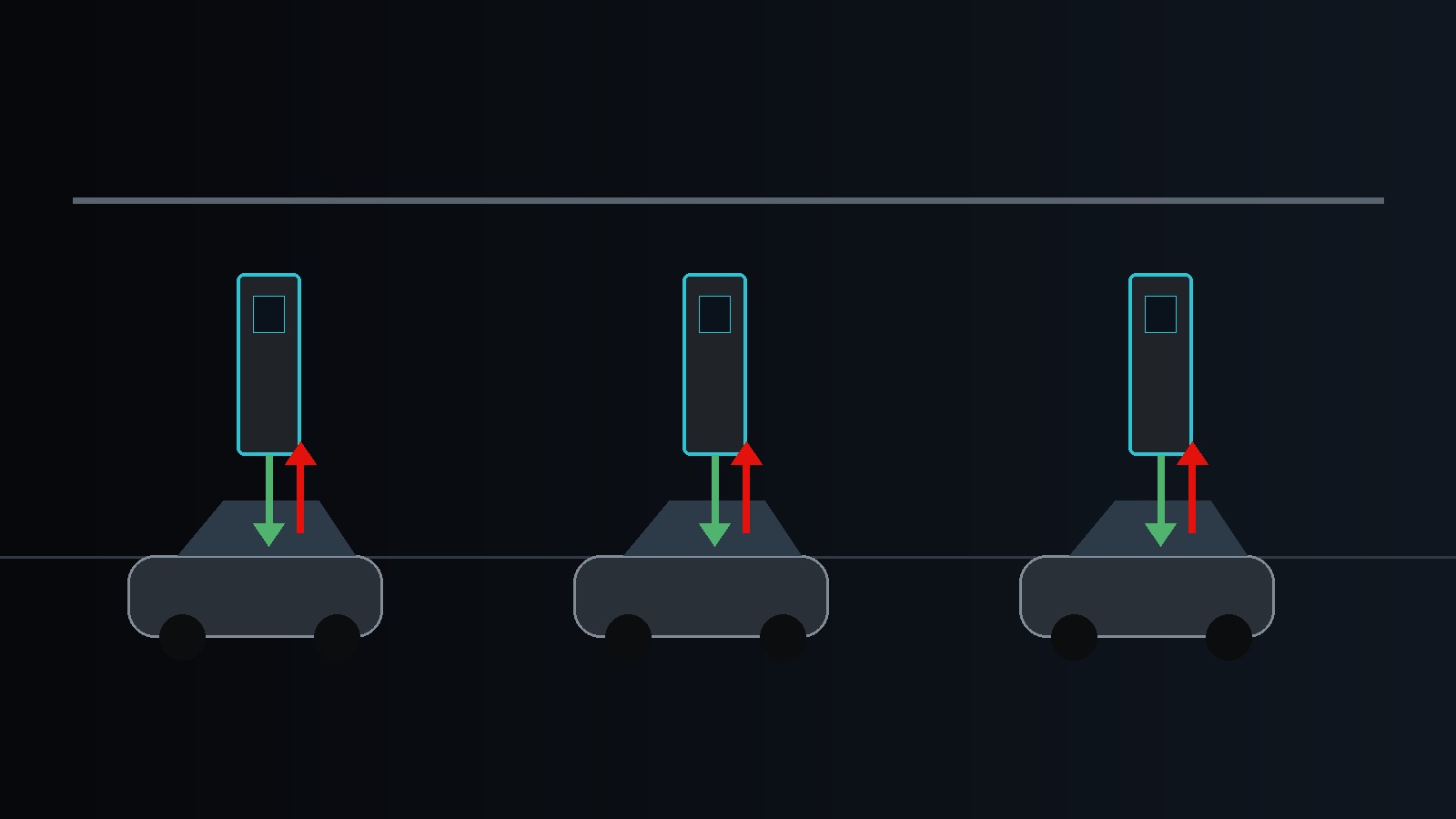
Economic development increasingly depends on how quickly power can be made available.
What can come online, how fast, and at what cost?
Can the power actually reach the load that needs it?
Queues and studies can become strategic economic constraints.
Institutional speed can lag far behind market demand.
Resilience
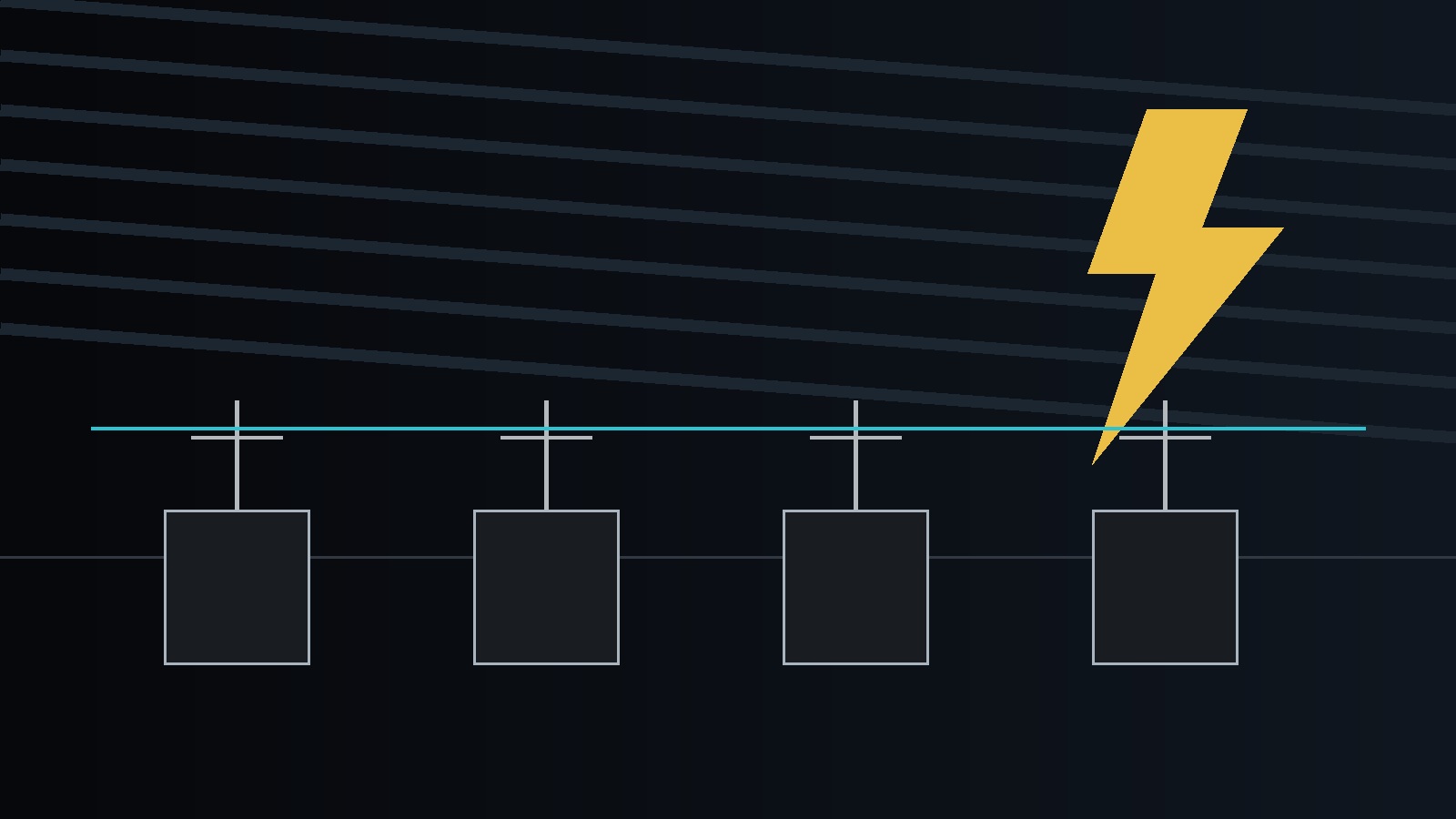
The resilient utility senses earlier, plans faster, isolates failure, restores intelligently and learns continuously.
Extreme weather, cyber risk, wildfire, flooding, heat, aging infrastructure and concentrated new loads require a broader concept of resilience.
Bio-energy & circular systems
In 2004-2006 Jim was already using European centralized biogas systems as proof that agricultural waste could become a valuable energy commodity.
Manure and organic waste become inputs to a new energy system rather than simply disposal problems.
Biogas and cogeneration reinforce the logic of distributed generation and local resilience.
Energy, fertilizer, waste management and agriculture become linked in one value system.
The digital oilfield
The lesson was early and enduring: data changes physical infrastructure when it moves from reporting what happened to continuously guiding what happens next.
By 2004, Jim was highlighting Shell International E&P's Smart Fields program: real-time reservoir surveillance, IT-enabled operations and the use of digital intelligence to increase production while lowering operating expense.
The generation mix
The future grid will be defined by a portfolio of technologies, economics and local conditions rather than a single universal answer.
Fast scaling and falling costs continue to alter the generation mix.
Reliability, new demand and emerging reactor technologies keep nuclear strategically important in many systems.
Gas remains part of many transition and reliability strategies even as long-term system economics evolve.
Battery and other storage systems become core grid infrastructure rather than peripheral technology.
Local generation, behind-the-meter storage and demand response create a more complex but flexible network.
The cheapest new megawatt can sometimes be the one that does not need to be generated at peak.
Prediction scorecard
The point is not that every timing call was perfect. It is that the structural direction has remained remarkably consistent.
The future of energy was never about a bigger smokestack. It was always about the panel on your roof and the battery in your garage.
2012
Smart devices schedule themselves around grid conditions and pricing.
2015
Distributed energy challenges the assumptions of the entrenched utility model.
2016
The old one-way grid gets a brain and a reverse gear.
2019
Vehicles and local resources become part of the energy system.
2023
Homes and businesses become little grids of their own.
Client stories
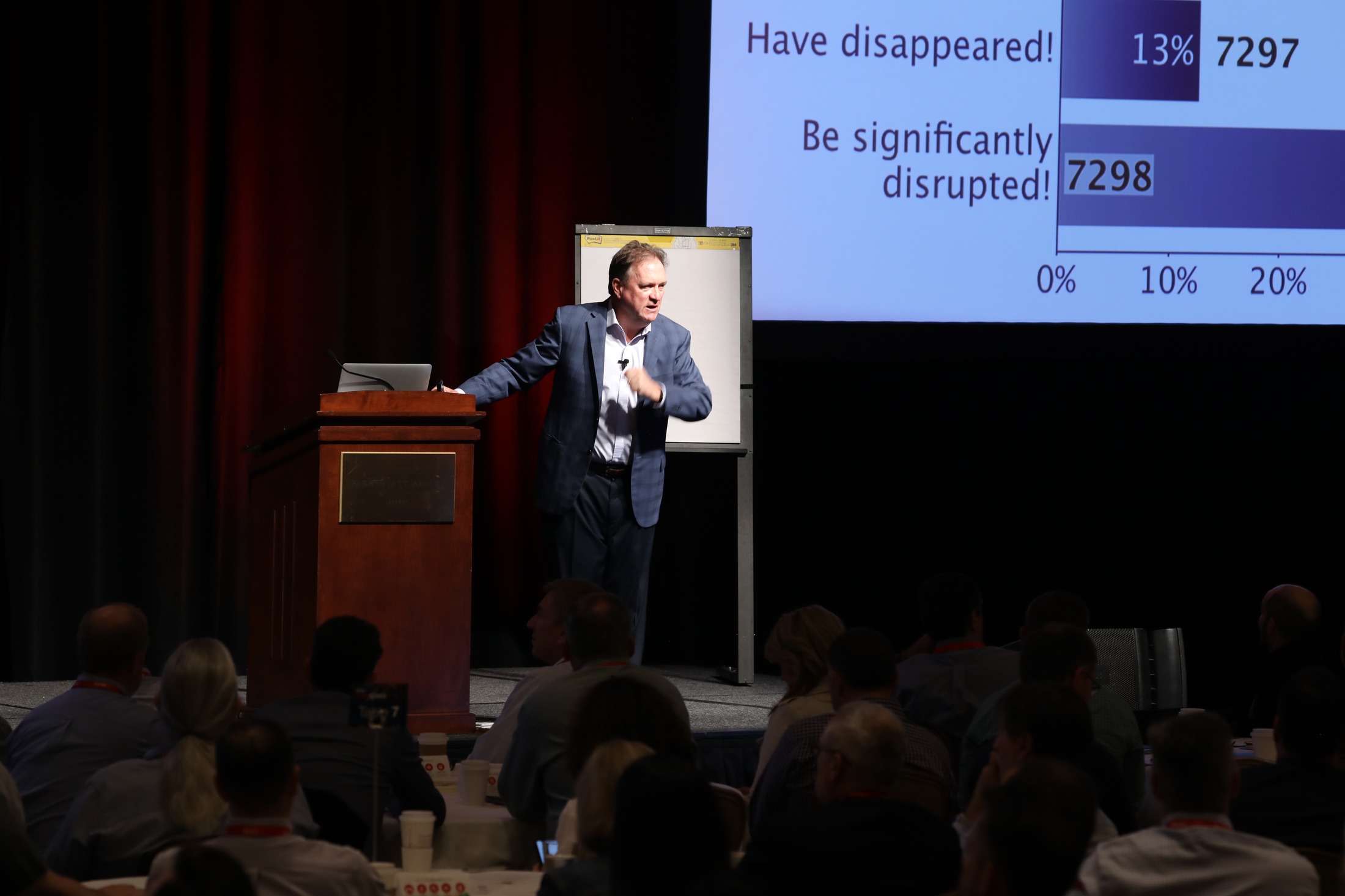
Utility leadership meetings, customer conferences, technical working sessions and industry associations all require different stories.
Itron
Leadership discussion on microgrids, renewable acceleration, smart-city infrastructure, electric vehicles and the shift from selling a product toward delivering an energy service.
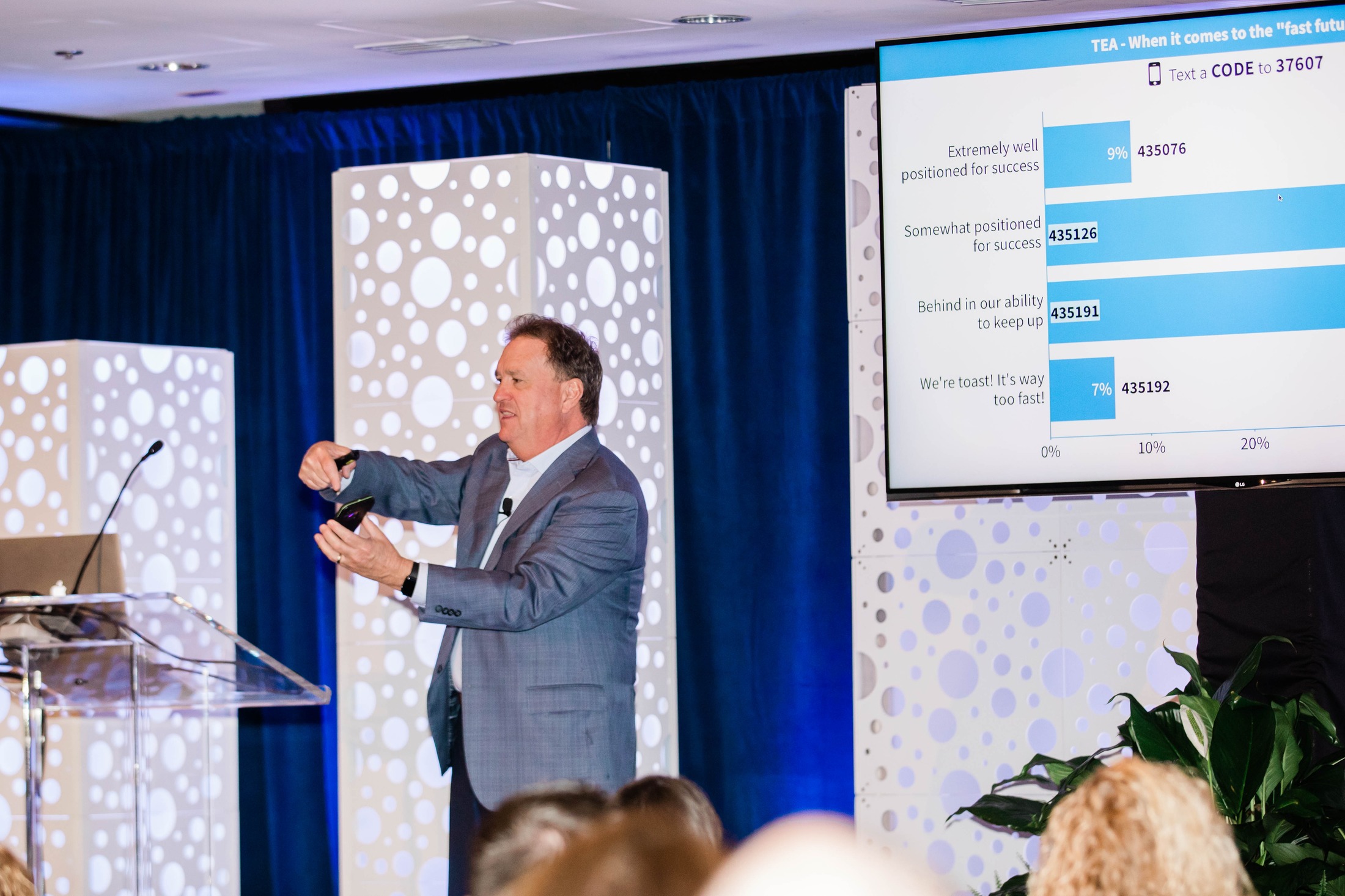
The Energy Authority
Microgrids, renewables, vehicle-to-grid technology, intelligent infrastructure and the innovation mindset required to keep pace.
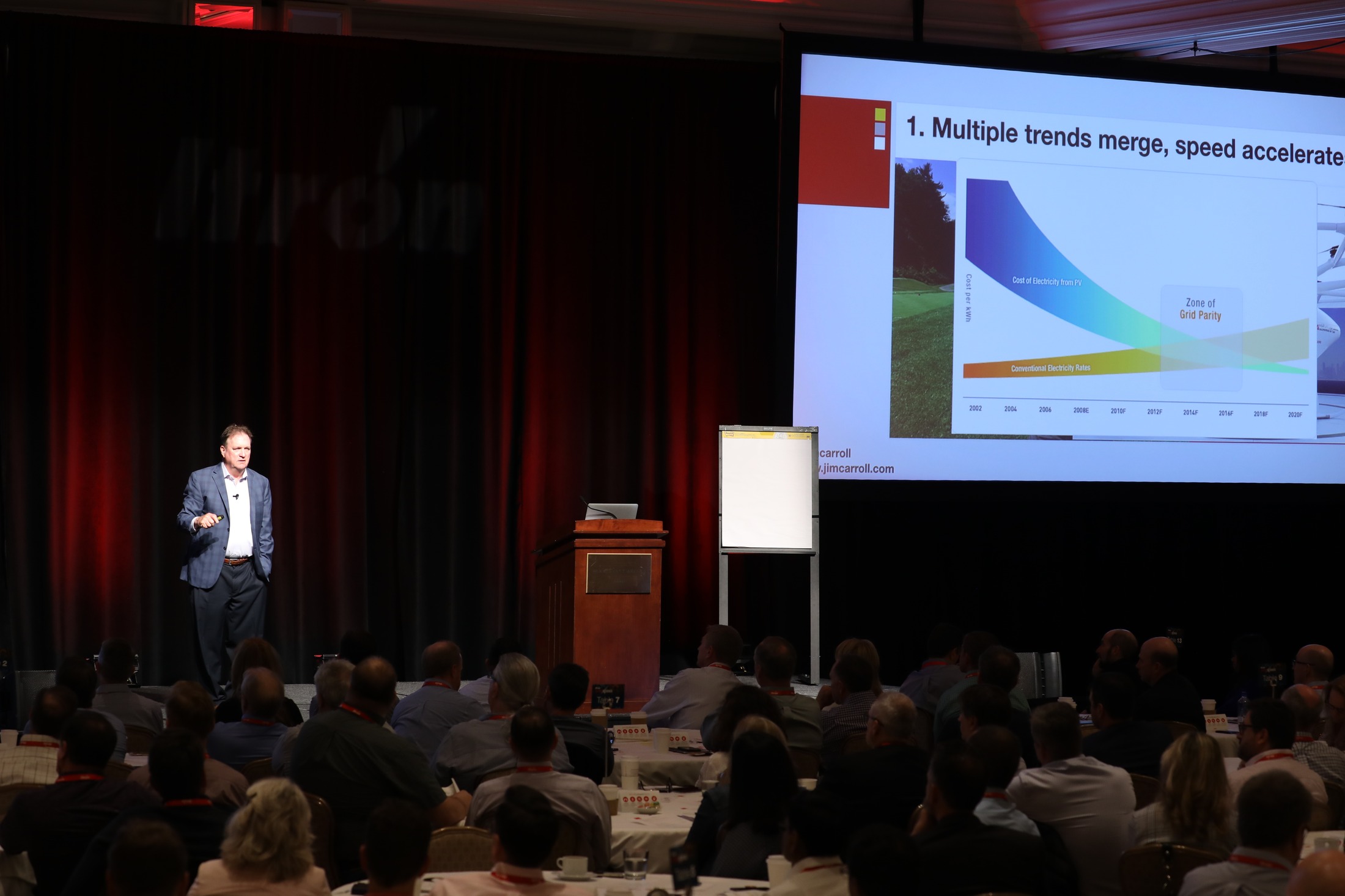
SAP Utilities
Hundreds of energy and water utility executives exploring grid parity, intelligent grids, microgrids, renewable generation and storage.
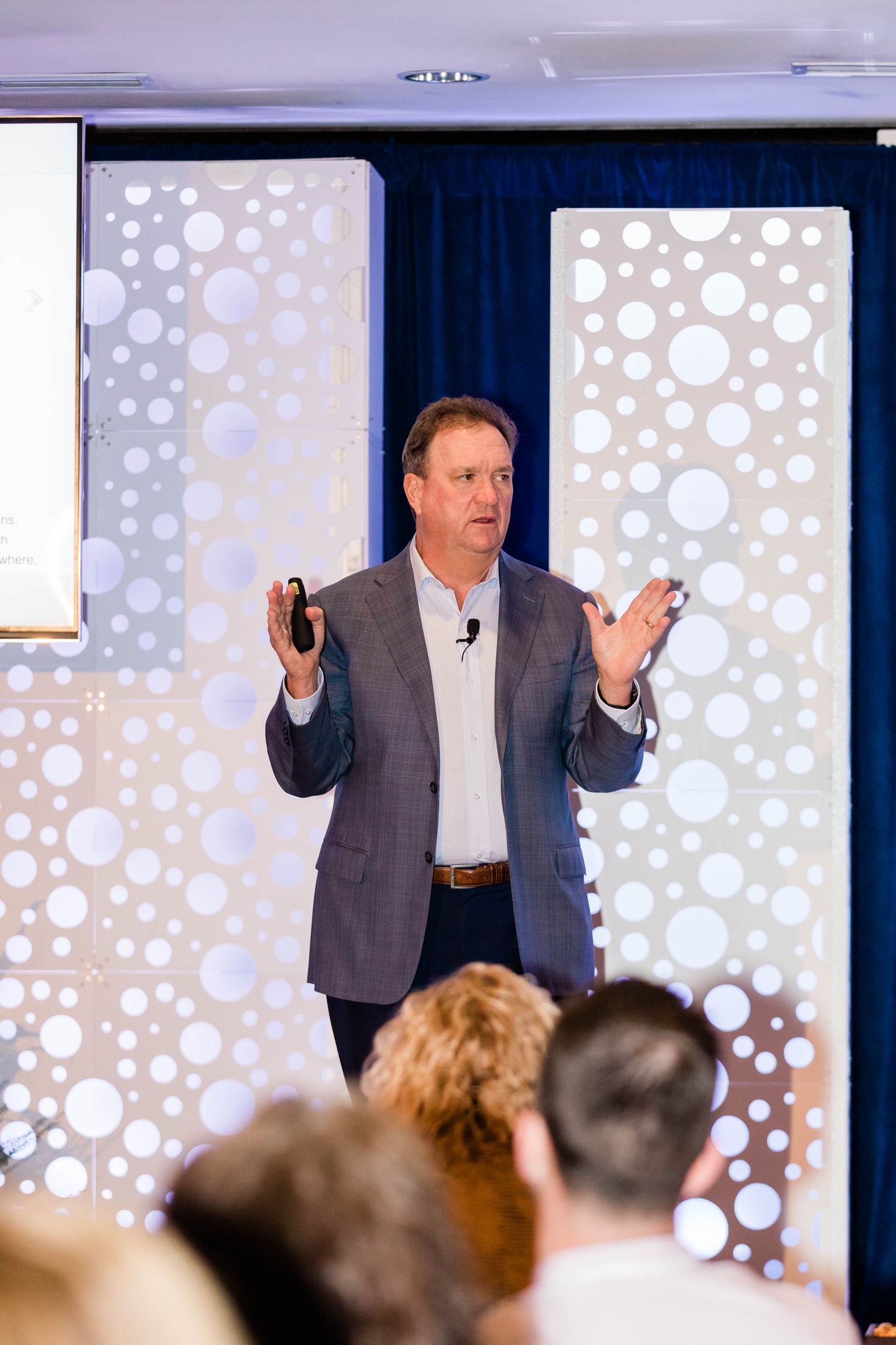
Accenture Global Energy Summit
Invitation-only global executives challenged to make big bold bets around renewables, microgrids, EVs and the interconnected energy future.
Corporate leadership proof
Jim's work includes CEO-level and leadership sessions focused on transformation, innovation and the strategic implications of a rapidly changing energy system.
Global leadership meeting on the disruption of the energy industry, transformation and the acceleration of renewables, storage and grid change.
CEO transformation leadership work connecting energy, water, infrastructure and the need to disrupt before being disrupted.
CEO-level global leadership meeting focused on reinvention, transformation, renewables and the cultural change required to pursue bold strategic goals.
Experience
The digital utility story did not begin with AI, batteries or even the phrase “smart grid.” Jim’s energy work reaches back to deregulation, online billing, utility telecom, interval metering and distributed generation.
1999–03
Online billing, web self-service, deregulation, customer communication, interval metering and the first serious conversations about distributed generation.
2003–07
Blackout preparedness, SCADA, utility telecom, smart fields, biogas, conservation, smart metering and alternative energy.
2008–14
Demand response, grid-aware devices, intelligent infrastructure, renewables and the early distributed-energy architecture.
2015–21
Microgrids, storage, EVs, prosumers, V2G and the warning that the traditional utility model could be “MP3’d.”
2022+
AI data centers, speed-to-power, grid bottlenecks, storage acceleration, software-defined grids and leadership in the acceleration gap.
A long record in the sector
The earliest engagements were already focused on the same core issue: what happens when technology changes the assumptions underneath a slow-moving infrastructure business?
NOVA SCOTIA POWER • 1999
Thomas Hall, CEO, Nova Scotia Power
NRECA • 2002
Thousands of rural electric cooperative leaders were challenged not to postpone the community technology, distributed generation and modern grid infrastructure their future would require.
What clients say
Energy audiences range from field operations and utility engineers to CEOs and global leadership teams. The common requirement is relevance.
“The guest speaker, Jim Carroll, gave a highly entertaining, valuable and informative presentation. It was an evening well spent.”
Thomas Hall, CEO, Nova Scotia Power
“Your insight helped to shape our strategy, comprehend our direction, and understand our future. Thanks for accelerating our thinking!”
CEO, Lennox
“We selected Jim because of his accessibility and passion to tailor his expertise to fit our vision. This combination produced exceptional results.”
AmstedRail
Deep customization
A municipal utility, an investor-owned utility, a cooperative, an energy technology company and a generation business do not face the same future.
Client calls, research papers, market data, utility reports, current news, agenda analysis, leadership issues and sector-specific examples. For major sector keynotes Jim will often access 1,000–2,000 articles and reports through deep research services.
LISTEN → RESEARCH → MAP THE TRENDS → BUILD THE STORY → CONNECT THE ROOM → LEAVE A PLAYBOOK
These sections come from energy.jimcarroll.com, Jim’s energy industry site, migrated here with their original copy and images.
From the research archive
Other industries
Make it about your audience
Bring the event objectives, the people attending and the questions you want them discussing afterward.