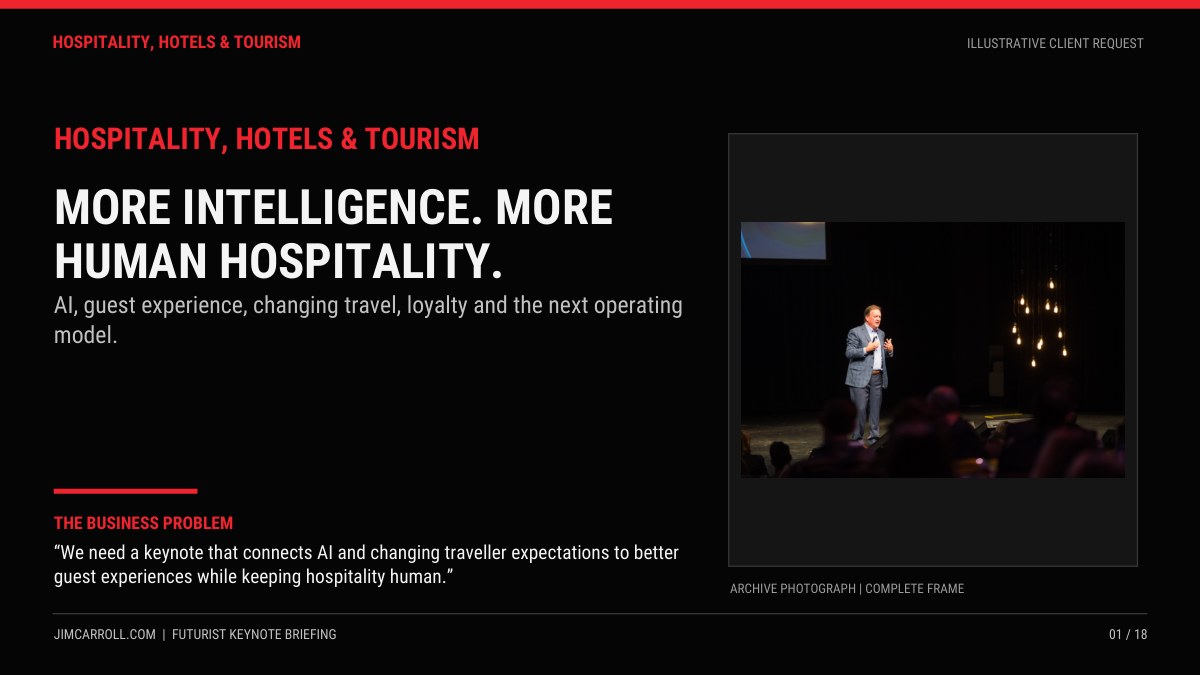
Hospitality & Tourism · 12 forces
The forces changing the decisions.
What this means for leaders: The following twelve shifts connect technology and market change to practical choices for organizations in hospitality & tourism. They are analysis, not claims that every development is universally deployed or inevitable.
These are the trends Jim is talking about with hospitality & tourism leaders right now.
The research lens
- Discovery and booking
- AI for staff and operations
- Human trust and guest experience
- Changing travel and loyalty economics
These themes provide a direction for research, rather than a fixed set of slides. A leadership session can examine assumptions and investment priorities in depth. An industry conference can build a shared view of the changes affecting its members. A customer event can explore the future of the markets your customers serve.
- 01
Guest expectations become continuously personalized
Guest expectations are shaped by many digital experiences before the traveler reaches a hotel or destination. Personalization can reduce friction, but it must be anchored in consent, useful preferences and service staff who can act on what is known. The real goal is a more thoughtful stay, not proving that a platform can remember every previous click.
- 02
AI concierges transform routine service interactions
Conversational tools can answer routine questions, help with itineraries and support service requests, potentially freeing staff for more complex interactions. But travel plans change quickly and wrong information can cause real disruption. Hospitality operators should provide clear handoffs to people, updated local information and responsibility for the recommendations their systems make.
- 03
Human hospitality becomes more valuable amid automation
As routine transactions become automated, human warmth, discretion and problem solving become more visible sources of differentiation. Technology should make staff better informed and easier to reach, not turn hospitality into an endless series of digital barriers. A strong service culture decides when the screen should step aside.
- 04
Climate volatility changes destination planning
Heat, severe weather, water pressures and changing seasonal patterns can affect travel demand and operations. Destinations need scenario planning that connects infrastructure, visitor communication, insurance and community capacity. The opportunity is to build resilience and flexibility rather than assume tomorrow's peak seasons will resemble yesterday's calendar.
- 05
Travel discovery moves toward conversational interfaces
Travelers increasingly discover places through conversational answers, video and recommendations rather than a traditional list of search results. Properties and destinations need accurate, structured information and authentic content that answers traveler questions. Visibility should be earned through usefulness and credible reputation rather than an attempt to game a single discovery platform.
- 06
Revenue management adapts to faster signals
Faster demand signals can improve pricing and capacity decisions, but automated revenue tools can also create confusing or unfair experiences if business rules are unclear. Operators need to weigh yield, loyalty, cancellations and brand trust together. Dynamic decisions should improve the whole guest relationship rather than maximize one night's rate in isolation.
- 07
Sustainable operations influence property investment
Energy, water, waste and building performance affect both operating cost and the credibility of environmental commitments. Meaningful progress requires measured performance and practical capital decisions, not decorative sustainability claims. Hospitality leaders should identify improvements that strengthen resilience and service quality while acknowledging trade-offs in older facilities.
- 08
Workforce redesign requires new service and digital skills
Labor-intensive service businesses need training that combines digital fluency with empathy, local knowledge and judgment. Staff should be empowered to solve exceptions rather than forced to defer every decision to a system. A sensible automation program starts by asking which tasks can be simplified so people can create a better experience.
- 09
Events and experiences become competitive differentiators
Conferences, food, cultural programs and destination experiences can turn a property from accommodation into a reason to visit. Successful operators think about the community and the full journey, not only the room inventory. The best experiences connect authentic local strengths with a service operation capable of delivering what marketing promises.
- 10
Trust and safety shape travel decisions
Safety, accurate information and clear assistance are essential to traveler confidence, especially during disruption. Digital convenience has little value if customers cannot obtain help after a cancellation or emergency. Hospitality brands should design recovery and communication processes that work under pressure and show guests they are not alone when plans change.
- 11
Accessible travel opens new market opportunities
Accessible travel is an opportunity to serve more people well, not simply a compliance checklist. Clear information, inclusive design and reliable service support make travel easier for guests with different mobility, sensory and cognitive needs. Leaders should test the actual journey—from discovery to arrival and departure—with the people they intend to serve.
- 12
Loyalty becomes a relationship rather than a points account
Loyalty becomes more meaningful when a brand recognizes what a traveler values and delivers a dependable experience. Points alone are easily compared; trust and thoughtful problem solving are harder to copy. Operators should focus on relevance, consent and consistent execution rather than collecting customer data for the sake of a larger database.