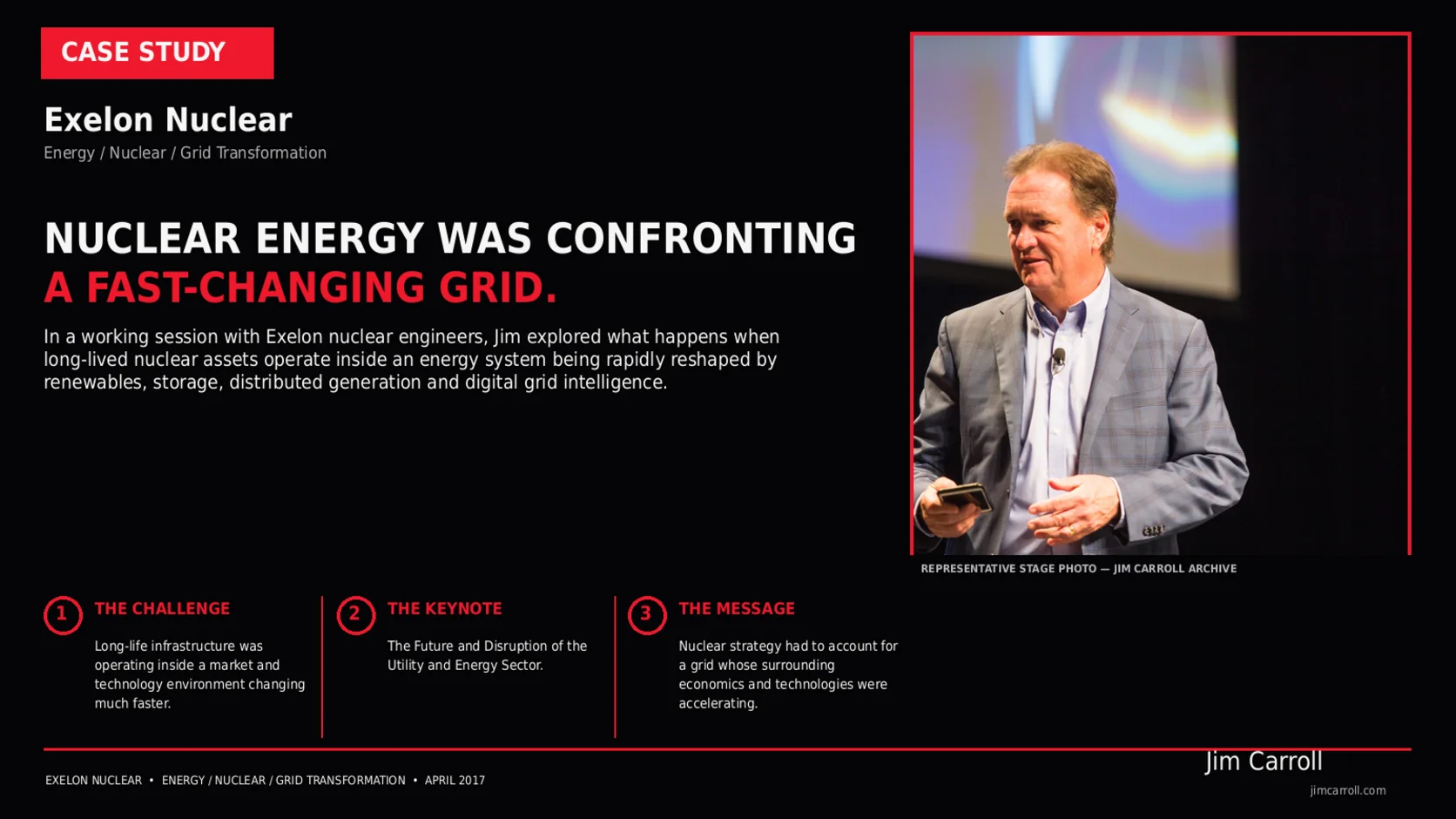
Exelon brought me into a small working session with nuclear engineers from its nuclear division to examine the future of the energy sector.
This was not a large conference keynote.
It was an intimate, technical discussion about what happens when one of the world's most complex infrastructure systems begins changing around you.
The energy sector was being reshaped by renewables, distributed generation, storage, smart-grid technology and changing economics.
For nuclear professionals, that created an important strategic challenge.
The physical assets are designed for long operating lives.
But the market, technology and policy environment around those assets can change much faster.
Six themes framed the discussion:
- Grid Transformation
The structure of electricity generation and distribution was changing.
- Renewable Growth
New generation sources were becoming increasingly important to the energy mix.
- Distributed Energy
More generation was moving closer to customers.
- Storage
Battery and storage technologies were beginning to alter traditional grid economics.
- Digital Grid Intelligence
Data and connectivity were making the grid more responsive.
- Long-Asset / Fast-Market Tension
Nuclear assets operate for decades while market assumptions can change in years.
The leadership challenge was not to predict one perfect future.
It was to maintain flexibility inside a system built around long-term infrastructure.
Nuclear energy was operating inside a grid whose surrounding economics and technologies were beginning to move much faster.