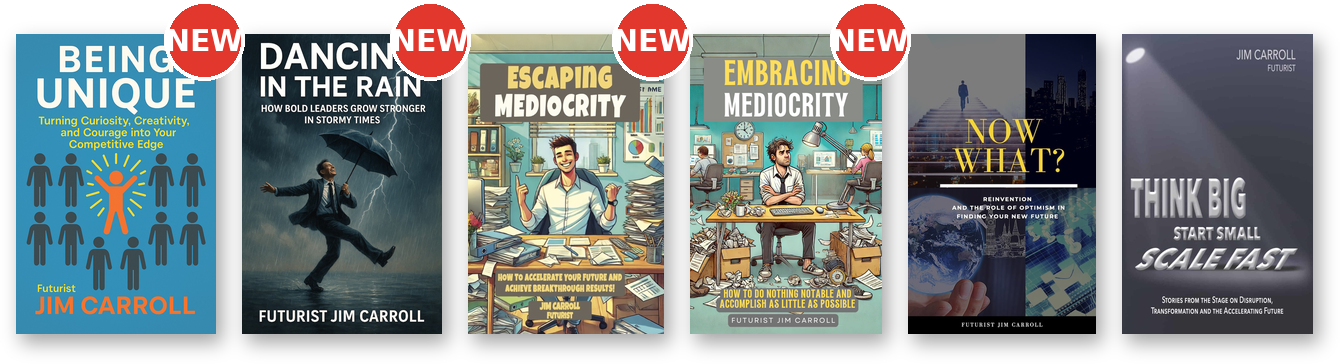

Jim Carroll delivered the keynote presentation at the PGA of America Annual Meeting in November 2010, bringing his futurist perspective on trends and innovation to one of the golf industry’s most senior gatherings. The PGA of America Annual Meeting brings together the leadership of the organization representing over 28,000 PGA professionals who teach, manage, and grow the game of golf across the United States. Jim’s keynote explored the trends reshaping sports, leisure, technology, and consumer behavior that would directly impact the future of golf as a business and a participation sport. His session was a centrepiece of a meeting agenda that also included a candidate forum and leadership discussions on the direction of the game.
Keynote: Informatica Executive Summit – Aligning Yourself for Growth Through Innovation
Jim Carroll was the keynote speaker at the Informatica Executive Summit in November 2010, delivering his signature session ‘Aligning Yourself for Growth Through Innovation’ to a senior audience of data management and enterprise software executives. Informatica, a global leader in data integration and management, convened this invitation-only summit to help its customers and partners think strategically about the alignment of technology investment with business growth priorities. Jim’s keynote provided the forward-looking strategic context, exploring the innovation mindsets and organizational capabilities that would define the next wave of enterprise transformation. His reputation as one of the world’s leading futurists made him the ideal voice to open up the summit’s thinking about what was ahead.
Trending: 10 Major Trends to Start Thinking About Now!
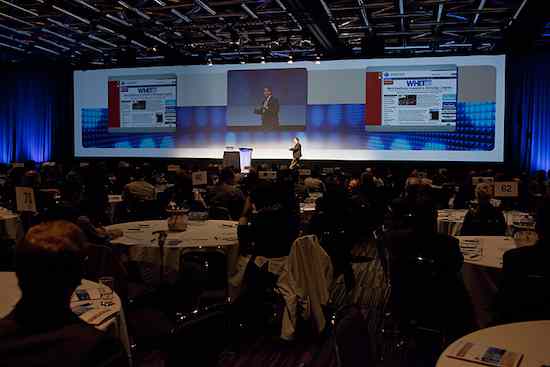
What are the major trends that will shape our world in the future? Here’s what you need to be thinking about now!
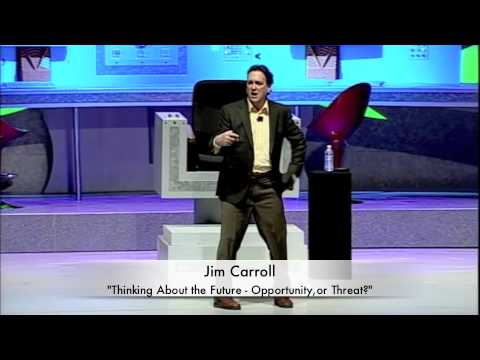
How SMALL is your world? Are you thinking BIG enough in terms of just how many big trends are going to impact your future?
Many people ask me how I spend my time in nailing many of the trends that will redefine society, industries, markets and nations into the future….
It involves a lot of research and a great deal of listening to other experts. But it also comes from the fact that I spend my time as a speaker at corporate meetings, massive association events and board retreats, with the resultant opportunity of seeing what many of the most innovative organizations in the world are focused upon. Just take a look at my client list, and you’ll get a sense that I have a constant stream of global executive level insight that drives my view of the future. Take a look at the track record of what I’ve been up to. There’s some pretty solid and significant insight happening here. Take a look at what world class innovators do that others don’t do.
My trending observations also involves a lot of common sense. Take the “expectation gap” which I outline below. This is a pretty significant trend, and it’s pretty well blindingly obvious when you think about it,
So what comes next? Here’s a quick list of 10 trends that you could be thinking about as we go into 2011. I’ve got dozens — no, hundreds — more. Hang out on this blog, track my thoughts, jump in, and let’s continue to innovate our way into the future!
- the expectation gap: it’s one of the most obvious, most significant, and most challenging trends going forward into the future. Quite simply, Western society is defined by an increasing divergence between what people expect, and what they will get. People expect the world’s greatest health care services; with the aging of society, it is dramatically clear that the system won’t be able to deliver what they expect. Boomers expect that they will have a comfortable retirement pensions; the economic reset and collapsing home values have made it increasingly clear that their hopes will likely have been dashed. People expect that they can live longer, but the increasing prevalence of lifestyle diseases due to obesity and other factors means that in some areas of the Western world, 60 is the new 70. People expect that they can reduce the size of “big government” but have no sense of just how to go about doing this without a great deal of pain. Whatever the case may be, our future is increasingly defined by this gap, and it is going to have huge ramifications for just about everything around us. And here’s the reality: a lot of organizations are going to make a lot of money in helping to close the gap! Take health care and what is really going to happen in terms of future trends. Huge opportunities for growth!
- industries blur: In the past, we’ve have “industries” which have focused on particular products and markets. Increasingly, the concept of an “industry” is going to blur as fascinating new trends provide interesting new opportunities. Consider this: the world of fashion and healthcare are going to merge. We are going to see an increasing number of bio-connectivity health care devices that will be used for the remote monitoring of health care conditions. Quite simply, people will increasingly wear small “smart appliances” that will monitor their compliance with exercise programs or that will keep their doctors up to date with key health indicators. But people won’t want to wear medical appliances though: they’ll want to wear fashion! Health-care jewelry anyone?
- energy gets smart: Clearly we’re going to see continued high-speed innovation with renewable energy sources, and velocity with grid-parity: the point in time at which the cost of producing renewable energy equals that of carbon based sources. Much of this is coming about as Silicon Valley gets aggressively involved in the energy sector Taiwan Semiconductor, one of the largest chip manufacturers in the world, has invested $193 million in solar-cell maker Motech Industries. That’s but a small example of a major trend in which hi-tech companies are getting aggressively involved in every single aspect of the renewable energy marketplace. Just look at what Google is up to with wind-farms off the Eastern Seaboard!
- the collapse of attention spans: Everything changes when people lose their ability to focus: sports, shopping, living…..the numbers with the next generation of consumers are simply staggering. The average teen sent 435 text messages per month in 2007; it’s now 2899! That’s 97 messages per day, an increase of 566% in just a few years. It’s estimated that they now spend 7.5 hours a day engaged with some type of media screen; if you add in the fact they are multitasking, it comes out to 11 hours of screen time per day — or 53 hours a week. Thats’ more time than involved in a full time job, and more time than their parents spend at work. What’s the impact? Continued hyper-speed in the evolution of branding and advertising; surreal rates of change involving products and services; unbelievable rates of change in how decisions are made and people are influenced. If you don’t know how to think, market and promote at nano-speeds, you’re not ready for the future!
- faster market evolution: If we’re thinking faster, than we are innovating faster! New products flood the market at ever increasing speeds, and fast-consumers snap them up in a moment and evolve their lifestyles quicker. We’re all going to begin moving at Apple-speed as Silicon Valley increasingly comes to control the pace of innovation in many industries. Put it this way: it took two years for Apple to sell two million iPhones, but only 2 months for them to sell 2 million iPads! And just about a month to sell 1 million iPhone 4’s! We’re seeing the same trend in many other industries and product lines: the business of outsourcing the manufacturing LCD TV’s exploded from $9.4 billion in 2009 to over $21 billion in 2010, and an estimated $30 billion in 2011. Some products are obsolete before they are released: Lenovo learned this fact when they cancelled their planned “tablet computer” this June due to the unbelievably fast success of the iPod with market domination.
- innovation partnerships. Given this rate of change, companies are quickly learning that in this fast paced world, they can’t innovate on their own; it is simply too difficult to keep up. And they’ve realized that they can enjoy greater success through open innovation and other external innovation partnerships. A great example of what happens when innovation “opens up” is seen with the partnership between consumer appliance maker Phillips and Sarah Lee on the single-serving coffee machines. It’s a market that grew from nothing to 12 million machines and 7 billion coffee “pods” in just 5 short years! Everywhere I go, I see organizations focused on challenging the core concepts of how they do “new things.” There’s a new mindset, and this is going to drive a big part of the growth for organizations going into the future.
- the fight against workplace boredom. When there’s so much fun and fast change in the world, a job can be a mind-numbing experience. That’s why one survey suggested that 67% of Gen-Y admitted on their very first day on a new job, they were already thinking about another job. Organizations are fighting back against boredom by trying to keep staff engaged. At IBM’s Bromont Canada plant, the “3×10” program aims to combat workplace boredom by changing employees full set of responsibilities 3 times every 10 years. The program is managed by someone who has worked in 10 different jobs within the plant over the last 28 years. Expect within a few years the likelihood that a 3×10 program will have shifted to a 2×1 program….
- American-Idolatry : People love competition, they love winners, and they relish the battle! Everyone is learning that if they are to succeed in the future, they have to appeal to the new base of hero-worship that comes from our new awards driven society. Everywhere I go, I see companies who are far more willing to celebrate and elevate heroes. DHL holds an annual innovation day which includes an award ceremony with partners who have worked with them on innovative ideas. Deloitte South Africa hosts an annual “Best Company To Work For’ survey and combines into it an elaborate awards ceremony. The future of workplace and partner renumeration is all about the red-carpet, the spotlight, and the celebration of success!
- the big impact of small incrementalism. Everyone is learning that one way to win the future is by having a lot of small wins that add up to big gains. The oil industry currently retrieves only 1 out of 3 barrels per well on average, yet a 1% improvement represents huge revenue gains! 7% of power on transmission and distribution lines are lost as heat, yet reduce that loss by 10% – and that would equal all the new wind power installed in the US in 2006. Todays’ typical automotive system uses only 25% of the energy in the tank — the balance is lost to waste, heat, inefficiency. Work on increasing that on a year over year basis, and there are some pretty solid gains through innovation. .At DuPont, the savings add up: globally, they now produce 40% more material as a global company using the same amount of energy they used in 1990. Up to 30% of the energy used in a typical industrial or commercial building today is wasted, but new, incremental improvements in green building design and other eco-principles are fixing this fast. Every industry I am dealing with sees small marginal wins adding up to huge tactical advantage! Small is the new winner…
- communities redefined: there were 37 million senior citizens in the US in 2006, or about 12% of the population. By 2030, there will be 71.5 million of them, representing 20% of the population. Other nations in the Western world are seeing the same trend: we’re all about to become like Japan! And the reality of funding issues means it will be impossible to have the same seniors-housing or assisted living type of infrastructure that we’ve had in the past. The next generation of retirees are going to live at home longer; they’ll live with each other more; the hippies of the 60’s are going to find themselves in the seniors communes of 2015! Community-bliss: far out, man! What does it mean? Communities are going to have to be rethought, re-designed and reconstructed – community ergonomics is going to be a massive growth industry! Overall, we’ll see a lot more growth in high density, compact, mixed-use communities – and a lot of innovative thinking as to just what the concept of ‘community’ means.
These are but a few trends that I’m thinking about. I’ve got HUNDREDS more.
Think about these trends from this perspective: there is a lot of transformative change that is underway.
This is no time to think “small.” This is the time in which you need to be thinking “big.” How “small” is your world: do you have a narrow view of opportunity? The reality is that right now, thinking BIG in terms of opportunity and the future will be crucial to your future success.
What does that does it mean for your future? In the old days, companies had “industries” that they worked within, “markets” that they sold into, and “business models” that they pursued. Assumptions that drove their decisions.
Every single assumption that you might have about your future could be wrong. Challenge those assumptions, think about the rapidity of future trends, innovate — and you’ll find the growth opportunities that seem to elude so many others.
Video: What do world class innovators do?
Each year, Deloitte South Africa presents their annual “Best Companies to Work For In South Africa” survey, and coincident with that, they honour companies that show the best talent management practices.
The companies are selected through a diligent process ; the entire event is built around the theme of world class HR and talent management practices.
This year, Deloitte engaged me to provide a “video keynote” that would touch upon the key themes from this years research into the best practices around talent management. The result is the video that you see below. It captures the essence of what makes for successful innovation in todays’ global high velocity economy.
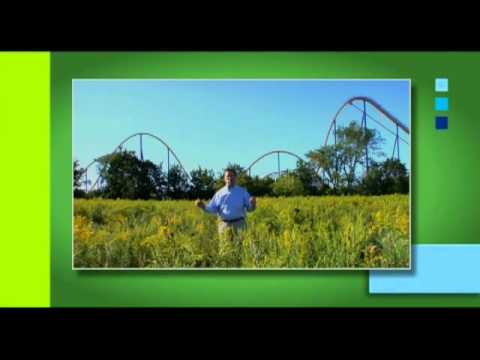
The video was an international effort, with film production /editing done by David Mitchell of RiverBank Pictures of Canada and further editing/production by FogHound Studios of Johannesburg. It was a true international project. Filmed on location in Toronto, Mississauga, Collingwood, Craigleith and Thornbury, Canada
“You can’t be a futurist and a pessimist!”

Yesterday I spoke to several thousand people as the closing keynote speaker for the 2010 Fresh Summit for the Produce Marketing Association in Orlando. I focused on several issues, including the rapid changes occurring in the world of retail and consumer change.
But in addition, my message included insight into how innovative people focus on opportunity, not threat; on growth, not fear. It’s an important message right now, given the continued economic volatility.
Coincident with my keynote, the Produce Marketing Association published an article in Fresh magazine.
Are you guilty of aggressive indecision?
Fresh Magazine, Fall 2010
Acknowledged as a leading global futurist, Jim Carroll is also an author and motivator with a massive global blue chip client list. He helps transform growth-oriented organizations into high-velocity innovation heroes.
How many times in the past two years have you heard this sentiment: We’re not going to pursue that opportunity right now due to the current business climate? Jim Carroll calls this mindset aggressive indecision, and believes it is a trap that all too regularly blocks progress and ensnares opportunity.
Jim Carroll considers this most recent recession the fifth downturn he’s experienced, a sentiment that suggests he is a seasoned Boomer who has been around long enough to pos- sess a decent perspective on the cyclical nature of markets. And, while he acknowledges that every downturn has had its challenges, he reminds us that each has also been followed by a recovery.
But rather than simply saying to look on the bright side, Jim points to what he calls Long-term Transformative Trends. “These are the big issues that will impact our lives 15 years down the road,” he outlines. He invites us to calm our fears, to step back from the precipice, and take a look at what these big changes mean and the opportunities they present.
“I can’t be a futurist and be a pessimist,” states Carroll. “When I look ahead, I see nothing but opportunity. We are constantly witnessing the birth of new industries, new jobs, new careers. These transformative trends represent huge potential.”
So just what are some of these transformative trends? Carroll covers five here:
Healthcare: With an increased focus on healthy lifestyles, a greater emphasis will be placed on managing diet by in- creasing the use of fruits and vegetables. This represents enormous opportunities for the produce industry to create innovative ways to differentiate and market existing products and come up with new varieties and packaging solutions.
Demographics: Ethnicities will represent a larger percentage of the population, which will result in different demands. Carroll tells the story of two farmers, one of whom continued to plant the same crops year after year, even though he was losing money. The other one saw that there were more ethnic groups demanding more egg- plant, so he switched his crops to eggplant, resulting in his unprecedented prosperity.
Ethical Packaging: There will continue to be a push to create more efficient packaging that has less impact on the environment. Wal-Mart has set a goal date of 2015 to be completely envi- ronmentally friendly in its packaging. Other companies are following suit.
Retailer/Consumer Relationships: Citing companies such as Apple and Trader Joe’s, Carroll notes that the retail landscape is changing in terms of brand loyalty and customer relationship. As social media infiltrates our culture, mobile technologies with apps that generate electronic coupons will influence pur- chasing decisions, as will greater in-store promotions.
Smaller Niche Markets: With more single consumers living in large cities, an opportunity will be created for portion size, consumer relationship. It doesn’t take a social scientist to see that large department stores are losing market share to smaller niche stores.
“Twenty years from now, we [Boomers] will have less of an impact on what happens in the world,” admits Carroll. “If we can acknowledge that the world is changing, step away from the fear, and make the decision to adapt,” he believes that the opportunities are virtually limitless
Healthcare 2020: The Transformative Trends That Will REALLY Define Our Future
A new keynote topic was put to my many speakers bureaus partners today, based on some of the recent work that I’ve been doing.
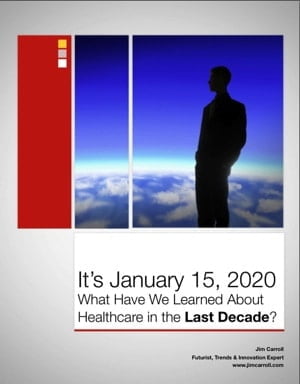
Grab the PDF by clicking on the image on the right!
What is clear to me from a number of recent keynotes for health care executives is that they all know that some pretty major change is needed, and it goes well beyond health care reform. There are a number of huge trends coming together which I cover in my It’s January 15, 2020: What Have We Learned About the Healthcare in the Last Decade trends summary.
Here’s the keynote topic which has gone out, which already generated some pretty substantial interest from healthcare executives interested in getting ahead of the trends through innovation.
Healthcare 2020: The Transformative Trends That Will REALLY Define Our Future
When Jim Carroll began a recent keynote talk for the Minnesota Hospital Association CEO Summit, he announced that he wouldn’t even mention health care reform — and the audience of 300 senior executives cheered! Instead, he told the audience that he would take them on a voyage to the world of healthcare in the year of 2020, and provide them the insight they really need to deal with the challenges and opportunity of the future.
Everyone in a leadership position in the US health care system knows that even with health care reform, the challenges facing the US health care system are substantial and immense. That’s why innovation has quickly come to be one of the top issues that senior healthcare executives and medical professionals are thinking about. There is a realization that there is an urgent need to challenge the very philosophies upon which the system is built. They’re seeking insight into the major scientific, technological, consumer and social trends that will, by the year 2020, allow for some very dramatic change in the concept of health care delivery.
Where will we by the year 2020? We will have successfully transitioned the system from one which “fixes people after they’re sick” to one of preventative, diagnostic genomic-based medicine. Treating patients for the conditions we know they are likely to develop, and re-architechting the system around that reality. A system which will provide for virtual care through bio-connectivity, and extension of the hospital into a community-care oriented structure. A consumer driven, retail oriented health care environment for non-critical care treatment that provides significant opportunities for cost reduction. Real time analytics and location-intelligence capabilities which provide for community-wide monitoring of emerging health care challenges. “Just-in-time” knowledge concepts which will help to deal with a profession in which the volume of knowledge doubles every six years. That and much, much more.
The fact is, we are going to witness more change in the world of health care in the next ten years than we have seen in the last 200. And that’s why organizations have been engaging Jim Carroll. For the last fifteen years, Jim has been providing his guidance into future trends to a wide range of global Fortune 1000 companies, associations, and other groups. In his Healthcare 2020 keynote, Jim puts into perspective why innovation is no longer just a fashionable phrase — it’s the critical new leadership focus for executives in the health care sector. Jim has captivated management teams and health care professionals in keynotes for major US health groups as the St. Joseph’s Health System, Blue Cross Blue Shield of North Carolina, Cardinal Health Care, Providence Health, Harvard Pilgrim Health Care, the Association of Organ Procurement Organizations, and the American Society for Health Care Risk Management to name but a few. He was the closing keynote speaker for the 4th annual World HealthCare Innovation and Technology Congress in Washington DC, which featured a virtual who’s who of the health care scene in the US today.


GET IN TOUCH
Jim's Facebook page
You'll find Jim's latest videos on Youtube
Mastodon. What's on Jim's mind? Check his feed!
LinkedIn - reach out to Jim for a professional connection!
Flickr! Get inspired! A massive archive of all of Jim's daily inspirational quotes!
Instagram - the home for Jim's motivational mind!