

Jim Carroll opened the Pennsylvania Hospital Association’s (PHA) 2012 Annual Meeting with a keynote titled ‘Moving Beyond the Meltdown: Aligning Yourself for Growth Through Innovation,’ delivered to healthcare executives gathered in Austin, Texas. The PHA Annual Meeting brings together hospital and health system leaders from across Pennsylvania to engage on the most pressing policy, strategy, and operational challenges facing the sector. At a time when healthcare was navigating the early implementation of the Affordable Care Act and deep uncertainty about reimbursement and delivery models, Jim’s message — that growth through innovation was the path forward — was both timely and galvanizing. His session ran as the event’s opening keynote from 8:00 to 9:30 AM, setting a forward-looking tone for the entire meeting.
Video: Speed is the New Metric in Food and Retail
From my keynote earlier this year at the International Dairy, Deli and Bakery Association, a clip that outlines faster change — in consumer taste trends, societal change, technology — drives the need for speed being the new success factor in the food industry in terms of retail.

The clip certainly ties in to what is one of the most popular pages on my Web site: “Food Industry Trends 2011: Report from a a keynote.” Watch the above, and then read the post – you’ll find the link below.
Announcing the Availability of Custom Print Runs of “The Future Belongs To Those Who Are Fast”
Here’s an exciting option for those who are looking to book for a keynote, and want to provide something special to their attendees.

I can now offer a custom print run of my book The Future Belongs to Those Who Are Fast. You get:
- prominent mention on the cover
- four custom pages bound inside the book which you can use as your own custom Foreword for the book
We can do this for print runs of as small as 100 books, at a very attractive cost. Contact me for details.
Here’s an example of how it works: I recently keynoted the 2012 Blanchard Summit, hosted by Ken Blanchard, author of the One Minute Manager.
In this case, his son and business partner Scott, wrote the Foreword for the book. As you can see on the cover, this fact is prominently mentioned.
Then, right after the introductory page and table of contents, Scott provided a four page Foreword that spoke about the key theme of the 2012 conference, and how this book and my keynote would provide the necessary content and direction to that theme. (In this case, their theme was “Fast Forward: Lead, Innovate and Cultivate.”)
You might find this to be an interesting option if you would like an additional way to hammer home your key agenda and points from your conference, event or meeting.
Or, you might find this to be a powerful tool to draw in sponsorship dollars — your sponsor has the opportunity to have a custom book with a key message that is provided in hard form to every single attendee.
If you are interested in exploring this option, please contact me. I can send to you a sample copy of the book so that you can see what it looks like.
Essentially, all we need to make it work is advance notice, and receiving the text for the custom 4 pages from you at least 8 weeks in advance.
We’re very excited as we think this provides event organizers with an additional new method of emphasizing a key conference theme.
Contact me for a quote and for a sample copy!
Announcing the release of Learning In Thin Air!

I am just so absolutely proud of my wife Christa, and equally as proud of my good friend Scott!
Today marks the availability of Learning in Thin Air by Scott Kress.
Christa has worked relentlessly as the editor, designer AND publisher for the book of our good friend, Scott Kress, over the last six months. She designed the cover, the inside layout, the entire thing from start to finish … with help from our son Willie, who did a ton of Photoshop work on the inside of the book. An amazing project!
And it’s a pretty amazing book, retelling the story of Scott’s remarkable adventure summiting Everest, and his 20 year journey as a mountain climber (many other peaks) and how this evolved into him becoming a business / leadership expert at Rotman, the University of Edinburgh and more.
Consider grabbing a copy! This is the second unique book released by our publishing arm, Oblio Press!
We previously published The Tiniest Warrior of all for our good friend Nicola JD Maher, a specialty book written for children who have a premature sibling. We undertook that book way back in 2005.
Oblio Press is out publishing arm, and also brought to print my own books, The Future Belongs To Those Who Are Fast, Ready Set Done: How to Innovate When Faster is the New Fast, and What I Learned from Frogs in Texas.
I’d encourage you to purchase a copy of Scott’s book ASAP — you’ll find it to be a compelling and fascinating read
- Learning in Thin Air

- Tiniest Warrior of All
- Oblio Press

A Keynote for the 2012 Blanchard Summit!
I was thrilled to be invited to keynote Blanchard Summit 2012, hosted by Ken Blanchard, well known author of The One Minute Manager, one of the top 5 bestselling business books of all time.
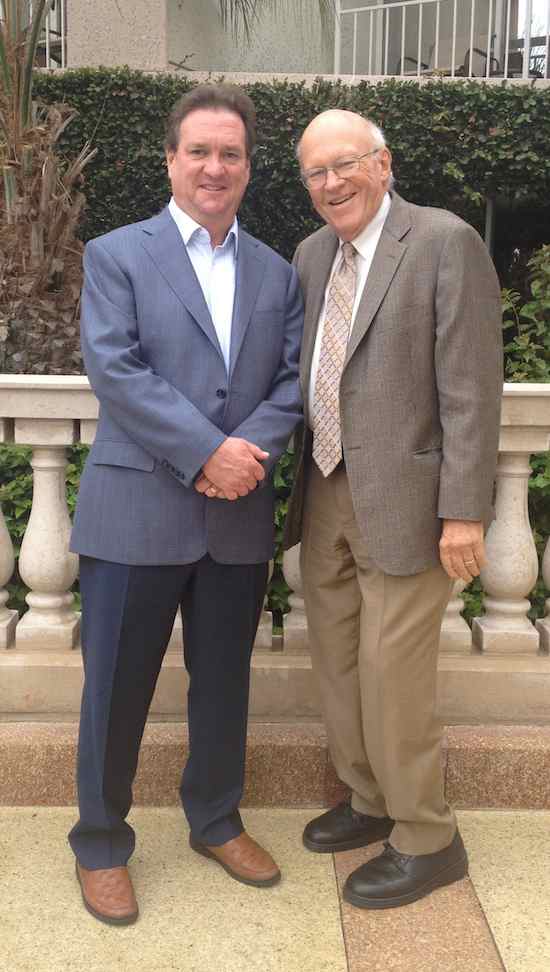
What did my keynote focus on? Certainly my key theme of “What Do World Class Innovators Do That Others Don’t Do?”
But I then spun this into the issue of how do you align talent and skills to world class innovation capabilities.
Certainly there’s been a lot of talk about the skills crisis lately. Most of it is focused on the wrong thing — people seem most worried by the fact that a lot of baby boomers are set to retire, and are taking their skills out of the economy. Or, an ongoing focus on how unique Gen-whatever is….
Those are big issues, but that’s not the big issue. I touched on that during my keynote at the Blanchard summit.
If an organization is to survive the high-velocity economy and achieve world class innovation capabilities, it needs to be doing a lot of innovation with the 10 Unique Characteristics of 21st Century Skills:
- skills are more specialized. Rapid knowledge growth means that it is increasingly difficult for people to keep on top of what they need to know. That means people need to specialize; knowledge niches are the reality for most professions and careers. As they specialize, simple supply/demand reduces skills availability, leading to skills inflation. It’s going to cost more to get the right specialized skills — that’s a big problem.
- skills are disloyal. A recent survey out of Belfast indicated that 36% of people indicated that on their very first day on a new job, they were already thinking about looking for another job! I don’t think that’s unique to the Irish — (and I am of Irish descent….) — I believe that it confirms that a massive philosophical shift towards a “job” and “career” is underway. The death of corporate loyalty means an increasing difficulty to get the right skills.
- skills are degradable. The half life of knowledge is decreasing at a furious rate. Most organizations are discovering that the skills they do have are becoming increasingly useless as knowledge obsolesence takes hold. Skills are ready to walk out the door as soon as they arrive — and if they hang around, their value decreases rather quickly!
- skills are renewable: Fortunately, out of date skills can be given new life. if people and companies can develop the ability to generate just-in-time-knowledge — a phrase I coined over a decade ago — they’ll learn how to adapt and evolve.
- some skills have no urgency: The challenge is that a lot of skills don’t really worry about the points above. Some professions, and many staff in organizations, simply don’t think about the reality of skills extinction as a real trend. They have no desire to upgrade, enhance, or change their capabilities. The lack of urgency leads to a sclerosis that impacts the overall ability of the organization to change, innovate and create.
- skills are disposable: The unique thing about skills today is that companies clearly don’t need staff anymore — they simply need the right skills at the right time for the right purpose. After that need has gone, they will need different skills for a different purpose. In the high-velocity economy, the idea of a permanent skills base is a quaint concept from the 20th century.
- skills are increasingly portable. That’s the good thing we’ve learned with globalization: with the depth of the emerging skills crisis, it doesn’t really matter anymore where the skills are — as long as you can get them, that’s all that counts!
- skills can be transferable: the boomer retirement issue is real. Smart organizations are spending big money to ensure that important knowledge is captured, retained and archived.
- skills should be experiential. This goes back to my ’21st century capital’ post: I think that one of the most important assets a company requires is the depth of it’s experiential capital — that is, the knowledge is has learned through innovation, risk, failure and success. Boost that skills capability and you’ve done something that flows onto the bottom line.
- skills are generational: We’re going to have a lot of active 80 year olds in the economy as the end of the concept of retirement draws near, at the same time that companies seek skills from bright, knowledge aggressive 15 year olds. We are going to have the longest life-span economy that has ever existed. If we prepare for that culturally and organizationally, we’ve got a good strong plan for dealing with the skills challenges of the future.
Some months back, in an entry I wrote a blog entry on the concept of “21st century capital”. One item I included was the concept of capital including a “strong skills accessibility capability”, noting that “talent, not money, will be the new corporate battlefront …. “
That’s an important battle, and it’s going to require a lot of innovation and creativity in terms of solutions.
Years ago, I wrote a little PDF that focused on these capabilities of 21st century capital. You can grab a copy by clicking on the image below.

Rethinking Innovation in the Energy Sector
Earlier this year, I was invited to open the Southern Gas Association in Austin, Texas. In the room, I had about 800 of the most senior executives in the natural gas industry in the US, including utilities, distributors, exploration companies, producers and suppliers. It was a pretty heavy-duty crowd. This was one of several high-profile events I led off in the energy sector — I was the opening keynote, for example, for the 2012 Accenture International Utilities and Energy Conference.
At the close of my talk, I reframed the concept of innovation for the group:
It’s a great little synopsis of how you can rethink the concept of innovation – run, grow and transform the business!


GET IN TOUCH
Jim's Facebook page
You'll find Jim's latest videos on Youtube
Mastodon. What's on Jim's mind? Check his feed!
LinkedIn - reach out to Jim for a professional connection!
Flickr! Get inspired! A massive archive of all of Jim's daily inspirational quotes!
Instagram - the home for Jim's motivational mind!