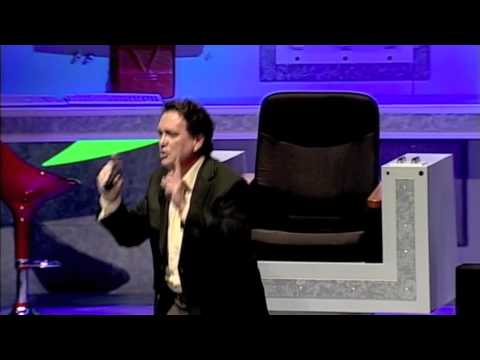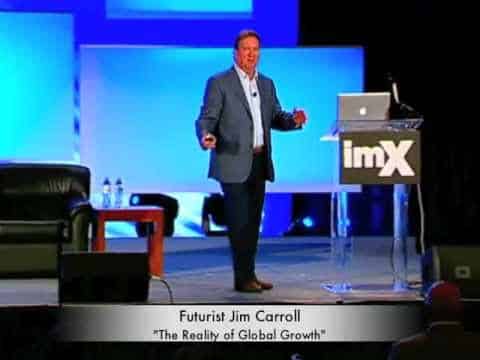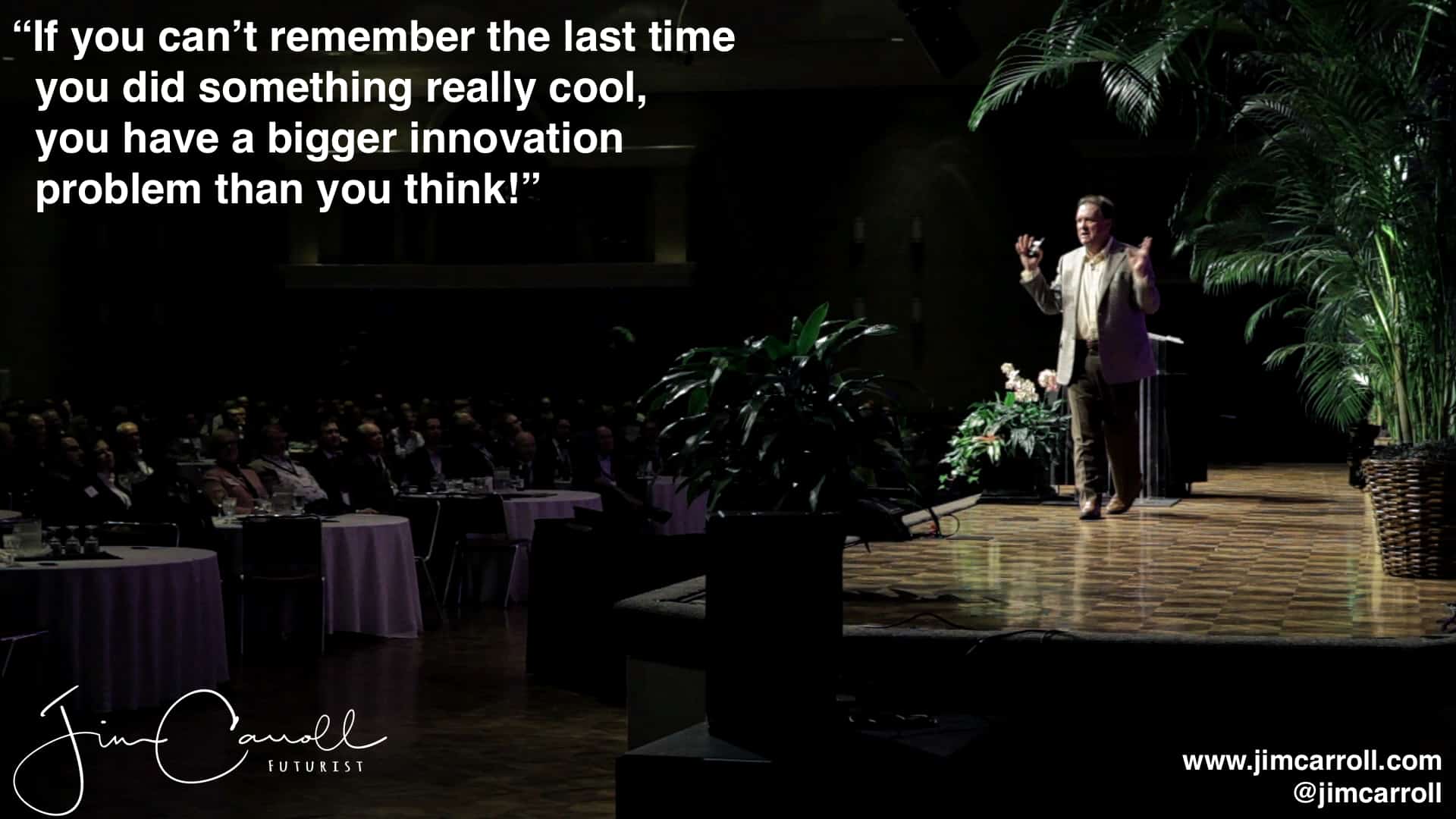
Jim Carroll was a featured keynote speaker at the CSC Executive Exchange 2011, held July 17–20, described by program materials as one of the world’s leading futurists and a ‘Scientists & Thinkers’ voice for a high-level executive gathering. CSC (Computer Sciences Corporation) convened its Executive Exchange as an invitation-only event for CIOs, technology executives, and senior business leaders to engage on the most pressing strategic technology and innovation questions facing global enterprises. Jim’s session brought a far-horizon perspective on the trends and disruptive forces that would reshape enterprise technology, business models, and organizational capability over the coming decade. His appearance alongside other leading thinkers made this one of CSC’s most forward-looking executive events.
Upcoming European keynotes
I’m off to Europe to keynote two events; the first, a private talk on future health care trends for a major European organization.
The second is in St. Andrews Scotland, where I will be speaking to a a group of business executives.
Yes. I will golf.
The family is coming along, and so I’m otherwise busy.
If you do need to reach me, send me an email or call. I will be checking messages once in the morning, and once at the end of the day.
Enjoy your summer!
Insurance 2020: Bold moves, turning concepts upside down!
In the last few weeks, I’ve done a number of insurance oriented keynotes, including one for a meeting with the CEO and top leadership team of one of the largest insurers in the world, as well as a top insurance association.

And I’ve been busy speaking to the trends and opportunities for innovation that are going to come into this often-slow-to-react industry at lightning speed.
In an era in which everything around is plugging together, there are tremendous new opportunities for some pretty massive business model change. I often make a joke on stage that perhaps one day my weigh scale might send an email to my fridge one day if I’m not living up to the terms of my life insurance wellness clause.
Yet, is such thinking far fetched?
Maybe not!
One of the biggest trends which is going to hit the world of insurance like a tidal wave is performance based insurance policies. If you live up to or exceed some performance standard, you’ll get a rebate or reduction on your insurance policy rate.
It’s going to happen extremely quickly in the field of automotive insurance. A flood of GPS enabled performance measuring devices will soon come to inhabit most automobiles throughout the industrialized world. Insurance companies will set a policy price, and then give you a rebate if you exhibit better than average behavior.
Consider a program already underway in the UK:
Insure The Box measures drivers’ mileage, when they drive, and how they drive. Excessive G-forces, sudden braking or cornering and long periods of driving without a break are monitored.
Policyholders are charged by the mile and motorists initially pay for 6,000 miles. Once these are used up they can buy more miles as they need them. Policyholders are rewarded with “free” miles if they drive safely.
Money: A spy in the car that could cut cost of cover for young drivers
The Guardian, UK, April 2011
You can expect most North American insurance companies to roll out similar technology and performance. Or maybe not — some organizations won’t have the speed, agility and flexibility to do this at the pace that the market, competitive and customer pressure will require.
The result is a classic opportunity for big business model disruption.
The same type of thing is going to occur in the world of life insurance.
It has long been the assumption that despite the rapid emergence of genomic, preventative medicine, that it would never be desirable, ethical or even fair to underwrite policies based on a DNA test.
I’m a believer that this is a pretty big assumption to make. History shows that assumptions that underlie a business model barely last. When I speak about innovation, I advise people it’s often best to challenge assumptions — those who don’t often miss the biggest opportunities.
Clearly, we know that there are some powerful trends at work:
- the cost for a DNA test that can be used to predict with a high degree of accuracy the disesases and conditions you will inherit in your lifetime is set to collapse, as Moore’s law comes to drive the cost of DNA sequencing machines that do the test
- hence, greater numbers of people will have the opportunity to gain such insight (whether it be good or bad)
- those who have a test that shows a life that will be relatively disease and condition free would likely be able to offer themselves up to a group of speciality insurers and get a policy discount compared to the average population
Again, there’s opportunity for big business model change and upheaval as this happens.
So too is the concept of a rebate of your life, medical or disability insurance, if you can prove that you are taking regular, active steps to ensure that you are in good health. Certainly there are those in the the health care system, who know that with the massive challenges in front of, the system, a lot of big, bold transformative thinking is necessary.
A federal grant program authorized in the health overhaul law is offering states $100 million to reward Medicaid recipients who make an effort to quit smoking or keep their weight, blood pressure or cholesterol levels in check. The grant program is meant to encourage states to experiment with an uncertain approach to wellness: offering incentives for healthy behavior.
Healthy behaviors pay off; Medicaid recipients who commit to improving their health will be eligible for financial rewards, Los Angeles Times, April 2011
Extend this type of thinking into what comes next in our hyperconnected world — individuals who monitor their blood pressure, glucose levels and other vitals that they are willing to share with their insurer. Exercise and wellness apps on their iPhone that they can use to demonstrate the commitment to a regular series of workouts. Adherence to a personalized lifestyle plan — with insurance cost reductions based on performance.
This type of stuff isn’t far-fetched at all. And it’s going to hit the insurance world quicker than it thinks.
Then there’s the issue of the underwriting of insurance risk. Today, in the life insurance industry, you must undergo a battery of medical and blood tests so that they can make an assessment as to whether you are insurable.
Tomorrow will be completely different, and it will be here before the industry knows it:
“Assuming privacy regulations require it, by 2020 underwriting will consist of one question: ‘Can I look up everything about you?’”
The Next Decade in Innovation, Insurance & Technology, May 2011
Tomorrow? They might simply look you up on Facebook, and based on what they see, come to a decision as to whether they will insure you or not.
Farfetched? Not at all! In fact, some in the insurance industry are already talking about it:
“Insurers are preparing to use people’s Facebook profiles and online spending habits as a way of setting premiums based on their lifestyle. The Sunday Times, December 2010
The article goes on to note:
“Studies for the insurers suggest that people’s online data detailing their food purchases, activities and social groups can be as good an indicator of their life expectancy as conventional medical examinations.
The trials were conducted by Deloitte Consulting LLP and showed that consumer data, based on a sample of 60,000 people, was as effective in identifying potential health risks as if the applicant for insurance had gone for a blood and urine test
Aviva, one of Britain’s largest insurers, is planning to introduce the new “predictive modelling” in Britain next year after studying the results of trials in America. Swiss Re is also working on a similar scheme.
The Sunday Times, December 2010
The bottom line is that in the next several years, at a very fast paced, the world of insurance is going to be challenged through innovation involving analytics and predictive modelling, performance based policies, and a whole series of other opportunity.
The future will belong to those who are fast!
“We’re going to think big, start small, and scale fast” – Experiential capital and the PGA
Here’s a video clip from my opening keynote for the 94th Annual General Meeting of the PGA of America, in which I talk about the necessity of “thinking big, starting small, and scaling fast,” and of the importance of the concept of experiential capital as a foundation for innovation.
I’ve written and spoken about the concept of experiential capital quite a bit through the years – I think in a fast paced economy its one of the most important innovation strategies
that we can undertake.
One particularly good post which can help you get thinking about this concept is “Understanding 21st century capital: Why it’s not just financial capital anymore“, in which I wrote”
Experiential Capital. In a world in which Apple generates 60% of its revenue from products that didn’t exist four years ago, it’s critically important that an organization constantly enhance the skill, capabilities and insight of their people. They do this by constantly working on projects that might have an uncertain return and payback – but which will provide in-depth experience and insight into change. It’s by understanding change that opportunity is defined, and that’s what experiential capital happens to be. In the future, it will be one of the most important assets you can possess.
I also write about the idea in my book Ready, Set, Done: How to Innovate When Faster is the New Fast, where I made this observation:
“Innovation comes from risk, and risk comes from experience. The most important asset today isn’t found on your balance sheet – it is found in the accumulated wisdom from the many risks that you’ve taken. The more experiential capital you have, the more you’ll succeed.”
I close with the observation: “Investing in experiential capital is one of the most important things you can do.”
When people ask me about the “secrets” of innovative organizations, this is one of the key attributes I outline. They realize they are immersed in a world of fast-paced ideas — and they take on many different projects, some of which are doomed to fail, in order to build the overall experience of the organization.
Which begs the question: how many experiential oriented projects do you have underway that involves new technological platforms, social network and branding or marketing projects; business model innovation or any other number of ideas?
Food industry trends 2011 – Report from a keynote
It’s been a whirlwind of activity over the last two months, with about 20 major keynotes under my belt.
One of these was a corporate event for a food company with $7 billion in revenue and 24,000 employees ; my talk was on the key food industry trends of today that should be driving innovation from a marketing, product development and branding perspective.

This is one of many events I do for food and consumer product clients – my global client list includes high profile keynotes or leadership meetings for the Readers Digest Food & Entertainment Division (the publisher of such innovative magazines as Everyday with Rachel Ray), the Produce Marketing Association Annual Fresh Summit, HJ Heinz, Nestle , FMC FoodTechnologies, Burger King, Yum! Brands and many more.

I was the keynote speaker for a meeting of their top 250 marketing executives; my mandate was to focus on how to innovate around the trends that are today impacting the food industry today, with a particular focus on consumer behaviour.
Below are a few of the many trends that I spoke about. I took on an extensive amount of research for this keynote, which is typical of how I approach these events.
In effect, I built my keynote around the theme “….these are the trends that will drive your brands……”, and from that, they could best learn how to change and innovate with their branding and marketing message.
1. Biggest trend: We are witnessing a changing relationship with food
My main observation is that we live in a period of time that sees consumers interacting with food, the purchasing of food, and the consumption of food in new and different ways.
An article, Observer Food Monthly in the Guardian Newspaper, 15 May 2011 caught this sentiment perfectly:
- “… never before has our culture been so engaged in discussing and experimenting with and agonizing over and fantasizing about and plain enjoying what is on the end of our forks”
Consider what is happening:
- we have a new form of interaction when purchasing food. Consider the number of iPhone apps by which we can research calorie counts, nutrition facts and other information while in the grocery store.
- we have new influencers in how we make these in-store food decisions. Think about the Monterrey Aquarium Seafood Watch iPhone app, which will give you background that can help you with your ethical food decisions.
- a change in how we manage our food intake. iPhone and Web sites apps such as Lose It, which allow us to track our food consumption on a calorie-by-calorie, product by product basis.
- a change in food packaging: ““…..interactive packaging, intelligent and active packaging, multi-sensory packaging, edible packaging … packaging as mini-billboards…” as noted by the research firm Reportlinker. Paackaging is going from passive to active, and is becoming more than just the vehicle for branding – increasingly, it is defining our relationship with the food.
- a change in our food relationships. Consider the impact of food traceability based on DNA. “Tonning’s restaurant is among more than 11,000 that Richmond-based food distributor Performance Food Group is supplying with DNA-traceable beef as an added value for customers of its premium Braveheart brand. The company, which has annual revenues of about $11 billion, said it is among the first distributors to use the technology.” Where’s the beef, Iowa Press Citizen, May 2011
- A more direct involvement with the ethics of food. “Wal-Mart, which sells more than 20 per cent of all US groceries, is developing an eco-labelling program that will give a green rating to all items sold in its 7500 stores worldwide.” Unlikely alliance, Sydney Morning Herald, February 2011
- and very significant transitional trends. “Whole grains are the hottest trend in sliced bread, with whole wheat edging out soft white bread in total sales for the first time……… The whole-grain craze has, after all, raised the bar on what consumers are willing to pay for bread that’s perceived as healthy…..” Grains gain ground; Focus on healthy eating helps wheat surpass white in sliced bread sales 1 August 2010, Chicago Tribune
All in all, these are pretty significant, systemic, long term transformative trends that will have a major impact through the next 5-10 years. Smart food companies will recognize that the very nature of our relationship with food is changing and will innovative around that reality. Massive opportunities for innovative thinking exist here!
2. A need to respond to faster consumer preference/taste change
I’ve long been pointing out that consumer preference is changing faster when it comes to food, and that leads to the rapid emergence of new opportunity, or the rapid decline of existing product lines. A few of my observations:
- behavioural change and food as fashion! Fresh-cut snack food grew from $6.8 billion in to $10.5 billion in one year. Notes one publication: “Snacks are like a fashion category…..People want a change. it’s going to be short-lived–maybe a quarter, maybe six months, then changed out” Private Label Buyer, May 2010.
- We spend more of our day with our food – it’s not just breakfast, lunch and dinner anymore. Canadian consumers are snacking more frequently. Snacks were 24% of all “meals” consumed by 2010. Fruit leads in the category, and healthy snacks are driving growth – the top 7 snacks include yogurt and granola bars.
- Food categories can explode in growth over night. US Greek Yogurt sales grew from $33million in 2007 to $469 million today!
The key point with all of these trends is that it reflects our busy, compressed lives — smart food companies will continue to learn how to innovate within that reality with new products, aligning themselves to health concerns, and other trends.
3. The impact of business model change and social networks on food and taste trends

Clearly, massive connectivity is coming to influence the growth of new foods, brands, tastes, patterns.
I spoke, for example, how bacon has quickly become so trendy as something used to enhance countless recipes. It can be traced right back to an effective social networking campaign.
- “If there’s one food trend that illustrates how top-down and grassroots phenomena combine it might be bacon….. in southern California about six years ago, Rocco Loosbrock paired peppered bacon with Syrah wine at a tasting….”swine and wine…..!” The mysteries of food trends: How bacon got its sizzle, Associated Press Newswires, March 2011
- In the last few years, we’ve seen an explosion in the number of pop-up restaurants and “Eat St” food – street food!
- what is happening here is a lower barrier to entry in terms of new restaurant start up cost — more people can get out and start out a restaurant as “street food”, and experiment with new, bold, and exotic tastes and flavors
- there’s also a very big trend underway that links restaurants and markets together in one location. Go to the restaurant, like the food and want to cook it at home next time? Visit the market in the same building, and buy the exact ingredients for that exact recipe. We call these Resto 2.0’s : for example, Murray’s Market in Ottawa, based on locally farmed food, “….sells cheeses, meats, produce and house-made foodstuffs, providing customers with many of the same raw ingredients they use as their restaurant next door.” Globe & Mail, June 1, 2011
- all of these trends involve a new breed of restaurateur / entrepreneur; they’ve learned to link these efforts with very effective social network campaigns. The result is that we now have even faster emergence of new taste trends. Smart food companies will learn how to innovate around the sheer velocity of what is occurring here – ‘faster is the new fast!’
My key point? Innovation is all about time to market … and the brand message needs to match the new speed metric…
4. A new consumer volatility
Back in 2009, I keynote global events for both Burger King and Yum! Brands. One of the major points in both keynotes was the consumer and public health concerns would come to drive more of a focus on a healthier diet; hence, the need for more aggressive innovation around a balanced menu that offered up more healthier choices.
Since then, looking back, it looks like one chain took the message to heart, and the other didn’t. Can you guess which ones?
What’s happened since then? Restaurant chains — and by extension, food companies — are discovering that consumer activity has become very volatile. They might talk of the need to go out and eat healthier, but then go out and continue to buy big, fat juicy cheeseburgers.
But then the news continues to hammer home the cold realities of North American food lifestyles, and the impact of childhood obesity.
- over the past 30 years, childhood obesity rates in North America have tripled
- 1 in 3 children are overweight or obese
- 1/3 of all children born in 2000 or later will suffer from diabetes at some point in their lives
- many others will face chronic obesity-related health problems like heart disease, high blood pressure, cancer, and asthma
Add to that new messages from Michelle Obama, Jamie Kennedy and other influencers around this debate — and all of a sudden, behaviour begins to change faster than people expect. Consider comments in the article Dining chains shape up menus ;Customers place low-cal orders now, 13 April 2011, USA Today
- :Something odd is afoot in restaurants where Americans have typically gone to gorge: healthier grub. This nutritional U-turn is taking place at some of the unlikeliest of eateries, including Denny’s, IHOP, Friendly’s, Sizzler and even at the nation’s biggest casual dining chain, Applebee’s, where the numbers are eye-popping.“
- “For the first two months of 2011, the top-selling entree at Applebee’s wasn’t a gloppy burger or flashy fajita plate. It was a sirloin and shrimp entree from the chain’s diet menu. This marks the first time that a low-calorie item ever ranked as the chain’s best seller for a single month — let alone two in a row.“
- “I’ve been in the restaurant business for 30 years, and I’ve never seen anything like this,” says Mike Archer, president of Applebee’s.
- “When Applebee’s launched the under-550-calorie menu in 2010, it didn’t immediately take off, says Archer. But after some tweaks, it caught fire early this year. It now accounts for up to 8% of sales”
8 percent of sales! For healthy options! The key innovation opportunity is to keep innovating with food and taste trends around trends such as health, local, regional. The consumer is volatile, and will change faster than ever before.
Key marketing and branding innovation points?
- consumer behaviour is now more unpredictable than ever before!
- sudden, dramatic shifts driven by sudden external influences or other pressures are the new reality
- it’s easy to abandon marketing momentum / commitment due to slowness of trend (i.e. healthy lifestyle – consumers say one thing, and do another!)
- yet success from ability to quickly rejig marketing message based on trend spikes – speed matters!
And so branding innovation is … sticking to the message behind the key trends, even if the trends unfold at a curious and unpredictable pace….
I spoke about many other trends within the keynote, particularly the impact of mobile marketing and moving into hyper-nice marketing. I’ll cover more of that later.
This is typical of the type of unique research I often do for a keynote. If you are interested in bringing me in to a leadership meeting at your corporate organization, feel free to give me a call!
Keynote Presentation: A View Toward 2020: What Should Medical Publication Professionals Should Be Doing Now?
Back in April, I opened the 2011 International Society of Medical Publication Professionals annual conference in Washington. Their newsletter on the conference is now out, with a report on my keynote.
The meeting opened Monday afternoon with Jim Carroll’s keynote presentation, which focused on the importance of innovation and on future changes that may occur with healthcare and the practice of medicine.

According to Mr. Carroll, “So much change is going on in the world today that every organization is struggling with what will happen in the future.” To drive home the point that “the future belongs to those who are fast,” Mr. Carroll shared three statistics that he carries with him:
- 65% of children in preschool today will work in jobs that do not yet exist
- 50% of material learned in the first year of a college-science degree will be obsolete by the time of graduation
- • A manufacturer has only 3-6 months to sell a new digital camera before it becomes obsolete
To highlight the rapid pace of technology, Mr. Carroll used several interactive “text” polls where he asked a question of the audience who used their cell phones to text in their answers. Mr. Carroll noted that the world is changing quickly and that 2-3 years ago, very few people would have been comfortable texting a response to a question asked at a meeting.
Mr. Carroll then discussed how companies need to embrace the rapid speed of innovation to remain successful. He described how the head of innovation at General Electric studied innovation during times of economic downturn and found that 60% of companies barely survived such a downturn. However, the 10% of companies that focused their dollars on innovation were the companies that came out in a positive position when the economic recovery happened. Those that didn’t developed “organizational sclerosis,” which shuts down the ability to innovate and adapt to changing environments.
Mr. Carroll then quoted from his book: “Some people see a trend and see a threat—other people see the same trend and see an opportunity.”
Over the next 10 years, Mr. Carroll predicted that major changes will occur regarding healthcare, the environment, and energy. He then described several trends that will result from these changes including:
- Movement to a model of preventive healthcare.
- Embracing Health 2.0 (referring to when patient records are all electronic).
- Connecting all relevant devices. For example, a cell phone connected to a biometric sensing system could allow your doctor to monitor your blood pressure via your phone. As a result of bioconnectivity, more healthcare will occur through virtual care instead of at hospitals, extending the reach of the primary care provider to the home.
- Utilizing the power of the cloud, which is the mass of data that exists on remote servers or social networks (outside of hard drives).
- Delivering medical knowledge to providers as needed (ie, the concept of “just in time knowledge”). Mr. Carroll noted that medical knowledge is doubling every 8 years.
- Developing systems that can handle the new scientific velocity.
- Developing innovations based on an optimism for the future.
Challenges for such innovation may include the velocity of change, ethics (what is considered ethical may vary in different parts of the world), and the ability of regulatory systems to keep up with scientific velocity.
Mr. Carroll concluded by stressing how ISMPP needs to become more aggressive in educating others about the important role of those involved in developing medical publications. Mr. Carroll ended his talk with what he described as Ten Great Words:
- Observe – Pick up knowledge.
- Think – Think about the message and how to provide Big Bold Solutions.
- Change – What can you change personally?
- Dare – Watch for 3 ideas you think you would never do and then try them.
- Banish – Discard anything that is an innovation killer.
- Try – Try 3 things you said you would.
- Question – Challenge the assumptions.
- Growth – Challenge yourself to grow.
- Do – What do I, myself, need to do?
- Enjoy – Enjoy what you are doing!


GET IN TOUCH
Jim's Facebook page
You'll find Jim's latest videos on Youtube
Mastodon. What's on Jim's mind? Check his feed!
LinkedIn - reach out to Jim for a professional connection!
Flickr! Get inspired! A massive archive of all of Jim's daily inspirational quotes!
Instagram - the home for Jim's motivational mind!