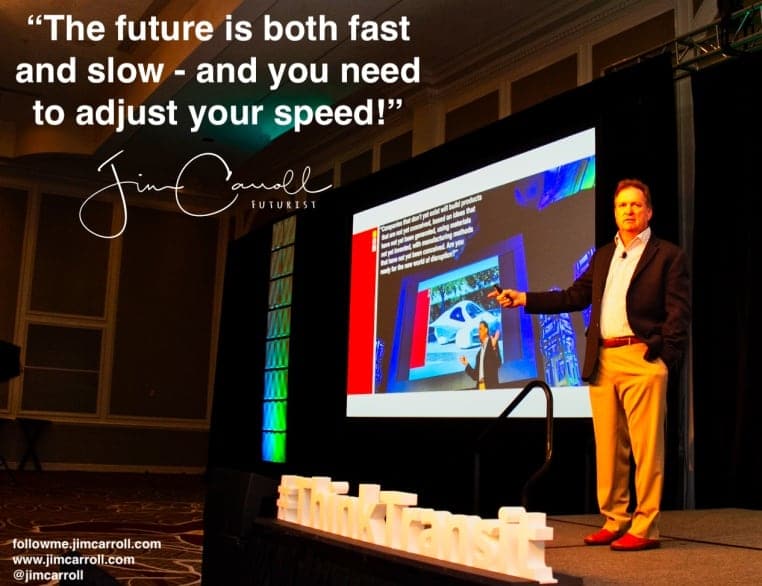
Jim Carroll was a keynote speaker at the Texas Municipal League (TML) Annual Conference, speaking to one of the largest gatherings of municipal government officials in the United States. TML’s annual conference brings together mayors, city managers, council members, and municipal staff from across Texas to engage on policy, best practices, and the strategic challenges facing local government. Jim brought a futurist perspective on the trends reshaping cities, infrastructure, public services, and the expectations of citizens — challenging municipal leaders to think about innovation not just as a private sector phenomenon but as an imperative for modern government. His session was listed among the conference’s premier keynote programming.
The BIG food industry trend for 2012: Bold Goals, Big Bets
Health, wellness and food are set to become even more linked than ever before in 2012 and beyond.
That’s a significant trend that I’m witnessing right now through the various keynotes and consultations that I do with a large range of food / restaurant / consumer product companies, as well as the keynotes I do for major health care groups worldwide. I get to see what food companies are focused on; I get to see what healthcare groups and governments are worried about…..

In a nutshell, here’s what’s happening:
- the importance of health and wellbeing on a global national, political and healthcare system perspective is accelerating. We’ve got a big global problem, and nations and governments are racing to deal with it.
- the result is that there is a very significant effort by food companies to speed up their innovation engine with respect to their health and wellness product line – it’s being done to mitigate potential political risk down the road
- it’s also being done because it makes increasing business sense — as consumers worldwide begin to adjust their lifestyle, including their food intake, revenues of the health/wellness product line soars. One report suggests, the sale of heath and wellness oriented foods is expected to quadruple through the next five years.
- to help accomplish that, food and consumer product companies are make an increasing number of BIG BETS involving product development, and through even more vigorous M&A activities, that enhance their health and wellness product lines
Making BIG BETS involves establishing big goals. Consider just two examples of “BIG BET thinking”:
- “Frito-Lay, the biggest U.S. seller of salty snacks, is embarking on an audacious plan. By the end of the year, it intends to make half its snacks sold in the U.S. with only natural ingredients” You Put What in This Chip? 24 March 2011, The Wall Street Journal
- Pepsi intends to grow a $10 billion health and wellness portfolio to $30 billion by 2020
Savvy food companies know that globally, they face increasing national financial, political and healthcare risk. Quite simply, the world is getting fat, people are getting sick, and countries are not going to be able to afford the care for those suffering from the resultant lifestyle disease.
Here’s a clip in which I’m speaking to the annual general meeting of the Professional Golfers Association of America — the PGA! — on the depth of the obesity / lifestyle crisis.
Given this reality, and the economic volatility in Europe, the US, Japan and elsewhere as government revenue declines and spending soars, in 2012 and beyond we are going to see far more aggressive efforts by politicians and governments to reign in health care spending, including that related to lifestyle-disease. Nations simply can’t afford what is set to come in terms of spending.Much of this activity will come to involve far more aggressive efforts concerning preventative health care programs, including wellness and lifestyle management. We can expect governments and politicians to become far more aggressive with food companies when it comes to their food offerings.
There is a big political risk here on a global scale.
The result? Smart food companies are making BIG BETS right now to grow their health and wellness product lines. It makes great sense from a business sense; it’s critical in order to stay one step ahead of government trends in order to mitigate risk.
So how will food companies grow their health and wellness line of business? By accelerating internal innovation into health and wellness product lines, but also through some pretty aggressive M&A activity
- A report by Deloitte suggests that this will include increased M&A activity involving dairy, juice, health snacks and functional foods.
- Gerald Abelson, president of Canadian corporate finance group MNC Multinational Consultants recently observed that “health and wellness is definitely where you want to be in the next three to five years” in a discussion about global M&A activity in the food and consumer product sector in 2012 and beyond.
Big Goals – Big Bets.
That’s the focus for 2012 and beyond for most companies in the food and restaurant sector.
Background:
If you check the Health Trends section of this blog, you’ll find a post in which I write about the ongoing and significant challenges that the world faces with the rapid emergence of lifestyle disease and other challenges. Notes one comment in that post (“Trend – Confronting the Global Health Care Crisis”):
It’s the lifestyle disease that provides the biggest challenge in terms of scope: according to the Karolinska Institutet, Stockholm, “1.6 billion adults are overweight or obese worldwide and over 50 per cent of adults in the US and Europe fit into this category.”
with the resultant impact:
- “The number of adults with diabetes worldwide has more than doubled since 1980 to 347 million, a far larger number than previously thought and one that suggests costs of treating the disease will also balloon.” Global diabetes epidemic balloons to 350 million, Reuters Health E-Line, June 27, 2011
Lest we think that this is a problem only in the Western world, I also note that:
The challenge with lifestyle disease isn’t restricted to the Western world; the statin (cholesterol) drug market in China, India other “BRIC”countries is set to grow at rates of up to 25% compounded per year. In other words, developing nations are soon to see the same lifestyle diseases which are currently sweeping through North America and Europe.
When would YOU consider running for President?
From the Q&A portion of a recent keynote in Las Vegas – I’m on stage, have finished my talk, and get asked this question from someone in the audience!
Wireless & mobile health: A massive business model disruptor!
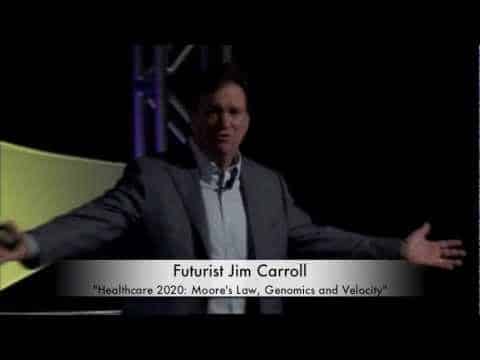
730AM, New Orleans, an audience of 4,500 executives. My keynote theme is “Today’s Trends – Tomorrow’s Opportunities.” I’m taking a look at the trends of Healthcare 2020 — the key trends that will provide for transformative opportunities in health care in the years to come. Trends that are unfolding today — one of them being the huge velocity behind wireless and mobile health applications, and the rapidity of changing patient / consumer behavior.
It’s a low-res video clip — I should have a higher quality version next week. But its worth a watch. (You need to turn the volume up!)
The statistics around mobile technology are, of course, well known, but worth repeating:
- It took two years for Apple to sell 2 million iPhones.
- It took 2 months for them to sell 2 million iPads!
- It took 1 month to sell 1 million iPhone 4’s!
- It took 1 day to sell 1 million iPhone 4s
- it’s estimated that Apple sold 5 million iPhone 4s’s in the first 4 days of release
But it’s what consumers are doing with these technologies that provide so much potential for innovation. With respect to health care, the numbers are quite staggering:
- 78% of consumers are interested in mobile health solutions
- medical and health care apps are 3rd fast growing category for iPhone and Android phones
- the Apple App store now has 17,000 health care related apps
- 60% of which are aimed at the consumer
What we have happening here is a massive trend in which people are changing their behaviours, actions, wellness, and day to day routines in which they actively manage their health circumstances through the personal digital assistants which are becoming an ingrained part of their lives.
Innovation is all about finding opportunity when business models change. The centuries old relationship between doctor and patient is changing in a massive way — driven with increased velocity by mobile and wireless technologies. This is HUGE.
This is a huge trend, and will probably provide one of the biggest areas for innovation in the world of health care out to the year 2020. I just wrote about this in a recent blog post – read “When Silicon Valley takes over health care innovation” for more.
Innovating in the era of the global idea machine – and the concept of “Just-in-time Knowledge”
If you want to known why you need to speed up your organization, spend a bit more time staring at an iPhone — or for that matter, any Apple device that you might happen to have in your home or office.
Think about the fact that Apple now masters such a torrid pace of product development that 60% of its’ revenue comes from products that didn’t exist four years ago. Then ask yourself if your organization could do the same thing.
Many of the organizations who bring me in for a CEO level leadership meeting, board retreat or staff event want to focus on a message that revolves around the idea of ‘how can we innovate faster.’ They recognize that increasingly, they too are becoming like Apple, in a world in which they must continually reinvent their products and services to stay relevant to their customers, or simply to keep up with the pacesetters in their industry.
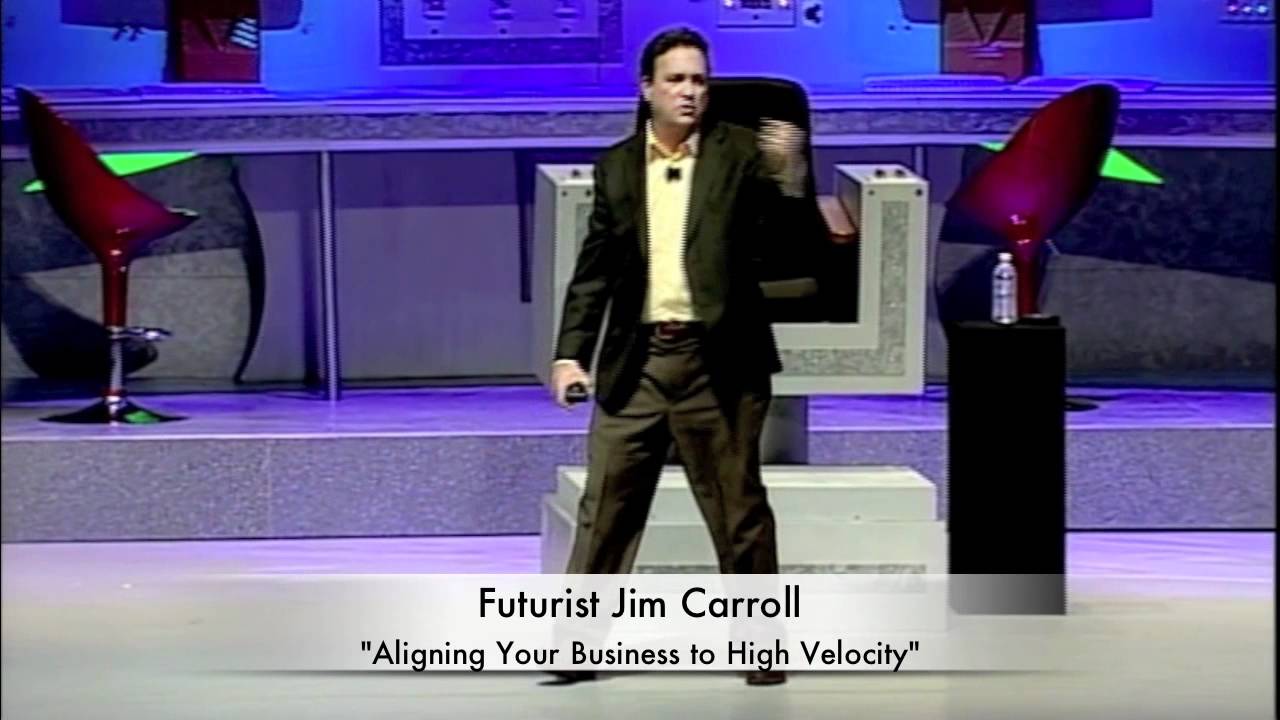
With that context in mind, watch this video from a recent keynote in which I talk about the how innovators align themselves for this world of fast-paced innovation by taking advantage of what I call the “big global idea machine.”
This is a great story, since it demonstrates how organizations are realizing that we are in a world of ever accelerating scientific velocity, driven by global collaboration, increasing speed with pure and accidental research, the impact of a global ‘tinkering’ culture, and other factors which are speeding up the discovery of new knowledge.
New knowledge drives new innovation — and its’ by learning to tap into new knowledge that you can accelerate your innovation cycles.
That’s where an increasing number of organizations have been engaging me — to help them understand how to speed up their knowledge ingestion capabilities. They know they have to do this because the shelf life of the product or service that they have in the marketplace is continuing to decrease at an often alarming rate. And in some industries, products are obsolete before they get to market. (Just ask HP with its’ new Tablet product, which was abandoned shortly after being brought to market!)
Think about that for a moment: we now find ourselves in a period of time in which innovation and change is occurring so quickly that the very concept of a product lifecycle is beginning to disappear. And just as product lifecycles collapse, so too does the half life of knowledge and the relevance of skills. It’s only by picking up the pace of reinventing that knowledge and skills that you can get ahead — and one of the ways to do that is through the “global idea machine.” Hence, people are focused on open innovation, global innovate idea sourcing, new forms of collaboration, and other methods to generate insight and knowledge faster — to speed up the process of R&D.
Whether I’m dealing with a company driven by rapid change in the medical, scientific, financial, mechanical or engineering knowledge, one thing is clear: the knowledge that a organization needs to succeed in the future is becoming infinitely more complex every minute, with a constant, relentless flood of that which is new. And from my perspective, the story of the Apple is becoming increasingly common — as every organization is driven by the same rates of change that are enveloping this global giant.
The bottom line is simple:
- the ability of obtaining rapid, instant knowledge generation is becoming an urgent necessity in almost every field of endeavor;
- the ability to quickly digest, understand and assess new knowledge is an increasingly important skill – one that not a lot of organizations have mastered;
- the ability to reformulate our thinking, assumptions and capabilities to respond to the constant change being thrust upon our organization is of increasing importance
In a nutshell, I coined the phrase “just in time knowledge” over a decade ago to describe the nexus of these realities. In the world of hyper-change represented by the Apple iPhone, it’s clear that we are already there.
Just in time knowledge involves a form of continuous learning that is instant, fast, and urgent. Think about situations where a need for JIT-knowledge is evident:
- Some estimates suggest that medical knowledge is now doubling every eight years. Rapid advances in new methodologies, technologies, treatments and methods of care evolve at a furious pace. In such a world, medical professionals can’t be expected to know everything there is to know within their particular field of endeavor. The new reality going forward for doctors, nurses and any other professional is that these professionals are increasingly forced to go out and obtain new knowledge, just at the time that they need it. The same holds true for pharmaceutical companies, medical device technology manufacturers, and anyone else remotely involved with health care.
- Sales based organizations are quickly discovering that furious rates of hyper-innovation in their marketplace require a sales force that is extremely adaptable, agile, flexible — and quick to understand the potential of new markets. If a product has a life of about six months in the marketplace, an organization can’t afford to waste any time in preparing to assault the market. The result is that there is an ever increasing need for sales based organizations gain deep, rapid insight into the sales potential of a new product line, while discarding the knowledge and understanding they have of the old product line.
- Mechanical engineers continue to see rapid developments in manufacturing methodologies, as well as a need to quickly master the art of managing ever more complex global supply chains. With increasing sophistication and agility in the manufacturing process, every engineer involved in process automation must have the ability to quickly gain insight and intelligence into leading edge issues associated with plant design, construction, automation, assembly, robotics, and all kinds of other complex topics.
The reality going forward? If an organization is to succeed in the future, it must be a master of the ability to succeed with just-in-time-knowledge.
Are you ready for the world of just-in-time knowledge? Here’s what you should do to answer the question:
- Undertake a knowledge turnover assessment. The first thing you need to do is get an accurate picture of just how quickly the issue of just-in-time knowledge is becoming a critical success factor in your industry. How quickly does new knowledge expire? How quickly is new knowledge generated? And what does this suggest to you in terms of the knowledge replenishment role that you need to master?
- Consider the risks and opportunities. What happens if your company doesn’t adapt to this fast paced new reality? What’s the downside? Now is a good time to frame the future in terms of bold contrasts, and in terms of the cost of inaction.
- Envision the future. If your organization excels at just-in-time knowledge, what will they be doing in 2015? 2020? How will their role have changed? What might they be doing day to day on January 15, 2015, compared to what they are doing today? And what you will, as their knowledge mentor, have done to have helped them make the transition?
- Educate your leadership and staff. I’d hazard a guess that few of your executive team are even thinking about the issue and challenges that come with just-in-time knowledge. If they aren’t aware that it is an issue, they likely aren’t aware that their future opportunity and success will come from mastering this critical new corporate capability. If they don’t know about the challenges that lie ahead, educate them now.
- Prepare a road map and adjust your strategy. Attaining the objective of having an organization master just in time knowledge promises to be a long, complex and arduous task – but what an opportunity! Start to rethink everything you do in terms of your new just-in-time knowledge role – whether in your board meetings, strategy sessions, or leadership discussions, and you’ll find that everyone is thinking the same thing: we need to start working to prepare for it now.
What’s hot? Search Phrases From November 8, 2011
I haven’t done of these posts in a while — it’s an observation of 10 of the most recent search phrases that resulted in people discovering information in my blog through the last week.
It’s a useful way to see what people around the world might be thinking about, or some of the issues that are top of mind. You can see some other What’s Hot entries here.
I’ve got some fabulous new Web site tracking software — notably Woopra and OpenTracker — both of which give me *real time* insight into what people are discovering on my site, so it’s pretty easy to pull this information together.
Here we go:
- a search for “food product trends marketing” from Ireland resulted in someone hitting what is currently one of the most heavily visited pages on my Web site — “Food industry trends 2011 – Report from a keynote“. Literally a few hundred hits a day!
- from Bangalore, India, a search for “healthcare industry trends presentation” led to the page “Healthcare 2020: The Transformative Trends That Will REALLY Define Our Future“, also one of the most popular pages on my site. What is evident is that people find a tremendous amount of value in the detailed trends outlines as found in this type of post and the previous food industry post — there are a lot of these scattered throughout my blog covering a wide range of industries. Try the Trends link for a list by industry.
- another popular search concerns the future of the meetings and events industry. From San Diego this morning, a search for “event industry 2012 trends” led to the post “Future of the meetings / events industry“
- from Singapore, a search for “characteristics of the 21st century” led to the post “10 Unique Characteristics of 21st Century Skills” which is a useful guide to the key HR issues that you are facing now and into the future
- on the HR theme, it’s kind of funny that someone in Larisa, Greece, did a search this morning for “Jobs of the future 2015“, which took them to the post “Good jobs in Bad Times – I’m interviewed on PBS on future career trends“. Maybe it will help to inspire someone for post-Greek economic meltdown HR innovation!
- from Kenya, a search for “importance of innovation to consumers” led to the post “The importance of innovation in the era of the “new normal.” This post is a good summery of the key factors which require fast paced innovation today.
- from Malaysia, someone searching for “future ready organization” hit the post, “How future ready is your organization?”. I wrote that in 2009 – and write about the velocity ratio, the rate of ‘rising tides’ and other factors that might give you a sense of whether your organization is keeping up with the speed of innovation occurring in your industry.
- out in Madras, India, a search for the phrase “innovation themes for wealth management technology” led to a post that summarized my 2009 keynote for the National Australia Bank – “14 Key Innovation Strategies for Financial Advisors & Financial Organizations”
- from North Carolina in the US, a search for “bioengineered body parts” odd to the post from 2006, “Bio-engineered body parts, the Cold Store and personalized medicine…” Consider what I wrote in 2006! “The pill bottle linked into my home network grid in order to interact with the prescription drug company. They had specifically engineered this medicine the day before for my own bio-code, based on a quick sampling of my blood and sinus condition that was done at the local Cold Store.”
- last but not least, someone in Las Vegas did a search this morning for the phrase “things you have to do in vegas during the recession.” That took them to a great post that still works with the current and ongoing volatility in the global economy, “10 Things You Need to Do to Innovate in a Recession“
That’s 10 search phrases — and a simple summary of some great insight. Stayed tuned — more “What’s Hot” posts to come!
If you want to track analytics on your own Web site, I highly recommend both Woopra and OpenTracker. Fascinating insight!


GET IN TOUCH
Jim's Facebook page
You'll find Jim's latest videos on Youtube
Mastodon. What's on Jim's mind? Check his feed!
LinkedIn - reach out to Jim for a professional connection!
Flickr! Get inspired! A massive archive of all of Jim's daily inspirational quotes!
Instagram - the home for Jim's motivational mind!