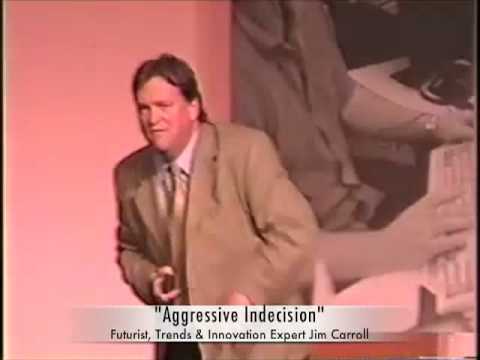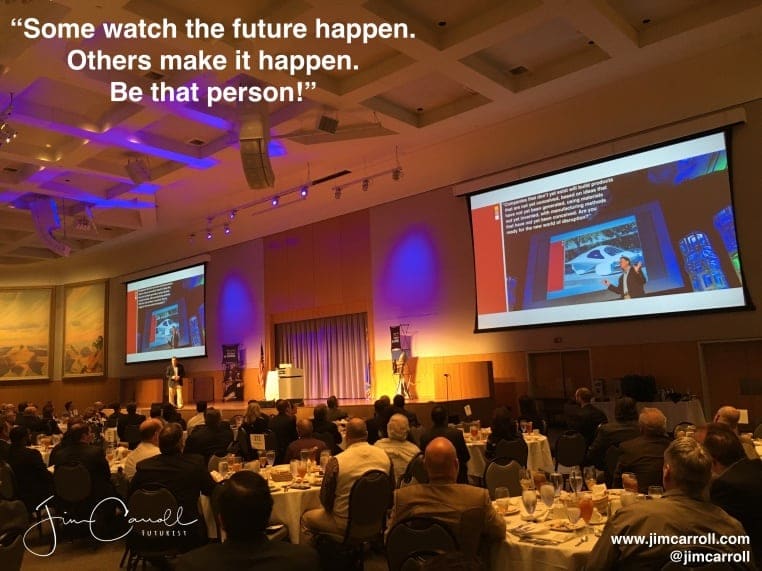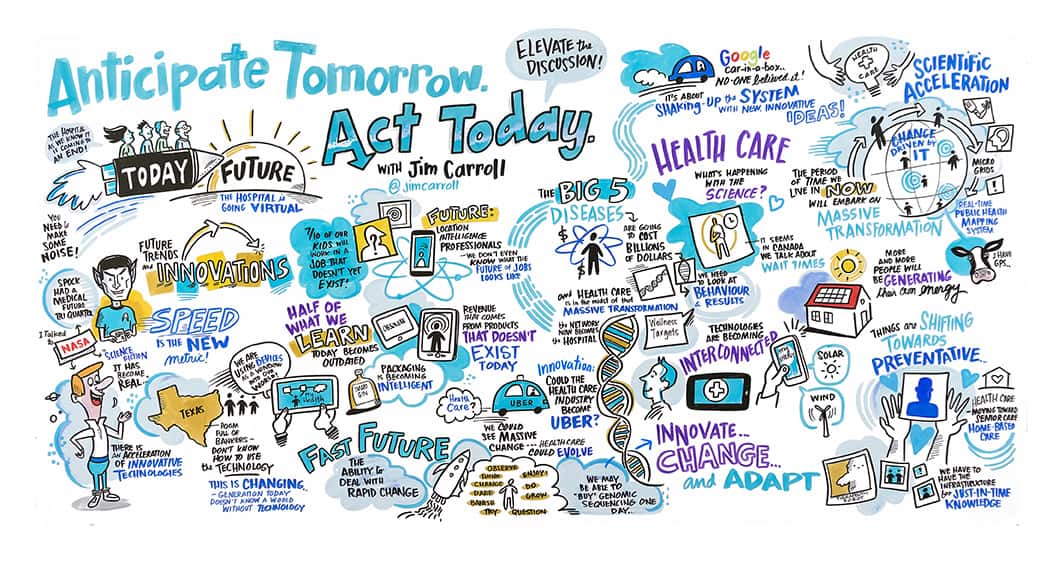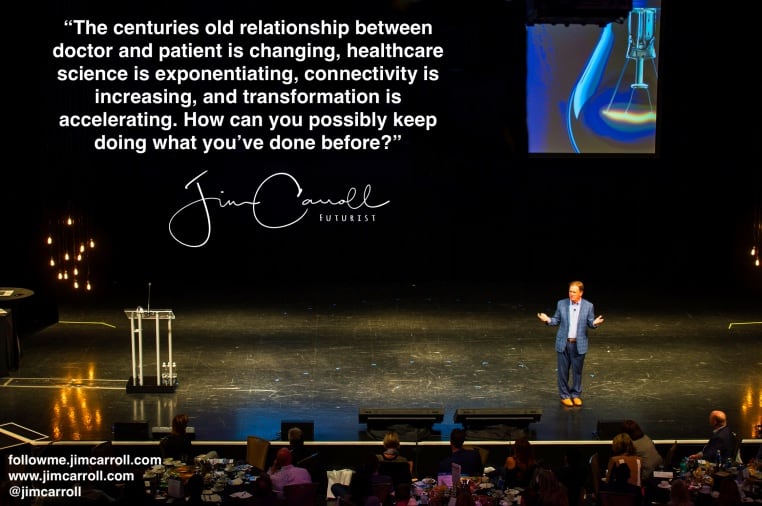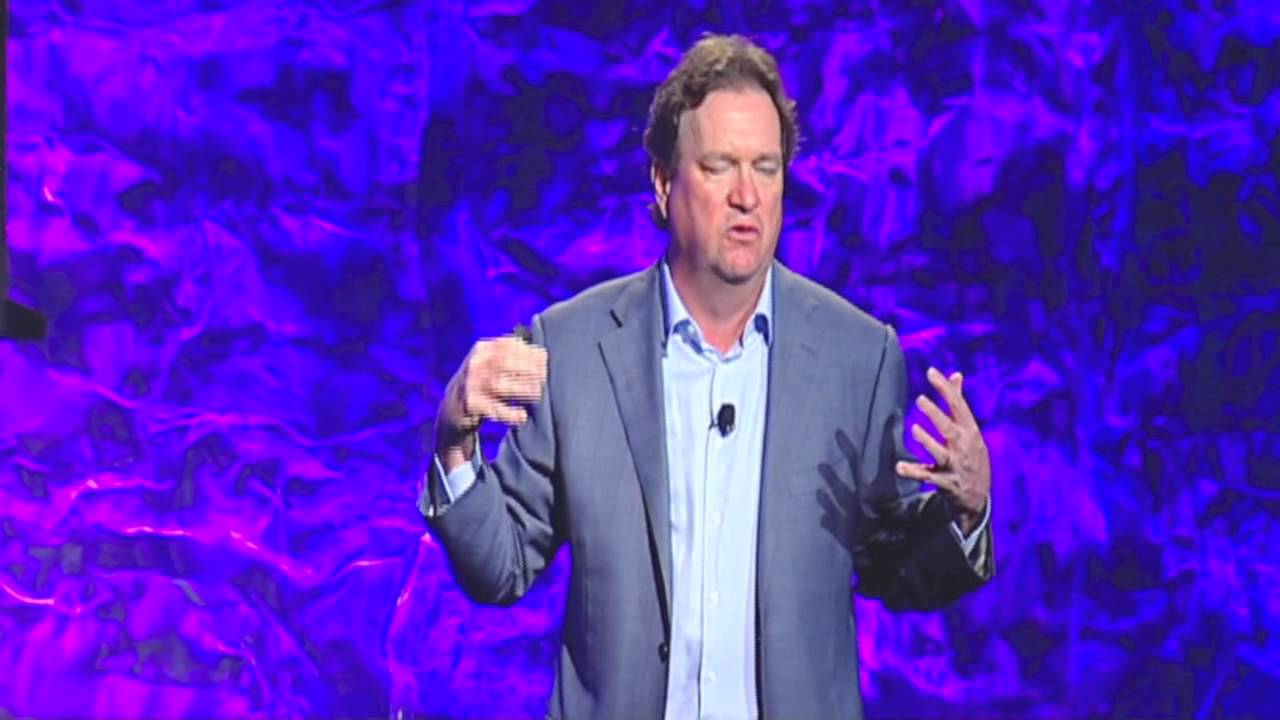
Here’s a quick video clip from a health care keynote in Houston; I’m speaking about bio-connectivity and the trend towards the virtualization of healthcare.
“Win a Seminar With the Monster Motivator!”
Way back in 2003, Monster.com ran a promotion which offered the winner — a corporate organization — the chance to bring me in for a customized talk on future trends.
I showed my kids (then 8 and 10 years old) the ad.
They were not impressed.
Why do I post this now? My wife and I came across this particular advertisement after we spent the weekend cleaning the basement archives up of 20 years worth of newspaper interviews, promotional materials, old book contract negotiation documents, and all the other flotsam that comes with a 20-year career as a speaker, author and futurist. (Why? The extended winter in the NorthEastern US led to some pretty significant ice/snow buildup, and we had a bit of a flood in the basement….)
I was looking at this document, and was thinking about the context. As far back as 2003 — and indeed, going way back to 1994, I was writing and speaking about how our workforces would be shaped and challenged in the future. My writing got the attention of Monster.Com, then building it’s online recruiting business; they ended up bringing me in for a series of keynotes in the Washington area.
And after that, they decided to experiment a bit with a new promotional method.
It’s kind of strange to look back at now, but it worked!
They drew a lot of interest, found it to be a powerful new marketing methodology, and had some fun along the way.
Today, my kids still aren’t impressed.
In any event, you can find a lot of material on my Web site about the future of the workforce; in particular, the post Rethinking Human Capital, which I wrote after speaking at the 2012 Talent Strategies Conference in New Orelans. You can also find a wealth of information in my Trends: Human Capital section of my Web site.
Trend: Measuring and Testing the Acquisition of Knowledge
Microsoft runs one of the largest training and certification communities in the world, related to its Microsoft Developer program. And they certainly “get knowledge” ; indeed, I often use a quote from the organization that outlines their belief that in the future, half of GDP will be generated from knowledge acquisition and education.
That’s why I was thrilled to see that they had some representatives in attendance for my opening keynote in March for the Association of Test Publishers ; folks who manage such things as SAT and LSAT tests, and scores of technical and professional testing programs. I had about 1,000 folks in the room.
Microsoft just ran a blog post over their at their “Born to Learn Training and Certification Community” blog with their thoughts on the conference ; near the end, you’ll find their observations on my talk, which I think offer up a pretty good summary of what I spoke about on stage.
At the end of this post, you’ll find a lot of links on how I view the future of knowledge. Click on the running dude on the right for my thoughts on ‘The Future of Knowledge!”
The Changing Face of Certification, by Liberty Munson – Microsoft
The key note speaker was Jim Carroll, a futurist and author, who spoke at length about the need for our industry to look at the accelerating rate of change around us and embrace it so that our businesses are well positioned for the future.
He repeatedly said “The future belongs to those who move fast.”
Here are some of the challenges we face in the testing industry given that knowledge is being refreshed at an increasing pace and is quickly outdated:
- How might the acquisition of knowledge be measured in a way that’s both timely and relevant?
- How do we stay ahead of change? How can we be proactive rather than reactive? How do we keep our assessment content in line with those frequent changes?
- How do we test and certify people for jobs and skills that don’t exist yet?
- Today, learners want real-time knowledge ingestion based on video offerings, such as YouTube, Khan Academy, etc. because they have a desire for continuous knowledge replenishment; how do we continually update our offerings to meet this demand?
This session underscored our industry’s (training and certification) need to adapt to the lightning speed at which technology changes and how those changes are affecting our students’ and test takers’ expectations about training and exam content. As I mentioned, this theme/conversation/concern re-asserted itself through many of the sessions as testing organizations struggle with how to manage
- the rapid speed with which knowledge and skills become obsolete, and;
- the impact that instant availability of information has on candidate expectations (known as “finger tip” knowledge–we don’t have to know the answer…we just need to know where to find it online; in fact, research shows that if someone knows they can find the answer later, they have more difficulty remembering it but have a good memory for how to find it!).
Along these lines, more organizations are looking to gamification (game-based exams) as the next big thing in testing because it can be very engaging and new entrants (in most cases, these are those young whippersnappers just starting out in a field) are largely engrained in the gaming universe in one form or another. I find this concept intriguing and am trying to figure out how Microsoft might apply it to our certification exams. Clearly, there are many hurdles in the implementation of something like this, but the notion of gamification in terms of certification may be one way to start thinking differently about what certification means and what exams might look like.
To me, the conversations around the future of certification are the most intriguing as we explore how to meet the demands of the future and embrace the speed at which technology changes things. After all, “the future belongs to those who move fast.” What do you think the future holds for certification? Where do we go from here? What do you think changes? What stays the same?
“Business Mantra for the Future … Think Fast. Act Faster!”
Back in February, I was the opening keynote speaker for 2014 Ameriquest National Symposium, speaking about trends related to transportation, infrastructure, fleet management, business model disruption — you name it!

Bridget Fediuk is the Marketing Manager for NationaLease, and is responsible for overseeing the marketing of NationaLease meetings and events, the NationaLease NEWS, Webinars, and various other projects.
She was at the conference, and wrote about her views over in the NationalLease blog.
Business Mantra for the Future … Think Fast. Act Faster,
by Bridget Fediuk
Successful companies in the future will be agile, flexible, and willing to embrace change, says futurist Jim Carroll.
Many speakers at the 2014 Symposium spoke about connectivity; how we’re all connected by technology and how those connections seem to grow faster and faster. Renowned futurist Jim Carroll was one of those speakers. He made it clear to those attending the Symposium that a company’s success now and in the future will be decided by its agility, flexibility, and willingness to embrace change. We all know that technology has been expanding at an incredible pace.
If you want to know how fast things are changing or will change, here are a few factoids from Carroll:
- 65% of pre-school children today will work in jobs or careers that do not yet exist
- ½ of what a student learns in the first year of college is obsolete by graduation
- Most digital cameras have a 3 – 6 month shelf life before they are obsolete
- 60% of Apple’s revenue this past year came from products that didn’t exist just four years ago
Carroll kept repeating the phrase that is the title of this posting, “The future belongs to those who are fast.” Many companies suffer from organizational sclerosis. They try to do things the way they’ve always done them, but we’re moving at such speed when it comes to innovation and invention that the old ways just don’t work. Businesses need to understand that fully half of today’s global population is under the age of 25; that most of them are globally wired and connected. These are your customers and your employees, and they’re used to nearly immediate gratification and acknowledgement. So if your business can’t adapt to fulfill their expectations; if you can’t embrace and implement changing technology, you are going to find difficulty achieving and maintaining success.
Carroll illustrated the pace of change by talking about the Jetsons, a cartoon show popular in the ‘80’s. Although the show was supposed to take place in 2062, he talked about some of the technology in that show that actually exists today. We may not have flying cars; however, tanning beds, video chat (think Skype), robot vacuums (think Roomba), and TeleViewer (think iPads) are items we no longer think of as futuristic. For the transportation professionals attending the meeting, Carroll stated that the typical truck cabin today contains more technology and computing power than a Cessna and that, by 2017, SIRI will be available for most new trucks.
So what is the secret to adapting to change; how do people and companies become world-class innovators.
According to Carroll, there are five key ways:
- Appreciate the unique time we live in and the rate of change that is occurring. Embrace it, don’t fear it.
- Think now of how much change will occur and pursue that change. Innovators don’t follow the rules, they rewrite them.
- Control the speed of innovation.
- See change and search for opportunity to capitalize on it.
- Ride the generational acceleration.
When it comes to your business and the future, Carroll suggests that you “think big, start small, and scale fast.”
The tortoise might have beaten the hare in the old fable, but in today’s world, slow and steady will not only lose the race; it will be lucky if it gets past the starting line.
Baby Boomers – Surviving the Information Age!
A video clip from a recent keynote in New Orleans. It was a look back at the past and a glimpse into the future, in a keynote theme built upon my long-ago book, Surviving the Information Age. It’s good for a laugh. This particular keynote topic is picking up steam — contact me for details!
Trends: Restaurants – “…we’ll be processing payments from our car dashboards…”
A few weeks ago, I was the opening keynote speaker in Las Vegas for the 2014 Multi-Unit Restaurant Technology Conference (MURTEC). In the room were folks responsible for the technology investments of a vast number of major fast-casual and quick-service restaurant companies.
The attendee list featured some of the largest such organizations in the world, as well as many of the new, young upstarts which are challenging existing business models, changing methods of customer interaction, and providing more menu options and choice.
I was brought in by Hospitality Technology Magazine, which is part of the Edgell Communications Group. This was the fourth booking of me for a keynote by the latter organization — I guess they like my message! It’s always fun to have a great client like that.
Hospitality Technology Magazine just ran this wrap-up summary with some observations on my talk:
HT just wrapped up the Multi-Unit Restaurant Technology Conference (MURTEC) in March and, after moving through recovery phases one and two, I had a chance to reflect. The first thing to report is that technology showed up — big — for the foodservice industry. For those of you who keep hearing HT and other commentators talk about the importance of the CIO-CMO alliance; about the need to shift IT into a business mindset; and about the required transition to a more digitally-focused operation, my first major observation from MURTEC is that you hear us, and you’re in. This was the most high-energy, open-minded, marketing-savvy group of restaurant technology executives who have ever been a part of MURTEC.
Change is coming rapidly, and it won’t be possible to fully vet every IT roll-out as you’ve done in the past. As keynote speaker Jim Carroll stressed, you need to be able to think big, start small, and scale fast. Carroll delivered some of the best one-liners of the conference. Somewhere in between likening mobile payment to teenage sex (because no one’s really doing it as much as they say they are; and those who are, aren’t very good at it), and predicting that by 2017 we’ll be processing payments from our car dashboards, Carroll offered up this: 60% of Apple’s revenue today comes from products that didn’t exist four years ago.
Would you be prepared to be in that position four years from now?
That’s just a glimpse of what I covered in my keynote. Why not, for example, aerial drone delivery of fast food? Is that too farfetched? Maybe not.
But more seriously, think about what the restaurant sector has been faced with in the last year.
It’s been the year of the restaurant tablet, with at-table or wait-line ordering options. The rapid emergence of hidden-menus, as a unique method of building customer loyalty. The entire sector is under challenge with innovation — with faster prep-time and two minute pizzas by Chipolte’s setting the pace. In some fast casual restaurants, we are suddenly seeing Go-Pro’s in the kitchen and food as a spectator sport! Then there is the whole reservation process, with immediate-customer-demand coming to the forefront with apps like GrubHub, Seamless, DrinkOwl, NoWait!
There are faster influencers too that lead to the more rapid emergence of new taste trends. Flavours now move from upscale kitchens to chain restaurants to grocery home-cooked meals, in 12 months, compared to 36 months 5 years ago….. consumers are snacking more frequently, now making up 24% of all “meals,” and so restaurants have to come up with new ideas faster, particularly because snacks are like a fashion category. Food trucks lead to new competition, business model disruption and exotic new taste trends that QSR’s and fast-casuals must keep up with…..
And then there is the impact of mobile. Suffice it to say, we are going to witness more change in this sector because of mobile than anything other technology of the last 50 years. There are big changes underway in terms of customer ordering, loyalty, payment, up-sell opportunities …..
Just three days ago, I did another session in this space for the Canadian division of one of the largest QSR’s in the world — a one hour keynote and a two hour workshop that helped the organization and it’s franchisees understand the unique and fast paced challenges in this space. Top of list and top of mind? Mobile and POS.
I spend a lot of time in this sector, having keynoted the global Burger King Franchise conference, an annual meeting of the top leadership of Yum! Brands, and countless other restaurant and franchise groups. There’t no time for complacency, and an organization certainly cannot rest on it’s laurels….


GET IN TOUCH
Jim's Facebook page
You'll find Jim's latest videos on Youtube
Mastodon. What's on Jim's mind? Check his feed!
LinkedIn - reach out to Jim for a professional connection!
Flickr! Get inspired! A massive archive of all of Jim's daily inspirational quotes!
Instagram - the home for Jim's motivational mind!