“You don’t know what you don’t know, until someone tells you something you don’t know. That’s why there are futurists!” – Futurist Jim Carroll


“You don’t know what you don’t know, until someone tells you something you don’t know. That’s why there are futurists!” – Futurist Jim Carroll
Here’s the thing. Disruption isn’t just Uber and AirBnB and others. It’s more. It’s fast science, robotics, 3d printing, exponential technology, new materials, big dreamers, the rise of the small and so much more!
Watch this video NOW. Disruption is real, it’s happening now, is is much bigger than you think!
“If it works the first time, you didn’t make the challenge tough enough!” – Futurist Jim Carroll
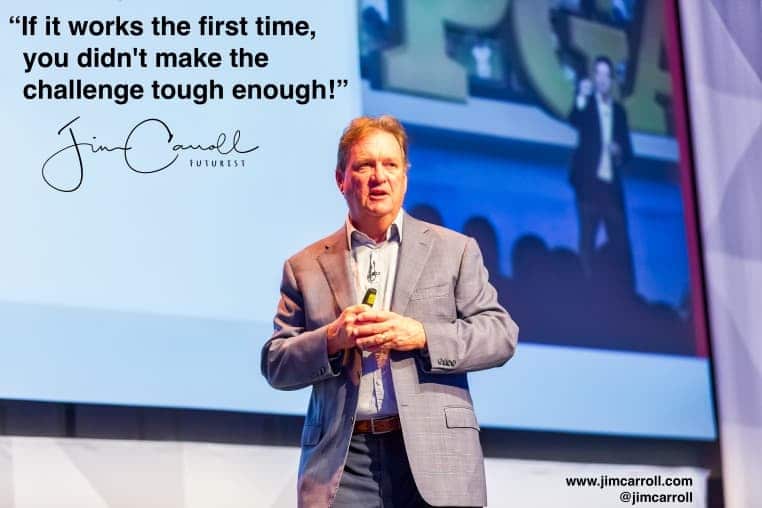
An innovation mantra often repeated is “fail early, fail often”.
This is very true right now when there is so much opportunity to do things you haven’t done before! Experiment, explore, push the boundaries, take risks, and yet discover joy in trying new things! That’s innovation – and be willing to make mistakes along the way!’
“The best way to get someone to succeed is to suggest to them that they will likely fail!” -Futurist Jim Carroll
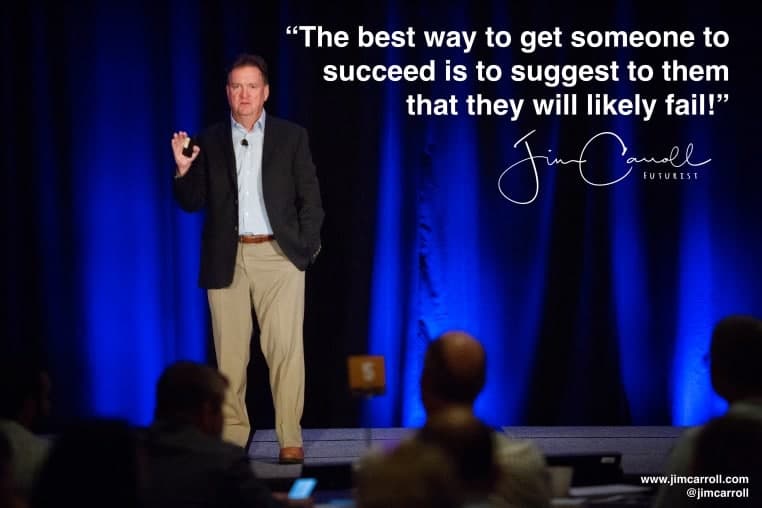
‘’ Yesterday, at the gym, my trainer suggested a certain exercise, and then seemed to suggest an easier version of it. Her implication was that I would be able to do the first one. So I did that one. So there!
Success comes from motivation, and motivation comes from pushing people to do things you think they might not be able to do!’’
One of my key responsibilities as a futurist is to help my clients — some of the largest associations and companies in the world — align themselves to the fast paced trends of today. One key question that always comes up? “When do we get involved with any key trend?”

I walk them through that issue from a variety of perspectives and with observations I’ve seen from spending time with countless Fortune 1000 organizations. However, I stress that when it comes to the issue of timing, it is critical that they get involved in some way with any new trend or technology.
Some don’t. History has taught as that some when it comes to key trends, some organizations don’t bother showing up at all or don’t show up at the right time — and end up missing a lot of opportunities. Hence, the quote in the picture!
How do you determine when to invest? The best guidance comes from something called the “Gartner Hypecycle.” Years ago, the global research company suggested that any new technology goes along a curve – it appears, hits the time of excessive hype and expectations. That is followed by the inevitable collapse of enthusiasm as people realize that it takes a lot of time and effort to implement the technology and determine the opportunity that comes from it. But inevitably, both the expectations and technology itself matures, and it becomes a key component for innovation and so much more.
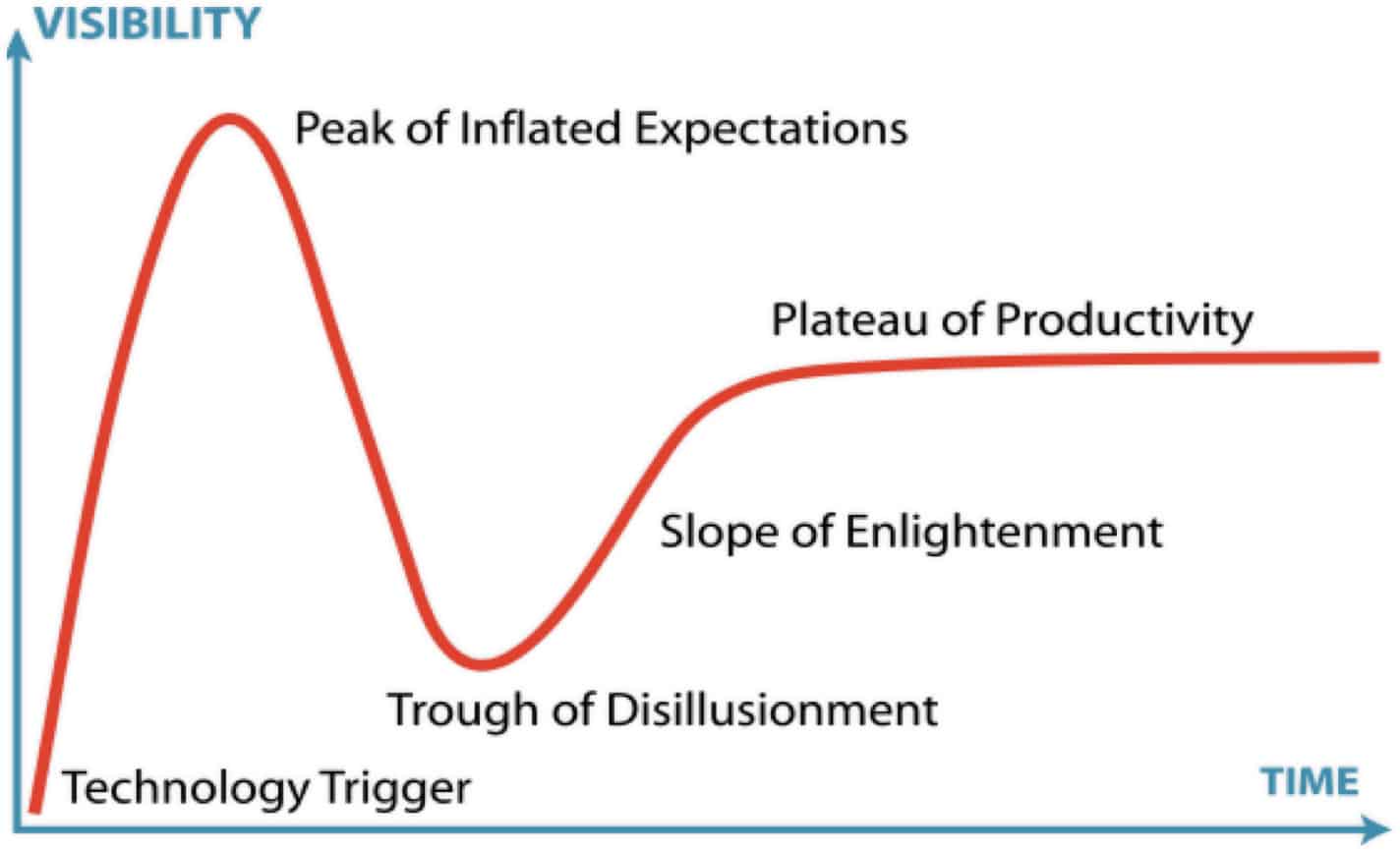
You can take any technology and place it on the curve.
Consider e-commerce: it appeared, and people got carried away with the potential during the dot.com era of the late 1990’s. However, that involved a period of rather excessive and ridiculous hype, and so we had the inevitable dot.com collapse. Plateau of productivity? Amazon is steamrolling retail in North America, and Alibaba dominates retail trends in China. Everywhere, stores are closing and online shopping is accelerating. Amazon buys Whole Foods. Do you get the point?
Now consider the explosion of new technologies around us today: 3D printing, the Internet of Things (#iot), virtual reality, artificial intelligence, self-driving cars. A key component to your strategy is figuring out where they are on the curve, and hence, what you should be doing with them in terms of an innovation strategy. There are some useful observations to be found online, such as this one which takes the hype-cycle and places a variety of technologies at their current point on the curve.
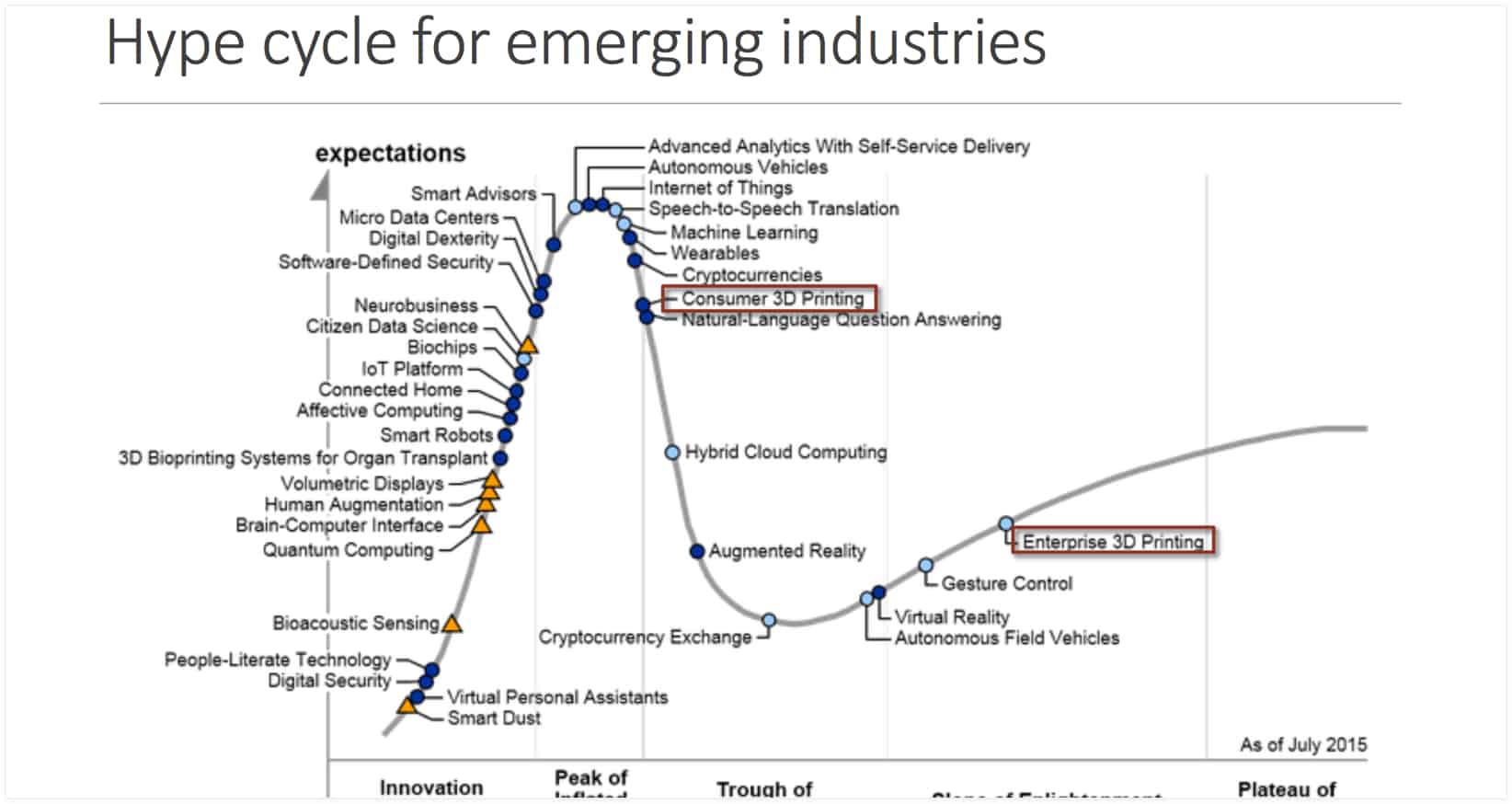
But here’s the thing: if a key technology shows an opportunity, don’t ignore it if it is still early days. Otherwise, there is a good chance that you won’t be ready when it becomes real – when it hits the plateau of productivity.
This is where my “think big, start small, scale fast” mantra comes into play. Even if it is early days, you should make sure that you are working with, experimenting with, and gaining expertise in any new technology. Fail early and fail fast! That way, you will be better positioned when it hits the “plateau of productivity.”
One thing I’ve learned? Some organizations don’t take this step. They don’t show up to the starting line. They are too dismissive of new ideas and new technologies The result is that they don’t even appear in the race, and miss out on building up the early expertise and experience with a key technology.
“If you are going to show up at the starting line for the future, make sure that you don’t show up late!” – Futurist Jim Carroll

‘’ Timing is everything! I came up with this quote yesterday while waiting to go on stage at an event.
The key thing is that with so many trends unfolding in our world today, you need to figure out the issue of timing. When do you decide to get involved and experiement; when do you pull out; when do you accelerate your efforts? Read the blog post for the insight I provide to my clients on this key issue.’’




GET IN TOUCH
Jim's Facebook page
You'll find Jim's latest videos on Youtube
Mastodon. What's on Jim's mind? Check his feed!
LinkedIn - reach out to Jim for a professional connection!
Flickr! Get inspired! A massive archive of all of Jim's daily inspirational quotes!
Instagram - the home for Jim's motivational mind!