
This global pharmaceutical powerhouse manages massive drug trials worldwide – for example, leading the global 64,000-patient Pfizer/BioNTech vaccine trial. They engaged Jim for a CEO-level event to challenge the organization to identify the strategic opportunity of becoming fully AI-enabled – and how they might disrupt its business model before it is disrupted.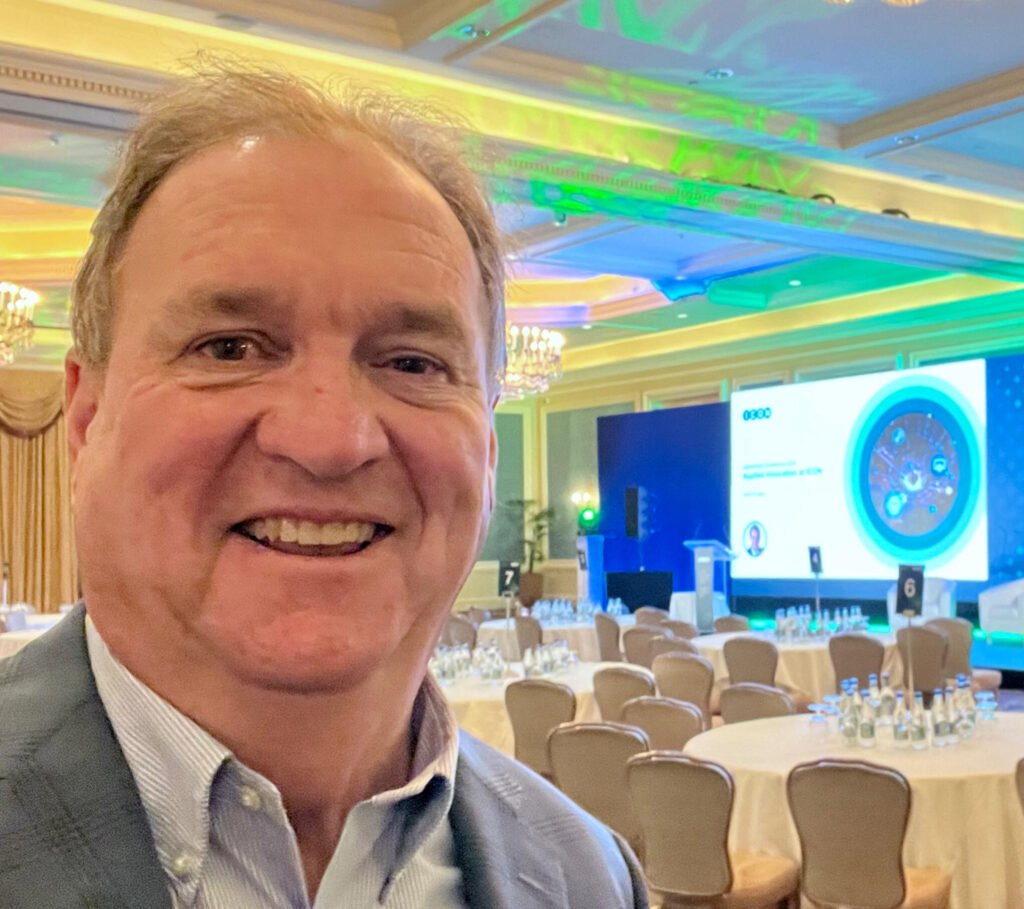
Daily Inspiration: Leadership and Growth – “Real leaders don’t try to cost cut their way into the future! (They reinvent!)”
“Real leaders don’t try to cost cut their way into the future! (They reinvent!)” – Futurist Jim Carroll

Really?
Are we going to do this all over again?
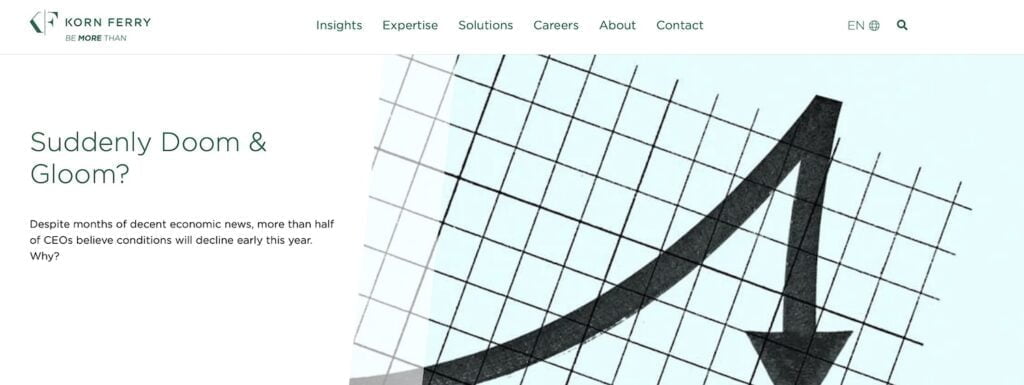
My interest was drawn recently to a headline in a newsletter I get from Korn Ferry, with an outlook for 2024. This mindset exists in the context of the Great Recession of 2023 That Was Predicted But Never Happened.
In one survey, four in ten firms say they plan layoffs in the New Year; in another, 53% of CEOs say they expect economic conditions to worsen in the first half of 2024. This is in sharp contrast to the investors supporting them, 94% of whom expect things to improve in the near term (only 16% of leaders do).
Are these CEOs continually ingesting some sort of doomster-gloomster drug that the rest of the world doesn’t know about? The article goes on:
But experts say many corporate leaders are fretting about their firms’ considerable expenditures over the last few years—and the dent those costs will have on future profitability. CEOs have been in a “reactive mode” for the last four years, says Doug Charles, Korn Ferry’s President of the Americas. Following the pandemic, many firms hired aggressively and made heavy capital investments to keep up with a consumer boom. Last year, after ChatGPT took off, many also rushed to spend heavily on AI and other technology-related infrastructure.
The question for many CEOs is whether their expenditures of the last four years are sustainable. Some believe they know the answer: They have already initiated hiring freezes, delayed expansion plans, and, in some cases, cut staff. Now, they wonder if even more severe steps are needed. “They’re on the cost side of the equation, trying to figure things out,” Charles says.
That explains the mindset – the global pandemic threw a kink into the works, and so there is a focus on trying to rightsize the organization. But then I contrast this mindset with what I came across in another CEO survey from Price Waterhouse. (This one is from last year; the most recent is due soon, and I will be interested to see what’s changed.)
Nearly 40% of CEOs don’t think their companies will be economically viable a decade from now if they continue on their current path.
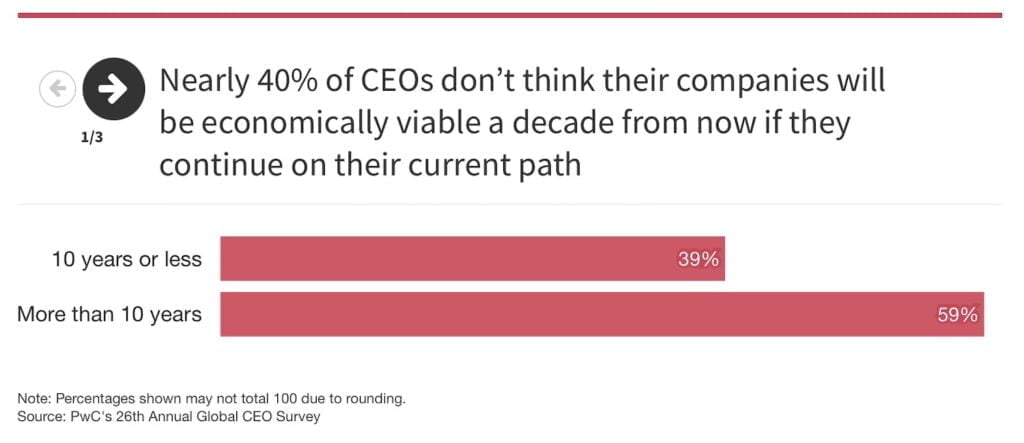
Let me get this right, because I think Einstein had something to say about what’s happening here. Digging deeper, let’s look at why they think survival might be at stake.
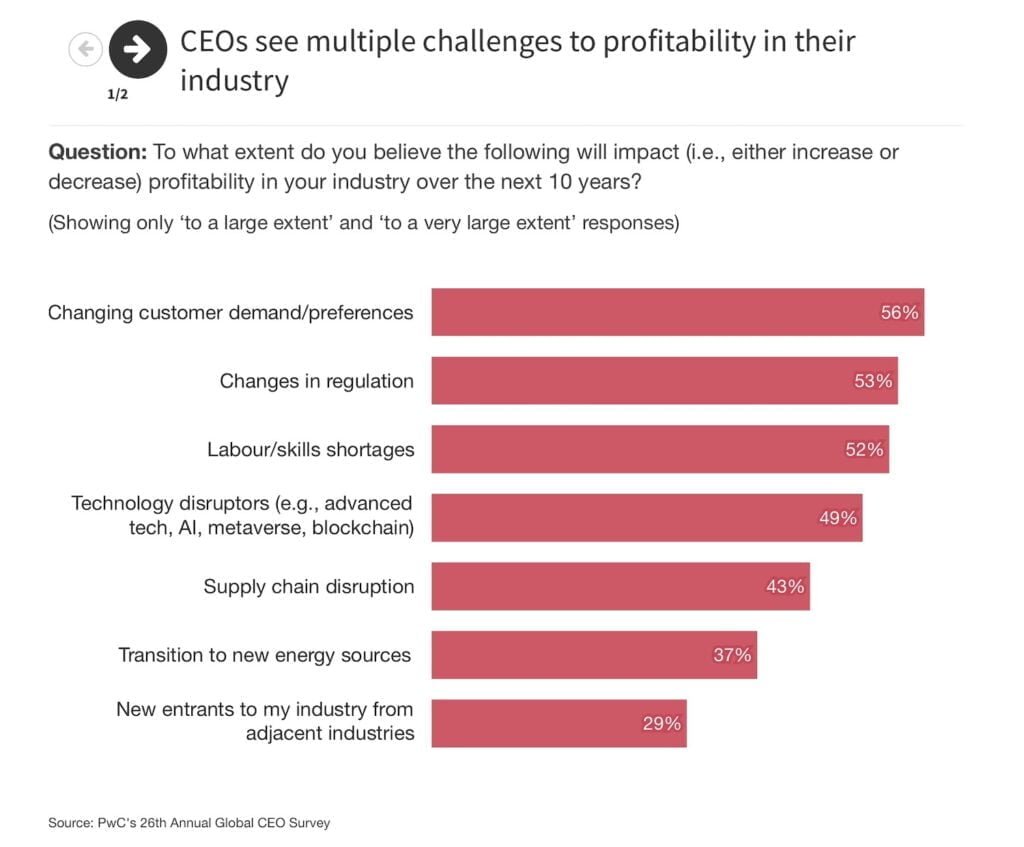
Oh – it has to do with such things as the emergence of new competitors, business and industry model disruption, skills issues, and changing consumer behavior. You know, the sort of thing I am always talking and writing about. To think about it, this has become a core part of my stage presentation; just recently, I featured this slide prominently in the first part of a keynote for a CEO and his leadership team, putting into the impact of artificial intelligence on their industry,
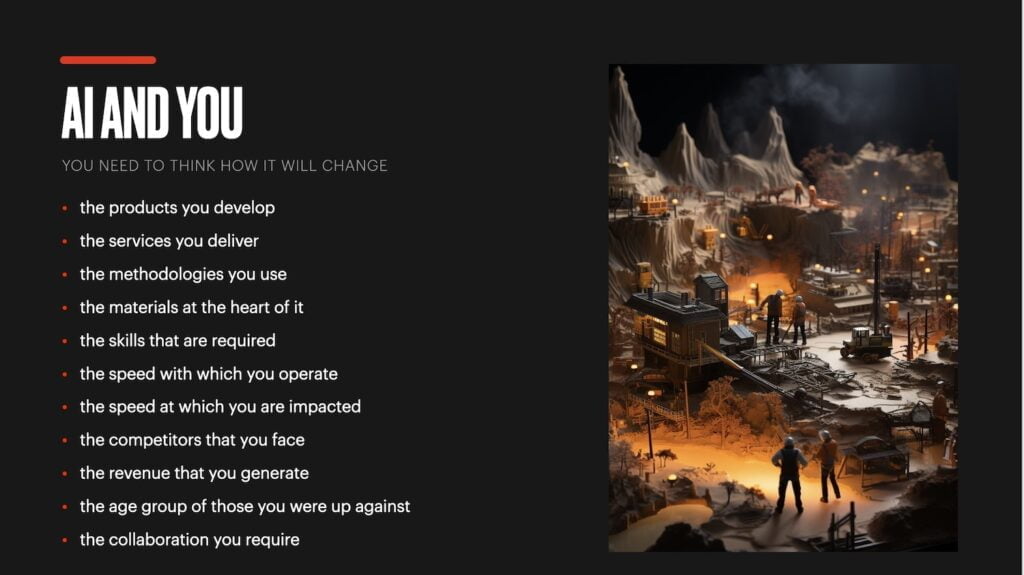
Simply put, I said, AI will change absolutely everything about you, including:
- the products you develop
- the services you deliver
- the methodologies you use
- the materials at the heart of it
- the skills that are required
- the speed with which you operate
- the speed at which you are impacted
- the competitors that you face
- the revenue that you generate
- the age group of those you were up against
- the collaboration you require
So on this ‘economic doom and gloom’ and ‘business survival’ mindset – simply put, these two mindsets can’t co-exist, You are convinced that you’ve got to get into a cost-cutting and ‘rightsizing mode,’ and yet, believe that if you don’t change some fundamental things about your business, you won’t survive. The interesting thing is that when you look at the PWC survey, they know that everything is going to change – that’s why I’m often booked by CEOs to come in and speak to their corporate teams about that change. They KNOW they need to reinvent their business to align with a different future – they KNOW they need to reinvent.
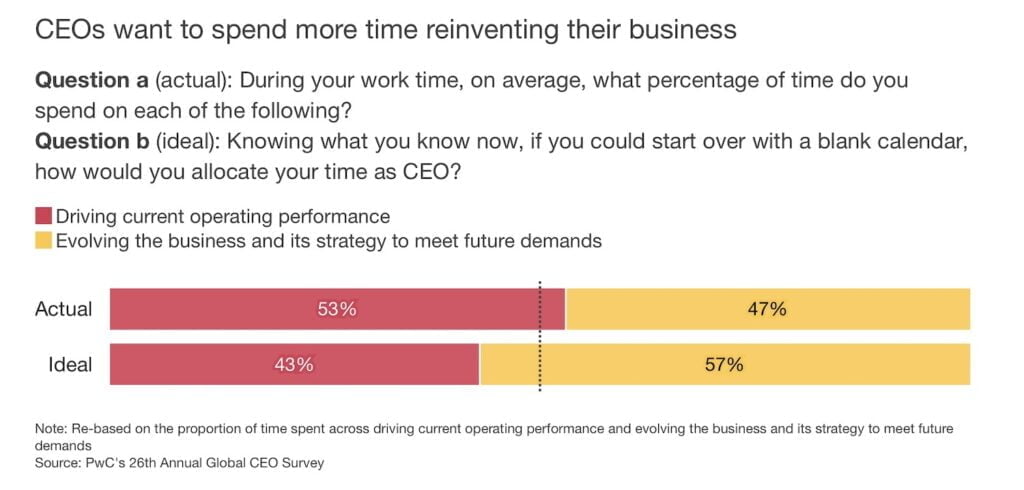
So what gives? As the song by Elvis goes, they are caught in a trap, and can’t get out.

They need to escape this trap of divergent thinking – as do you. I read all this stuff with fascination, knowing that one of my core messages through the years has been the need for organizations to continuously reinvent themselves – in terms of the products or services they deliver, the skills they have in place, the structure they use to go forward, the collaboration they have embedded into their organization. IU often shares the story that for Apple, some 60% of their revenue comes from products that didn’t exist 5 years ago, and challenges the audience – could your company do this same type of thing?

My key message? If you continue to let the economic doomster-gloomsterism drive your agenda, you are doing ti all wrong – because as I have pointed out many times, history has taught us that it is those who reinvent through investment – not those who cost-cut – are those who survive and thrive into the future.
That’s what real leaders do.
Daily Inspiration: “In a world of lemmings, be the unicorn!”
“In a world of lemmings, be the unicorn!” – Futurist Jim Carroll
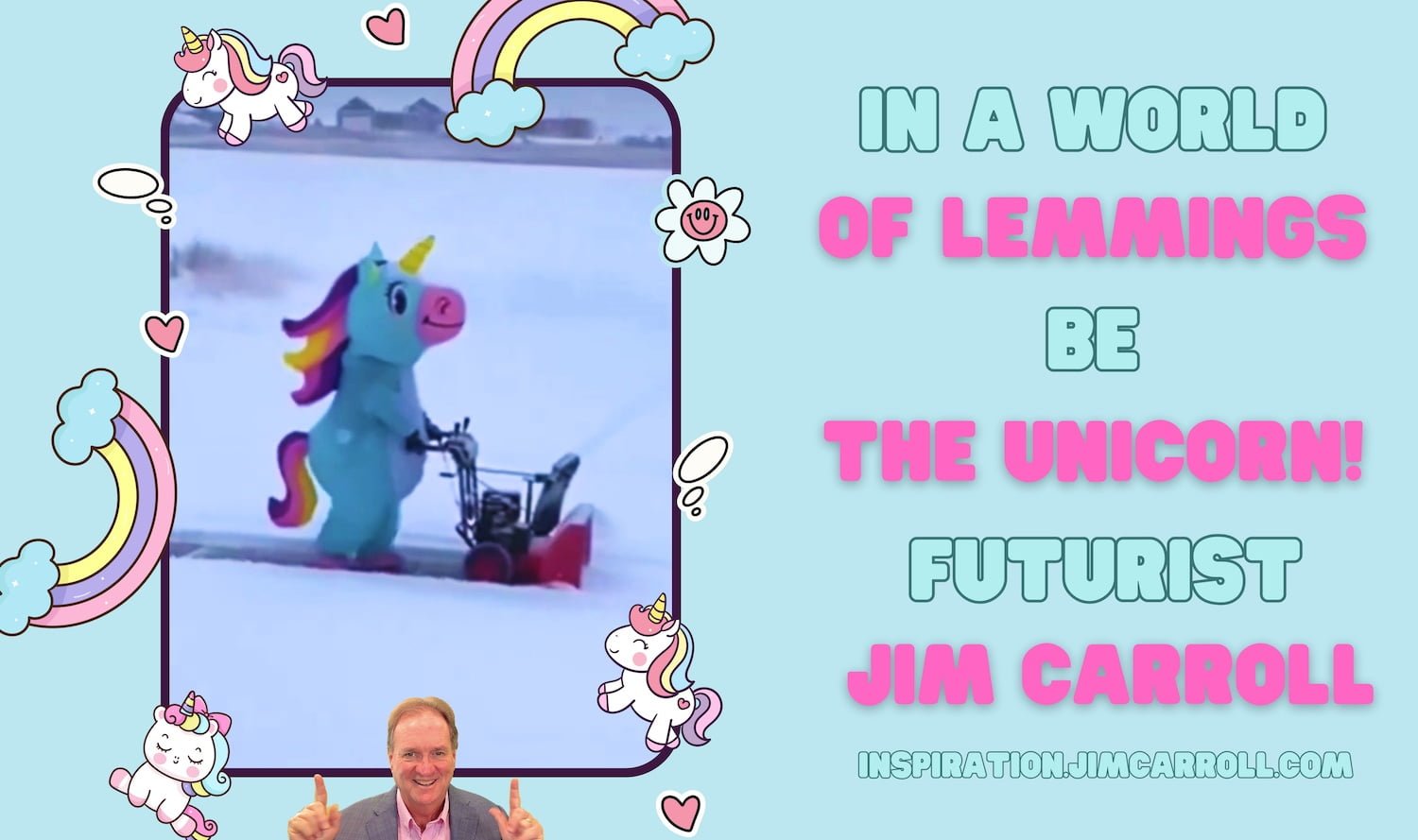
I’ve been cracking up since I came across this video – and I must be driving my wife mad with my constant giggles.
And here’s the thing – leadership motivation need not be boring. Nor should it be formulaic, routine, dull, predictable.
Sometimes, we just need a simple visual to inspire us to think differently – to not be like everyone else but to be our own self. Hence, I give you the Snowblower Unicorn.

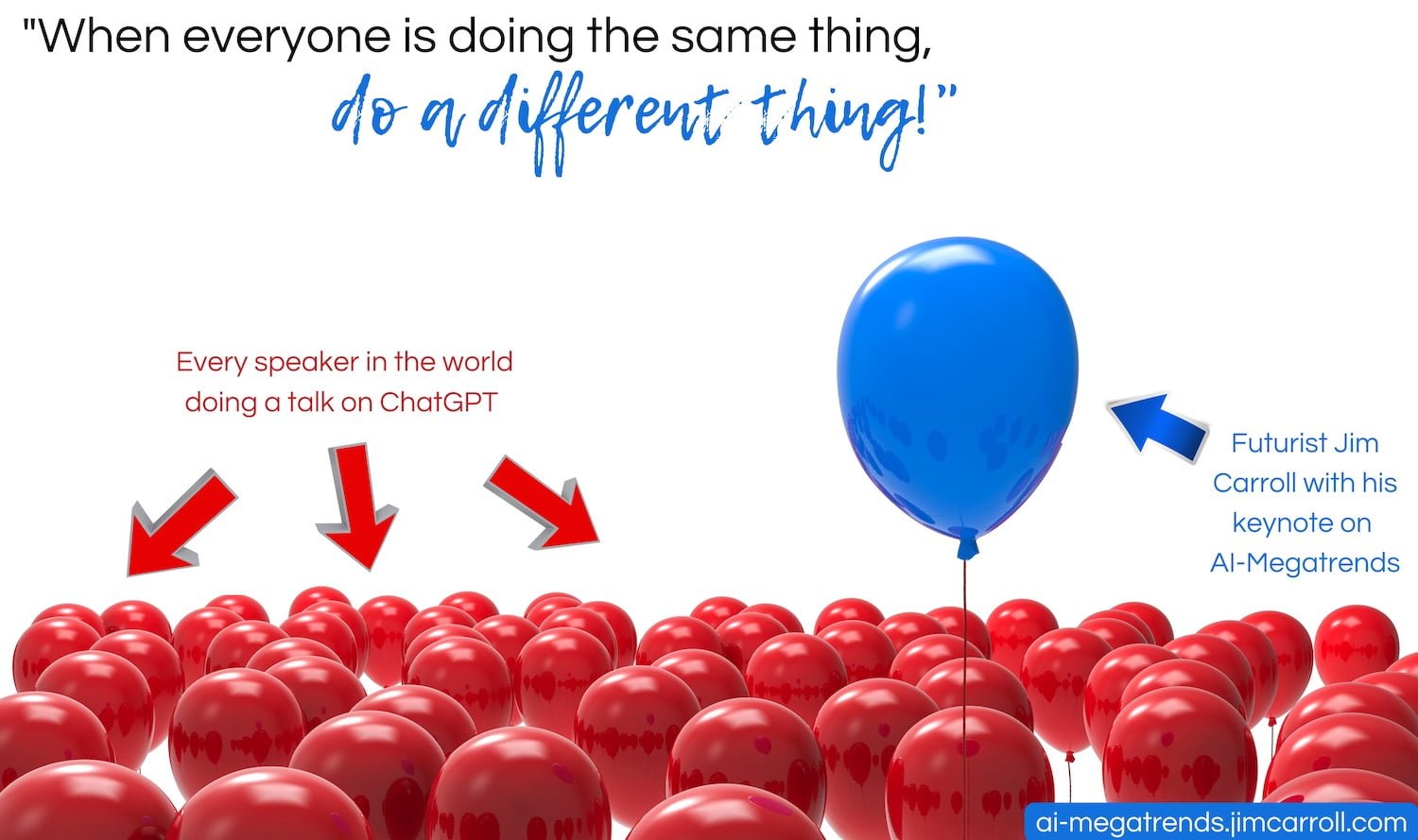
When everyone is doing something, do a different thing!
The video popped up late yesterday in my social media feed while I was busy pulling together my thoughts and image for today’s post – and I immediately knew I had to abandon that idea I was working on for now and run with this. I did a bit of a remix from the original with a music track licensed from Pond5 to give it a bit of levity and fun.
And there you have it – perhaps the most powerful leadership insight you might seen yet this year.
It’s a trend – a search for ‘unicorn snowblower‘ turns up quite a few news articles and videos. And why not – sometimes, it’s the most simple acts that lead to the most awesome results!
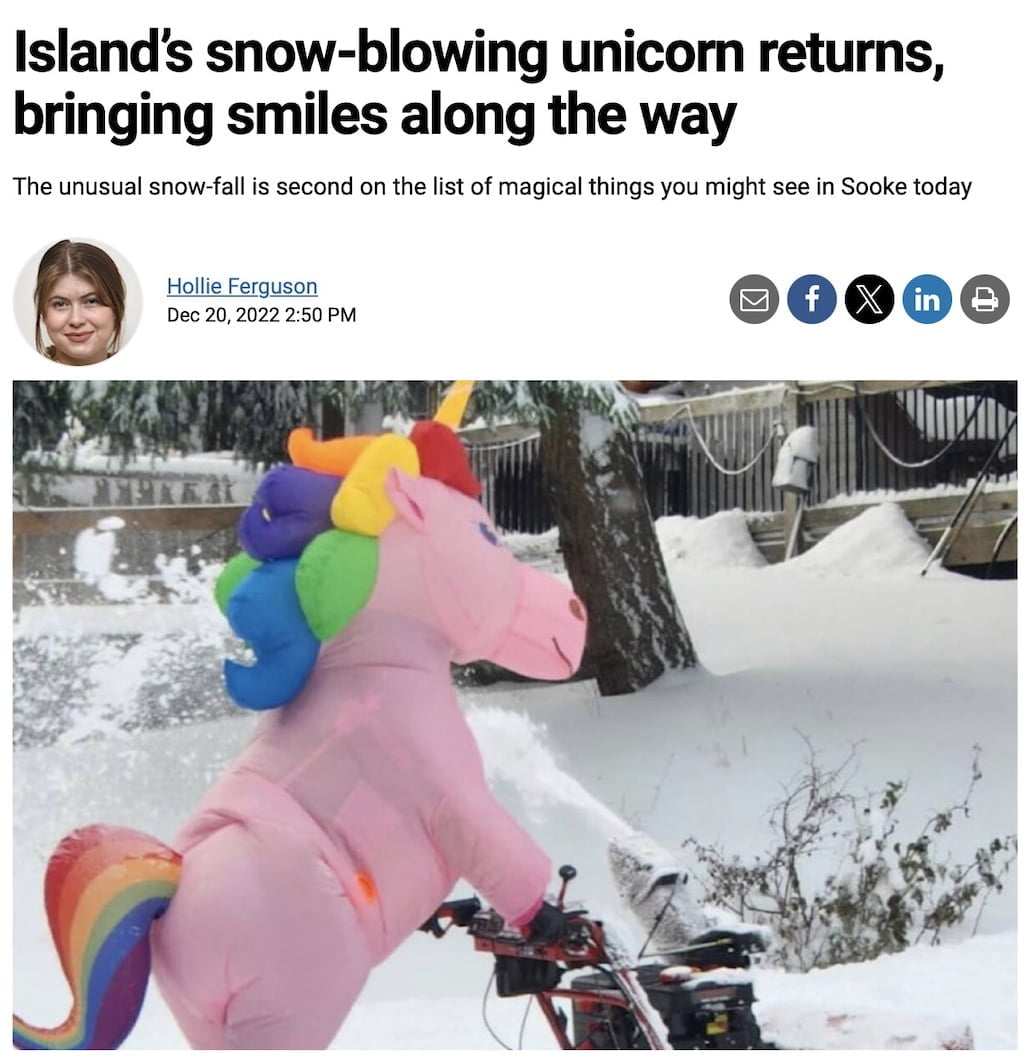
The inflatable, hoofed Sooke-sation brought the joy of a snow day to a new level.
Commuters braving the winter weather were treated to the magical sight of the Sooke snow-blowing unicorn last week, who first appeared in January 2020.A post on the Meanwhile in Sooke Facebook page delighted people as they shared and liked the photos of a man dressed in an inflatable unicorn costume.
Sooke snow-blowing unicorn returns, bringing smiles along the way
Victoria News, December 22, 2022
I often speak and write about creativity and innovation – and indeed, I’ve got an entire speaking topic dedicated to the former.
Accelerating Creativity: Discovering Opportunity With an Innovation Reboot!
We will see more change in every industry in the next 10 years than we have seen in the last 100 as transformation and disruption sweeps the world.
Every company is faced with the rapid emergence of new competitors, significant new business models, more challenging consumers, the acceleration of science, and a transition to the speed of innovation that will define their future.
How do you manage this complex new world and get ahead? By turning on your innovation engine, firing your creativity thrusters, and strapping in for a rocket ride into your faster future. You need to accelerate your ability to generate radical new ideas and transformative concepts. You need innovation creativity!
In this keynote, futurist and innovation expert Jim Carroll shares the innovation and creativity insight that he has gained through three decades of a relentless focus on what turns organizations into high-velocity innovation and creativity heroes. None other than NASA has invited Jim in – twice – to share his insight on innovation strategies. Disney – a creativity superhero – invited him in for a keynote on the opportunities that come from rethinking creativity. The World Bank engaged him for a talk that linked fast-moving future trends to the need for accelerated innovation and fast thinking.
Jim’s keynote will share with you the key elements of his imaginary but powerful “Masters in Business Imagination” curriculum – a structure of 10 key leadership strategies, actions and structures that will help you envision opportunity, think differently, and act quickly.
Launch yourself into the faster future with this unique, high energy creativity focused keynote from global futurist, trends & innovation expert Jim Carroll!
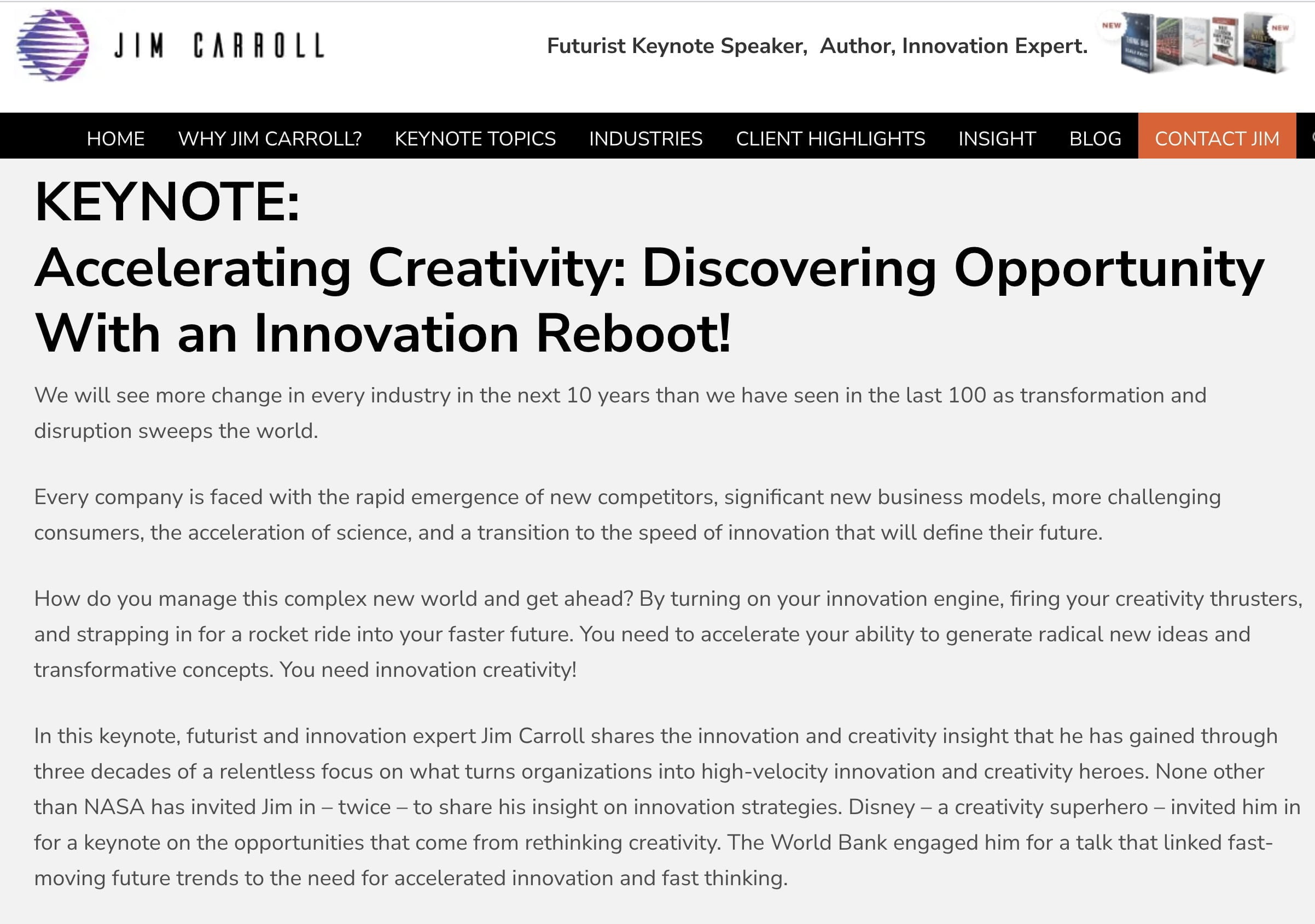
That keynote is very much based on my Masters In Business Imagination degree.
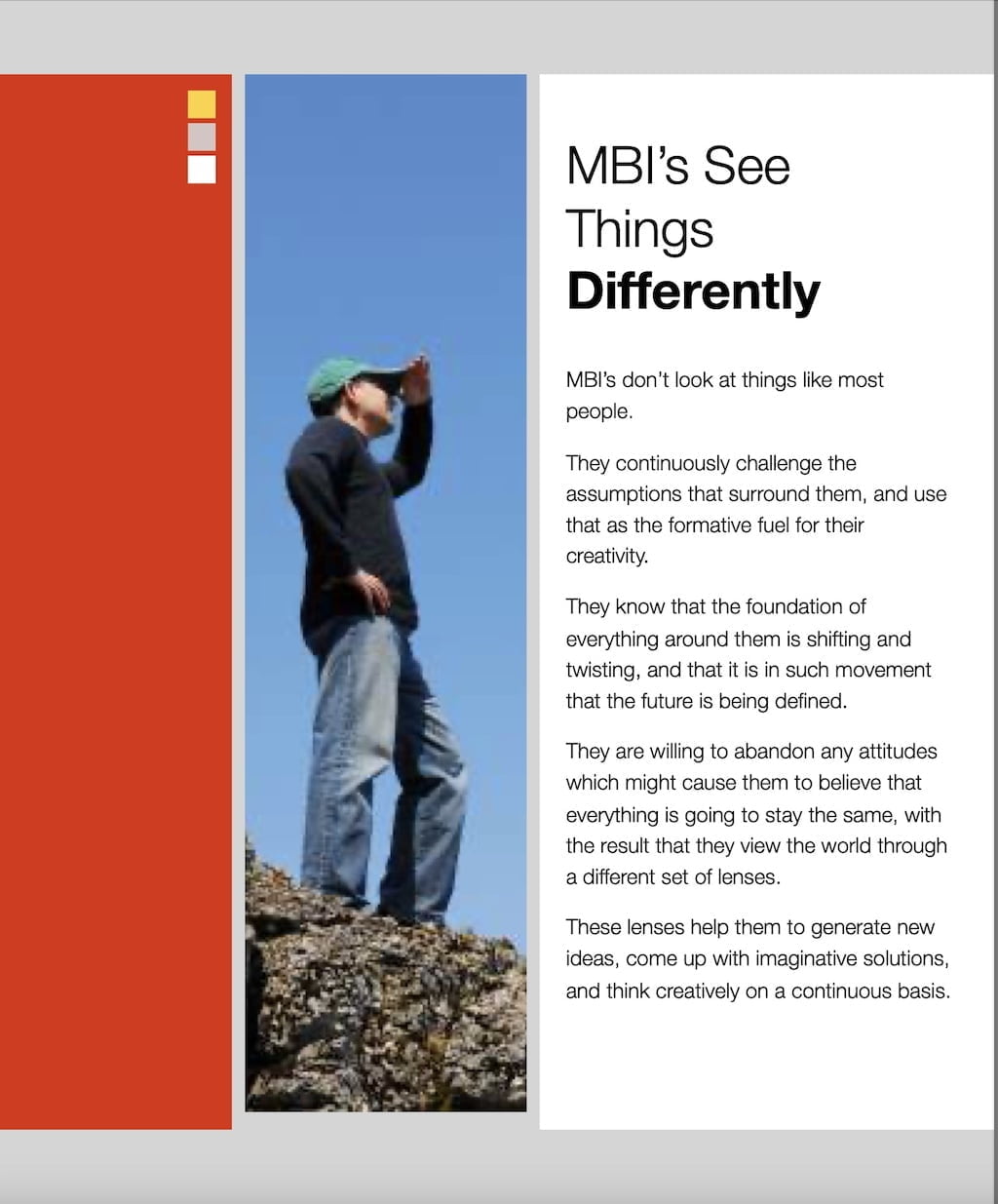
Why is the Snowblower Unicorn important? Because MBI’s see things differently – they see the Unicorn. MBI’s don’t look at things like most people.
They continuously challenge the assumptions that surround them, and use that as the formative fuel for their creativity.
They know that the foundation of everything around them is shifting and twisting, and that it is in such movement that the future is being defined.
They are willing to abandon any attitudes which might cause them to believe that everything is going to stay the same, with the result that they view the world through a different set of lenses.
These lenses help them to generate new ideas, come up with imaginative solutions, and think creatively on a continuous basis.
I wrote about this concept of being unique in a post last April (as well as many, many times before!) “When everyone else is doing the same thing, do your own thing!”

With this observation, noting how I’ve been working hard to stand out in the crowd of futurists and speakers all talking about the same thing.
Look, innovation and aligning to the future aren’t about bandwagons. It’s more important — and more difficult — than that. It’s about finding something within an obvious trend that plays to your strengths, lets you share your unique value, and removes you from the crowd. It means that you find what you need to do to need to be different, stand out, and do the important thing, not the hot thing!
I concluded:
Be different!
Be unique!
Be yourself!
Be the Snowblower Unicorn!
There you have it – the most important leadership insight you need!
Daily Inspiration: Customers and Branding – “When expectations accelerate, accelerate your expectations of yourself!”
“When expectations accelerate, accelerate your expectations of yourself!” – Futurist Jim Carroll
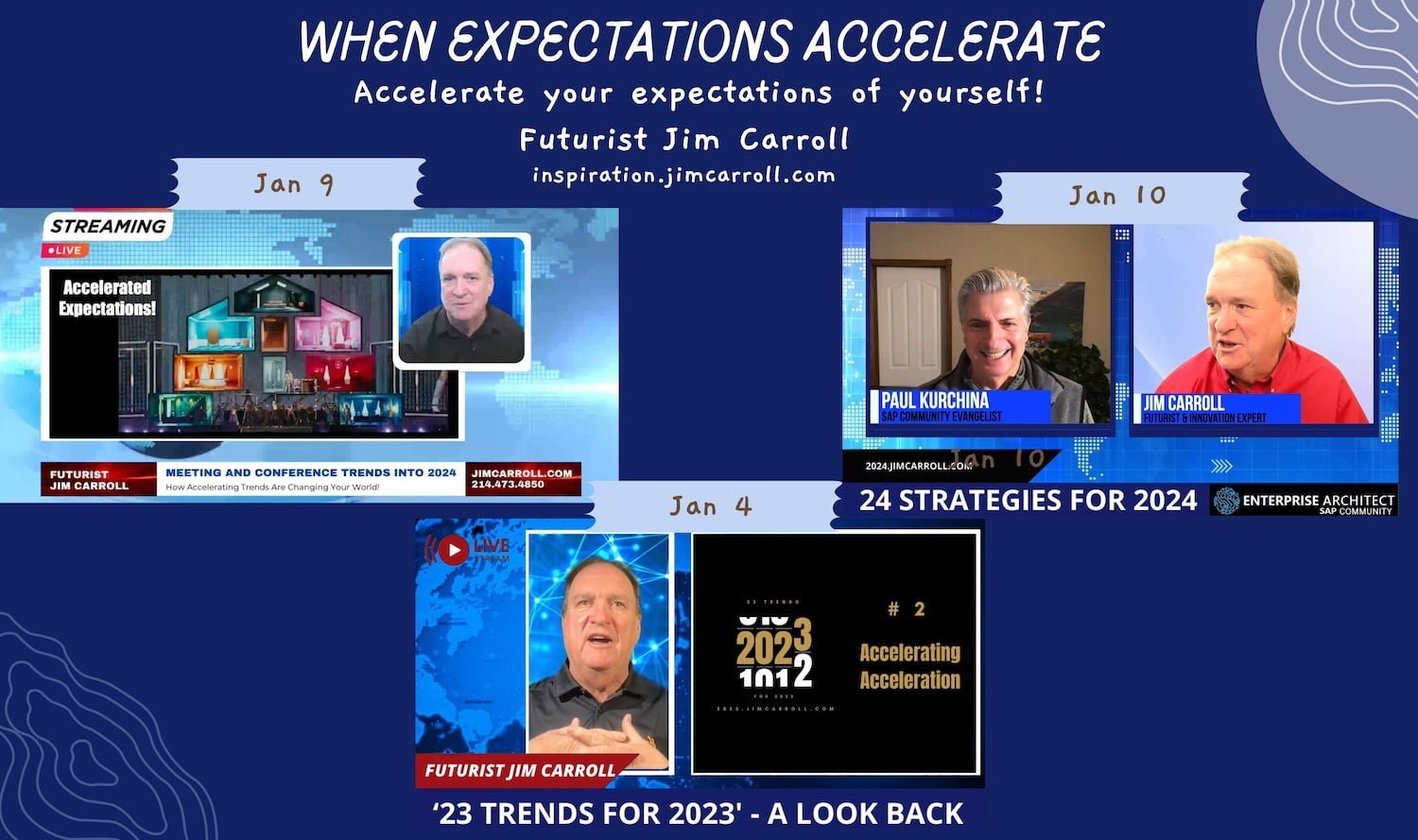
During the global pandemic, I spent a good part of my 10,000 hours down in my basement, working away in my virtual broadcast studio, mastering the task of virtually going live. I got pretty good at it, working with clients to put out virtual keynotes that looked pretty good. You can see screenshots of much of the work in a slideshow over at https://virtual.jimcarroll.com.
I continue to do some work in the studio, putting out content related to upcoming or past keynotes, topics I’m tracking, or other stuff. It’s not only important to my work, but the studio has also become my ‘happy place’ – it’s just a lot of fun working with the technology and my ideas.


(Yes, it gets a little warm in there!)
Yesterday, I put out a short ten-minute show, primarily aimed at a LinkedIn group of meeting and event planners – essentially, the people who plan, organize, and manage the large-scale conferences and events I am often booked into.

The show took a look at the trends impacting the industry into 2024; I put it together to summarize some of the key trends I’ve seen happening all around me.
What’s in store for the meetings and events industry in 2024?
As a futurist, I had a look at this short video. From ‘drone shows’ to ‘event workflow software’ and ‘digital twin immersive site visits’ – and the impact of The Eras Tour on event expectations! – I take a look at a few key trends you should be thinking about!
In my show, I took a look at a variety of the trends, technologies, and issues that might come into the industry during the year – including the impact of Taylor Swift’s Eras tour staging! (That short section is in the clip above, but I had to put a big black box over the clip because it violated YouTube’s copyright technology. It wasn’t similarly rejected by LinkedIn, Facebook, or TikTok. Go figure!)

You can watch the full version here without that bit blacked out – I have it on my own ‘streaming server.’
In any event, the point I was trying to make in that section was this – through what she has done with the Eras Tour, Taylor Swift has set the bar extremely high when it comes to the meetings, events, and conference industry going forward. The use of sophisticated and ever-changing staging setups, the lighting and video production, the massive number of set changes, the customers, choreography, and costumes – it’s all way over the top. Even if you are not a Swiftie – a Taylor Swift Fan – you should go and watch the show just to see the level of production that is involved. It’s available for rent on AppleTV and other streaming services.
Since the new year began, I’ve engrained that mindset into my work by experimenting with new virtual setups and content production from my virtual broadcast studio. Last week, I did a short show about my 23 Trends for 2023 series; yesterday I did this show about the event industry; and later today, I’ll speak to close to 200 people with my good friend Paul Kurchina, with a look at my 24 Strategies for 2024 series. All of these ‘shows” involve a new set design that is a little more ‘news-oriented’ and has a nice, clean, professional look. I’ve also introduced elements of titles and production elements of production that fit within the theme. (You can actually catch that show later today – it is streamed out ‘live’ to several online services, and can be found at https://live.jimcarroll.com – although I’ve got a bit of work to do to make that page look better!)
My mindset for my work today? In 2024, individuals attending events – whether virtually or in person – will have higher expectations when it comes to the production value of what they watch and attend. This isn’t solely due to Taylor Swift – it’s the fact that the industry continues to see an influx of new technologies, ideas, design and production concepts, and more. Not only that but with the ongoing collapse of attention spans – people tune out just minutes in! – you’ve got to work harder to keep their interest, whether in person or virtually. This involves tight and professional production values.
I did the same thing with my slide deck design for the year, adopting a new slide deck template that to me also looks cleaner, tighter, and more engaging.


I’ve also been, as you know, using AI to generate many of the images within these slide decks – to me, they add a new professional element to the design.
In my keynotes, I will often talk about ‘customer expectations’ as a key trend to watch and monitor going forward.
Overall, as the world speeds up, those expectations are accelerating and changing – customers are becoming more demanding. The example I will often use is e-commerce and online selling – the bar of expectations has been set by the customer experience delivered by Amazon, with online order tracking, instant delivery, and no-question returns for Amazon Prime customers. If you can’t meet or exceed the same level of expectations, you aren’t in the game.
The world is changing – and a key part of that is the expectations of those you interact with. You need to align with that reality, adapt to it, and continuously push yourself to do better than your best. This involves working with new ideas, design concepts, and more – because, in a world in which the bar of expectations is set by Taylor Swift, you’ve got an extremely high bar to jump!
Video: What’s in store for the meetings and events industry in 2024?
What’s in store for the meetings and events industry in 2024?
As a futurist, I had a look in this short video. From ‘drone shows’ to ‘event workflow software’ and ‘digital twin immersive site visits’ – and the impact of The Eras Tour on event expectations! – I take a look at a few key trends you should be thinking about!
Daily Inspiration – Momentum : “Your moment is right now. Are you ready?
“Your moment is right now. Are you ready?” – Futurist Jim Carroll
What are you waiting for?
More clarity? Greater certainty? A guaranteed outcome? A completely reliable forecast? Are you demanding a crystal clear outlook before you can bring yourself to a decision or even gather up the momentum to begin moving forward?
The only certainty that you have right now is that tomorrow is tomorrow, and there’s not a lot you can do about that fact. It’s pretty guaranteed that in major ways or subtle fashion, it will be very different than today. In that context, if you keep on doing what you’ve always done in that context, you’ll keep getting what you’ve always got.
Here’s what separates successful people from marginal performers: Successful people do. Marginal performers don’t. That’s because successful people know that their moment is right now, and they seize upon it through action, not indecision. Successful people decide to move forward with confidence. Marginal performers? They hesitate!
How do you get your momentum going? Understand what drives success:
- Successful people seek solutions. Marginal performers focus on problems.
- Successful people take calculated risks. Marginal performers play it safe.
- Successful people learn from failure. Marginal performers avoid it.
- Successful people set clear goals. Marginal performers lack direction.
- Successful people adapt quickly. Marginal performers resist change.
- Successful people cultivate resilience. Marginal performers give up easily.
- Successful people are continuously learning. Marginal performers think they know enough.
- Successful people build strong networks. Marginal performers work in isolation.
- Successful people stay focused on the big picture. Marginal performers get lost in the details.
- Successful people inspire others. Marginal performers complain.
- Successful people embrace challenges. Marginal performers avoid them.
- Successful people innovate. Marginal performers stagnate.
- Successful people prioritize self-improvement. Marginal performers neglect personal growth.
- Successful people build resilience. Marginal performers succumb to pressure.
- Successful people are proactive. Marginal performers are reactive.
- Successful people seek feedback. Marginal performers ignore criticism.
- Successful people foster positive relationships. Marginal performers create conflicts.
- Successful people think long-term. Marginal performers focus on the short-term.
- Successful people lead by example. Marginal performers follow the crowd.
- Successful people take responsibility. Marginal performers blame others.
- Successful people stay curious. Marginal performers are complacent.
- Successful people are flexible. Marginal performers are rigid.
- Successful people maintain a positive attitude. Marginal performers are often negative.
- Successful people are goal-oriented. Marginal performers lack focus.
- Successful people embrace diversity. Marginal performers resist differences.
- Successful people are consistently reliable. Marginal performers are unpredictable.
- Successful people invest in their future. Marginal performers live only in the present.
Successful people are the yin. Are you the yang?
Get moving. Get going. Start doing. Momentum is better than motivation.

Your moment is right now.
Will you seize the opportunities?



GET IN TOUCH
Jim's Facebook page
You'll find Jim's latest videos on Youtube
Mastodon. What's on Jim's mind? Check his feed!
LinkedIn - reach out to Jim for a professional connection!
Flickr! Get inspired! A massive archive of all of Jim's daily inspirational quotes!
Instagram - the home for Jim's motivational mind!