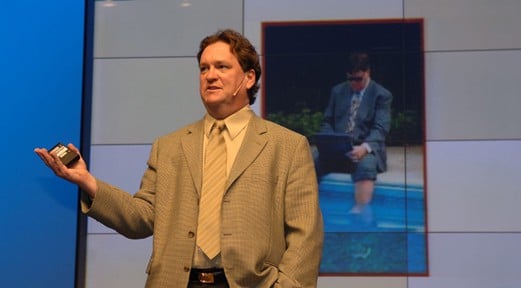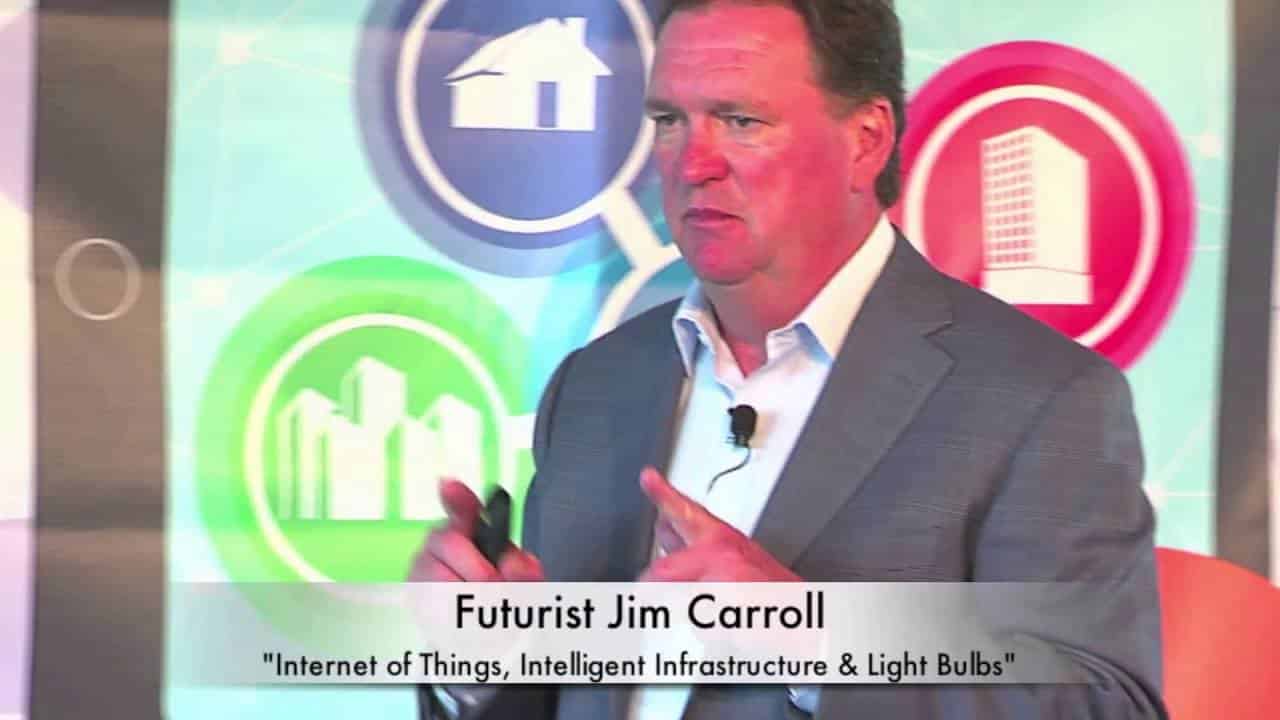
From my keynote for the global Worldskills conference in Sao Paolo, Brazil! What types of new careers are emerging around us?
Video: The Acceleration of Skills in the Era of the Internet of Things @WorldSkills in Sao Paolo
From my keynote in Sao Paolo for the WorldSkills Global Competition …. how will the iOT impact skilled trades and other careers?
Trend: My thoughts on the future of ‘specialty foods’
I was recently interviewed by the folks at the Speciality Foods Association, for my thoughts on what is happening in their sector.
How a Futurist Deciphers Trends
By Brandon Fox, January 2016

Author, speaker, and consultant Jim Carroll offers global trend analysis and strategies for change to companies as varied as Johnson & Johnson, the Walt Disney Corporation, and Yum! Brands. Here, he discusses why trends are more complicated than “what’s hot or what’s not,” the lightning speed of consumer influencers, and why experimentation is necessary to build shopper relationships.
WHAT TRENDS ARE YOU SEEING IN THE FOOD INDUSTRY?
Boy, where do we start? I take a different approach—it’s not “what’s hot or what’s not,” but how are things changing and how quickly can specialty food come to market
People are influenced faster than say, five or 10 years ago—or even a year ago—and a lot of that has to do with social networks, but also with just the way new concepts and new ideas are put in front of them.
I spoke to a group of beverage executives a couple of years ago about what was happening with food and alcohol. I told them to think about “Mad Men.” All of sudden, 1960s retro drinks were all the rage. It happened quickly because people are influenced in new and different ways. It’s not, “what are the new taste sensations?” but “where are those new taste sensations coming from?”
[As for what’s emerging now,] consider how hummus grew as a trend—and then consider what comes next: more quinoa, buckwheat, and rice [products] as people seek similar healthy snack and meal options. And there are fascinating new developments like fruit sushi, chocolate-flavored soda, and even bacon-flavored vodka.”
WHERE DO YOU SEE INFLUENCES COMING FROM SPECIFICALLY?
One example I use all the time is bacon. I traced it back from an article that appeared in the Associated Press newswire in March 2011. The article was called “How Bacon Sizzled and People Got Sweet on Cupcakes.” [The author] followed the trend back to a wine distributor in Southern California who, about six years ago, paired a Syrah with peppered bacon at a tasting. That somehow got out onto the blogs of the time and all of a sudden, boom! Bacon became hot. Everyone talks about Facebook and Twitter all the time, but it’s a new kind of connectivity in terms of how we eat and drink and how we share and talk about it.
DO YOU THINK CELEBRITY CHEFS’ INFLUENCE HAS BEEN STRONG ENOUGH TO DRIVE THIS INDUSTRY?
Huge impact. It used to take a new taste trend from a high-end restaurant five years [to filter down] and now it takes six months or three months or less because there is so much exposure. And another thing is food trucks. People can’t meet the high capital cost of a new restaurant, so they roll out a truck. They’re everywhere. You have people with obvious skills. They can now do what they want and get in front of an audience. And with television shows like the Cooking Channel’s “Eat Street,” it’s a supernova that’s moving faster than ever before.
HOW DO YOU DIFFERENTIATE BETWEEN SOMETHING THAT’S GOING TO BE SUSTAINED VERSUS A BLIP ON THE RADAR? YOU’VE TALKED ABOUT BEING NIMBLE, BUT IS THERE A DANGER TO JUMPING TOO QUICKLY?
Too fast or too slow? When the low-fat and low-carb trends came along, by the time [companies] got a product to market, the trend had come and gone. One fascinating experience was when I was doing a talk for Reader’s Digest’s food and entertainment magazines on the same day Lehman Brothers went down and the stock market crashed. The focus of the conference quickly became the economic downturn, comfort food, and the fact that people would focus on more grocery shopping and less time in restaurants. That was the day that Campbell’s Soup was the only stock that went up in value. The buzz around the room was that we, as a food industry, are not very fast or agile to respond to these fast-paced trends.
THAT WOULD HAVE BEEN IN 2008—HOW HAVE YOU SEEN THINGS CHANGE SINCE THEN?
I still worry. How far has the industry come along? Well, a little bit. To a large degree, many consumer food companies still have not made much progress. Fads have a shorter lifespan, trends have a shorter lifespan, consumers have a shorter attention span. While you might have had longevity of three to six to 12 months with a particular type of food, is that collapsing now? We’re no longer in a world in which we can sit back and have a one-year planning cycle.
YOU TALK A LOT ABOUT MOBILE TECHNOLOGY. EVERYONE SEEMS TO BE DOING EVERYTHING WITH THEIR PHONES, BUT HOW CAN A COMPANY REALLY LEVERAGE MOBILE?
Think big, start small, scale fast. If you think big and look five years out—you’re, say, an olive oil company—the bottle is going to be intelligent. It’s probably going to have a chip built into it. You’ll probably have some type of relationship, either direct or indirect, with the consumer. That’s a given.
HOW WILL A CHIP ON A LABEL OR BOTTLE HELP THE COMPANY GET TO KNOW THE CONSUMER?
The consumer might have liked the company on Facebook—maybe there was a very effective ad on Facebook and they have agreed to share their information. That establishes the relationship. When [the consumer] walks into the store, their mobile device has that relationship embedded in it and the product with the active packaging chip in it recognizes that they’re near and starts running a commercial on an LED screen while they’re walking into the store. It might say something such as, “You’ve liked this before, so here’s a coupon that we’ll zip to your mobile device.”
That kind of freaks me out.
I’m 56 and that kind of freaks me out, too. My son—he’s 20—is in a different world. He views contractual relationships in a very different way. Five years, 10 years from now, he’s going to have more of a budget for spending, and will he accept that idea of zipping a coupon to him? I think he will.
There’s a stat I dragged out years ago—the average consumer scans 12 feet of shelf space per second. Think about that. You have very little time to grab their attention, so you’ve got to experiment quickly with new ways of putting [your product] in front of them.
Brandon Fox is the food and drink editor of Style Weekly in Richmond, Virginia. Her work has also appeared in The Local Palate and the Washington Post.
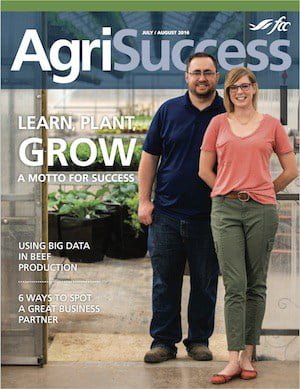
Article: “Can’t ignore the trends in agriculture”

Farm & Dairy Magazine interviewed me a few months back, and have since published an article with some of my thoughts about the future of agriculture. It’s a good read!
Can’t ignore the trends in agriculture
Farm & Dairy, by Susan Crowell
January 2016
I must’ve read at least 10 “top trends for 2016” articles at the beginning of the year. Most of them were related to food or farming, but there was an interesting twist proffered by one of the grand dames of futuring, Faith Popcorn. Popcorn talked about “fear,” her word for 2016.
Fear — think Ebola, ISIS, terrorist attacks in Paris and San Bernardino — escalated during 2015. We’re all just a little bit more worried that something bad could happen. Witness the entire stock market shaking on tremors emanating from China. Will the giant’s economic house of cards collapse this year, we wonder in the wake. It’s not just paranoia; bad things are happening all around us.
I think Popcorn gets a little extreme and says people are also looking for ways to “cocoon” and forget the outside world. They’ll look for an escape through virtual reality or seek protection programs, like armored school buses. But she says people are also looking for things to create memories of happiness and peace.
To me, that screams agritourism or bringing people together around the farm table. After all, you can’t have comfort food without farmers.
Here’s the thing about futurists and trend spotters: We don’t live in their world and often think their projections are wacky and “out there.” While they might not be spot on, however, there are kernels of truth in their outlooks, and that’s why we need to pay attention to them.
Another futurist, Jim Carroll, says there are three types of people: those who make things happen; those who watch things happen; and those who say, “Whoa, dude, what happened?”
You don’t want to be blind to a trend that could bring massive changes to your farm or ag business. You also don’t want to ignore changes that are already happening.
What’s already happening?
- Consumers care more about how their foods are produced and sourced — and that’s impacting the entire food chain from your farm to the store or restaurant. Transparency, transparency, transparency. Information, information, information.
- Local food is no longer a fad. Consumers want to support local farms, local businesses. Some are willing to pay, some are not.
- Environmental responsibility and conservation.
- The smartphone. It can purchase; it can find deals; it can suggest recipes; it can share nutrition information; it can pay; it can connect farmers with retailers, farmers with restaurants, farmers with their input suppliers, farmers with consumers.
- Stronger links between health and food (and also convenience); stronger emphasis on “clean eating” — think back to basics, or products that are minimally processed. People want “real food.”
- Food safety and traceability.
- Minimizing food waste — which speaks to the processing chain, as well as finding new uses for previously undesirable meat cuts or products.
- Water everything. (Ever hear of water footprint analysts? They’re already in demand.)
- Longer life spans. The typical baby born in the U.S. today will live to be 100. What does that mean for family farm structures and transitions and retirement planning and real estate and housing?
- New faces in farming. Carroll cites U.N. statistics that say there are 800 million practicing urban agriculture. More colleges beyond the traditional land grant universities are offering agriculture degrees. Embrace them all.
Yes, the current climate for traditional agriculture is challenging, so it’s hard to look at these trends and see how they play a role in your farm’s future, when you’re just trying to scrape by in 2016. (Ask yourself what each input costs relative to its contribution to yield. If you don’t what it contributes, get busy.)
Carroll, who does numerous, high-profile keynotes within agriculture, writes, “agriculture is an industry that is ripe for massive change and disruption — and the year 2045 might happen by 2025, if not sooner.”
And that’s one futurist’s prediction we can’t ignore.
By Susan Crowell
Trend: The Future of Sports? All Interaction, All The Time!

Last week, I appeared in USA Today, in an article about the future of sports.
They interviewed me just after my keynote on the main stage at the massive PGA Merchandise Show, and so there is an obvious slant towards golf. My quote and obserations are below.
This isn’t the first time I’ve talked about this aspect of the future of sport and fitness. I’ve done high profile keynotes for the Sporting & Fitness Industry Association CEO Summit; over 4,000 people at the National Recreation and Parks Association annual meeting, and two talks for the PGA of America!
You can read the full USA Today article In the future you’ll probably be able to pitch to Babe Ruth when you aren’t watching eSports here.
Jim Carroll
Futurist, trends and innovation expert
*Change will happen at Silicon Valley’s pace, not that of the NFL or NBA or any other league or sanctioning body. Technology companies will become the driving force behind sports innovation.
*Having just spoken to a PGA gathering, Carroll outlined a future in which any foursome will retreat to the clubhouse for post-round brews and … film breakdown. Within a few years, golfers will be able to post HD video to social media of their great shots, taken from cameras on the course and in the golf carts. They’ll also get detailed information about every shot they took; info will be gathered from the club, the ball, wearables and those cameras.
*The in-stadium (or arena) experience will be similar. Every object used in the game will soon be able to send information to a computer, so fans will be inundated with precise data about the speed of a baseball bat, the arc of a basketball shot and everything else.
Is this a bad thing? Is it a good thing? It’s easy to argue it both ways.
For example, after my PGA keynote, one traditional golfer who runs a site/blog known as “Wee Egg Mon” wrote Wee Egg Mon about how bothered he was by my talk.
It’s a good read, but he does make this observation: “Everything is going to change? Really? I hope not. I rather like the game the way it is.”
That’s the funny thing about the future. Sometimes it happens, and Ogden Nash captured the sentiment perfectly when he observed that for some folks, “progress is great but it’s gone on way too long.”
I doubt that the world of sports & fitness will look anything in 2025 will look anything like it does today, beyond the basics. Is that a bad thing? A good thing? Like I said, I have no idea. I just know it will happen.
Article: “Jim Carroll: Power to the people means energy-sharing”
A few weeks ago I was interviewed by The Big Issue, a UK publication that is mostly sold by the homeless and long-term unemployed.
As noted on their Web site, “Since The Big Issue was launched in 1991 we have helped thousands of vulnerable people take control of their lives. We currently work with around 2000 individuals across the UK offering them the opportunity to earn a legitimate income; to ‘help them to help themselves’. We currently circulates around 100,000 copies every week.”
There’s a really good audio program — “The Energy Transition Show” — which will help you explore the ideas below in greater depth!

Futurist Jim Carroll says renewable energy will soon allow people to beat the Big Six by creating microgrids with their neighbours.
Renewable energy projects have taken a beating in recent years – there was a lot of misspending in the early days, and production costs were too high. But we are getting much more intelligent about renewable energy and making it really efficient. I think we’re approaching a time that the cost of developing new, exciting alternative energy sources is going to rapidly decrease.
The individual is capable of playing a much bigger role here. Whether it’s wind generation, solar cells or bio-composting, the internet is allowing people to raise funds, share ideas and invent new energy technologies faster than ever before.
Traditional energy is all one-way: a big power plant that sends out energy to everyone on the grid. But the possibilities of creating a two-way system, where we can accept inputs from a large number of small-scale energy generators, is an incredibly exciting prospect.
The time is coming when more and more people will find they are capable of getting off the traditional grid. Or maybe connecting to the grid on only a part-time basis.
If you can connect a smart home energy thermostat with some solar, wind or biomass energy in your garden, you’re really not far off generating your own power. Soon people will be able to create local microgrids with their neighbours.
The big companies will have to become more flexible to adjust. Big data will enable the power sector to add far more intelligence to the grid, and make it a truly two-way, interactive system.
We’ve shared music – why can’t we share energy? The music industry thought it would be selling CDs forever but the model changed when people started sharing.
Long term, I’m optimistic we’ll be able to move away from carbon. We’re at a key inflection point. Right now, we’re roughly 90 per cent carbon, 10 per cent renewables. But I can imagine being at 50-50 in my lifetime. The next generation will look at renewables and say: “Wow – this just makes sense.”
Jim Carroll was talking to Adam Forrest


GET IN TOUCH
Jim's Facebook page
You'll find Jim's latest videos on Youtube
Mastodon. What's on Jim's mind? Check his feed!
LinkedIn - reach out to Jim for a professional connection!
Flickr! Get inspired! A massive archive of all of Jim's daily inspirational quotes!
Instagram - the home for Jim's motivational mind!