
The Future, Sector by Sector — Manufacturing & Industrial: The Factory Learned to Think
Ninth stop: manufacturing.jimcarroll.com is live, with a companion PDF — The Future of Manufacturing.
AI. Robotics. Digital twins. Mass customization. Advanced materials. Manufacturing is moving from mass production to flexible, intelligent, software-defined systems — and the factory floor I describe on stage today looks nothing like the one I started talking about thirty years ago.
Mass customization is replacing make-to-stock with make-to-order across more categories every year, which only works because digital twins now let manufacturers simulate both the product and the factory itself before a single physical decision gets made. AI and machine vision are moving deeper into quality, design and process decisions — not just spotting defects, but shaping how the line runs in the first place.
Robotics and cobots are expanding flexible automation into tasks that were reserved for people not long ago, working alongside human operators rather than replacing the floor wholesale. Advanced materials science is changing product weight, performance and economics simultaneously — the material itself has become a competitive lever, not just an input cost.
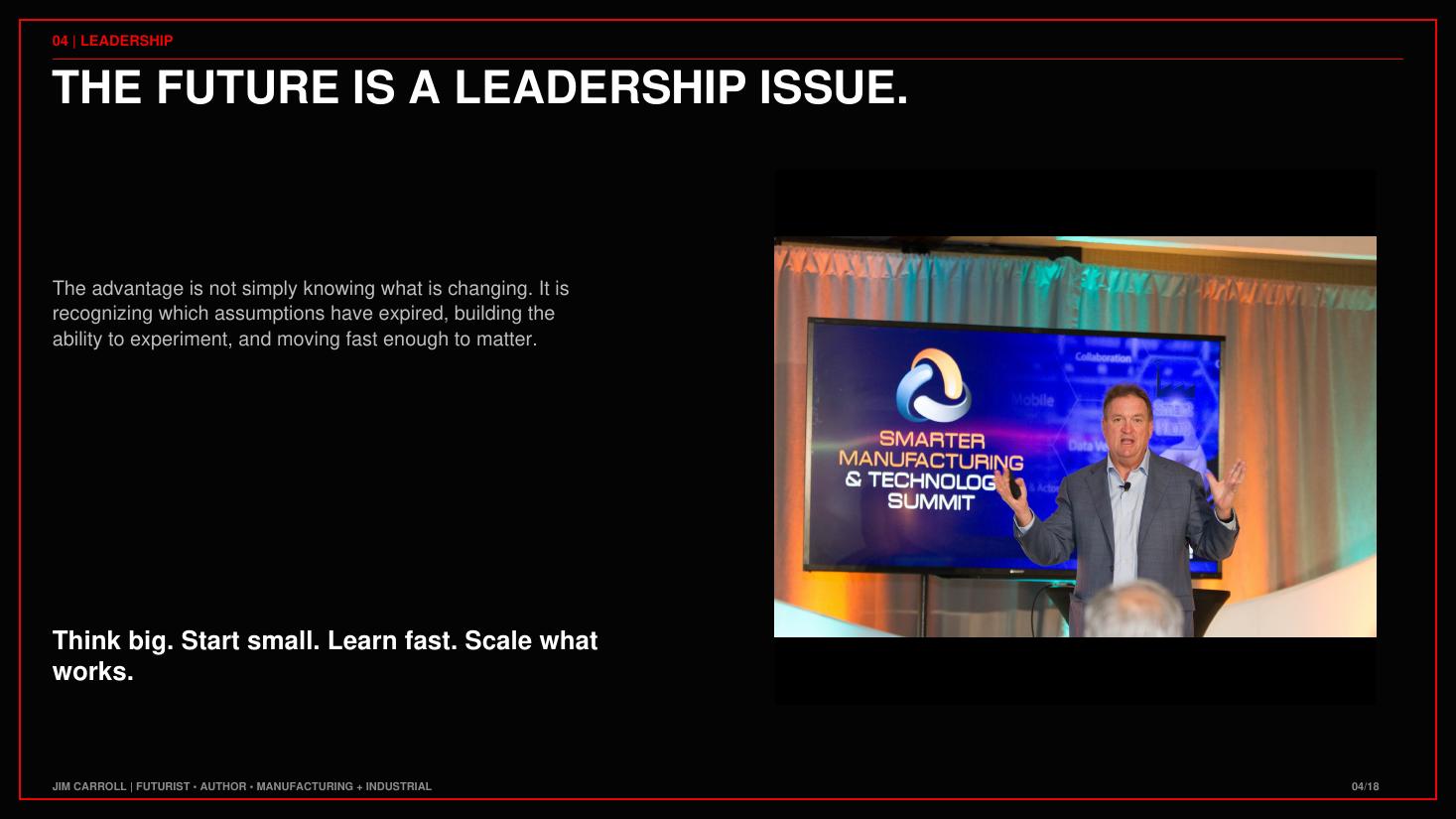
And the product doesn’t stop being a product once it ships. Product-as-a-service is shifting value toward uptime, insight and ongoing service as connected products keep reporting back long after they leave the factory — which is exactly why I frame the leadership challenge here as leading the factory of 2035, not managing the factory of today.
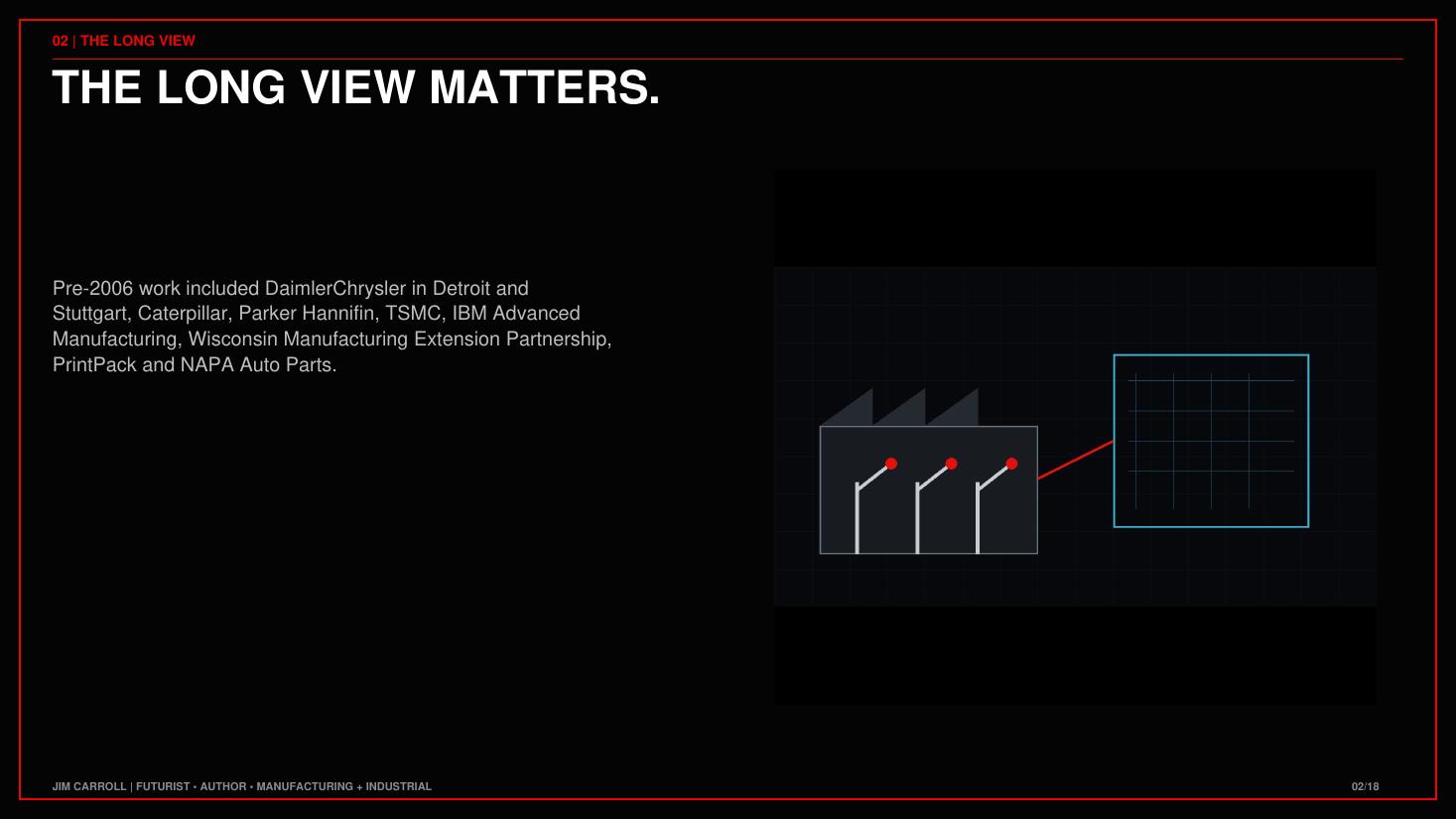
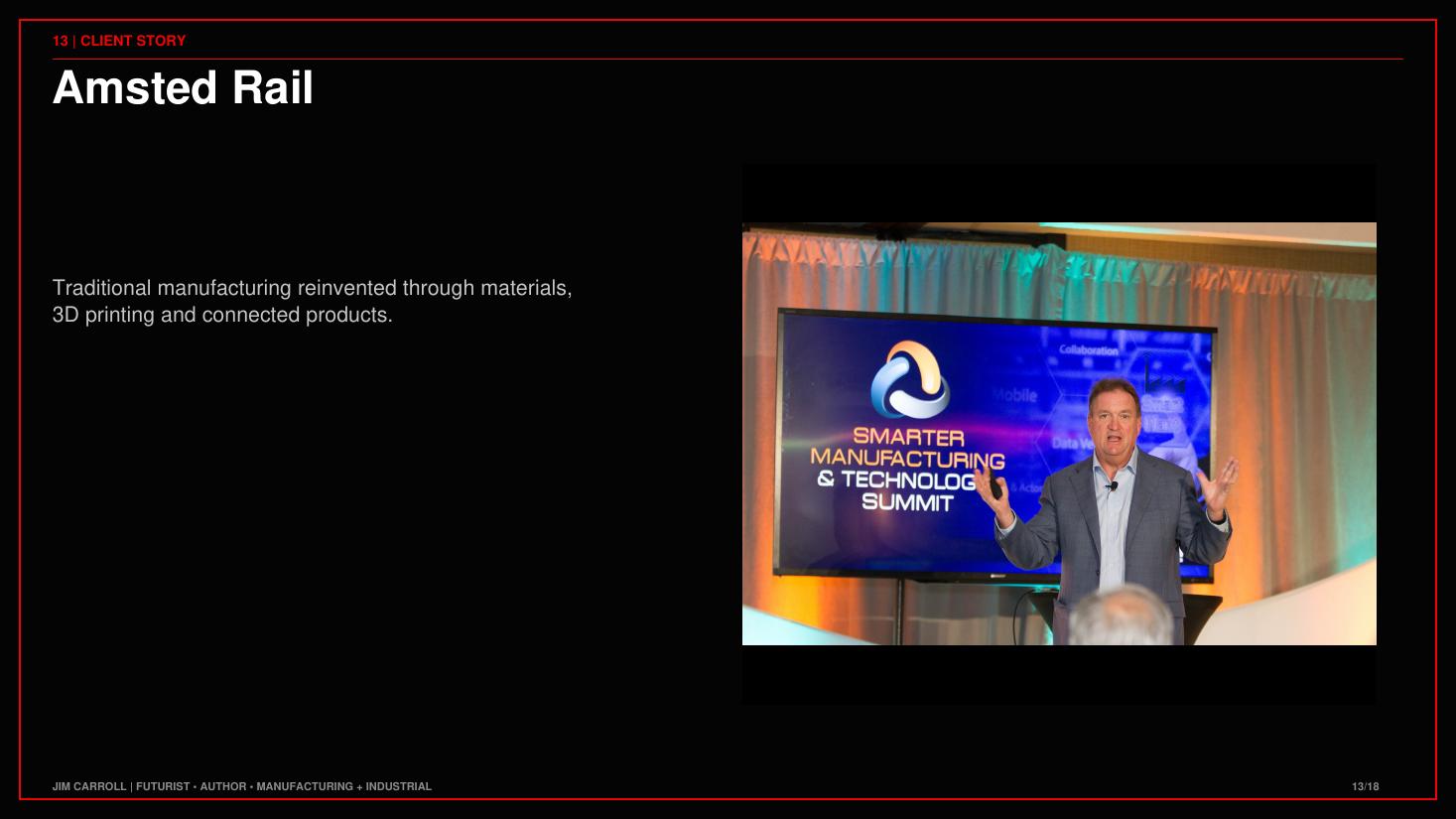
I’ve carried this into rooms with DaimlerChrysler, Caterpillar, Parker Hannifin, TSMC, IBM Advanced Manufacturing, Schneider Electric, Whirlpool, QAD, the Association of Manufacturing Technology, the Society of Manufacturing Engineers and BIFMA — automotive, industrial equipment, electronics and the software vendors now embedded inside all of it.
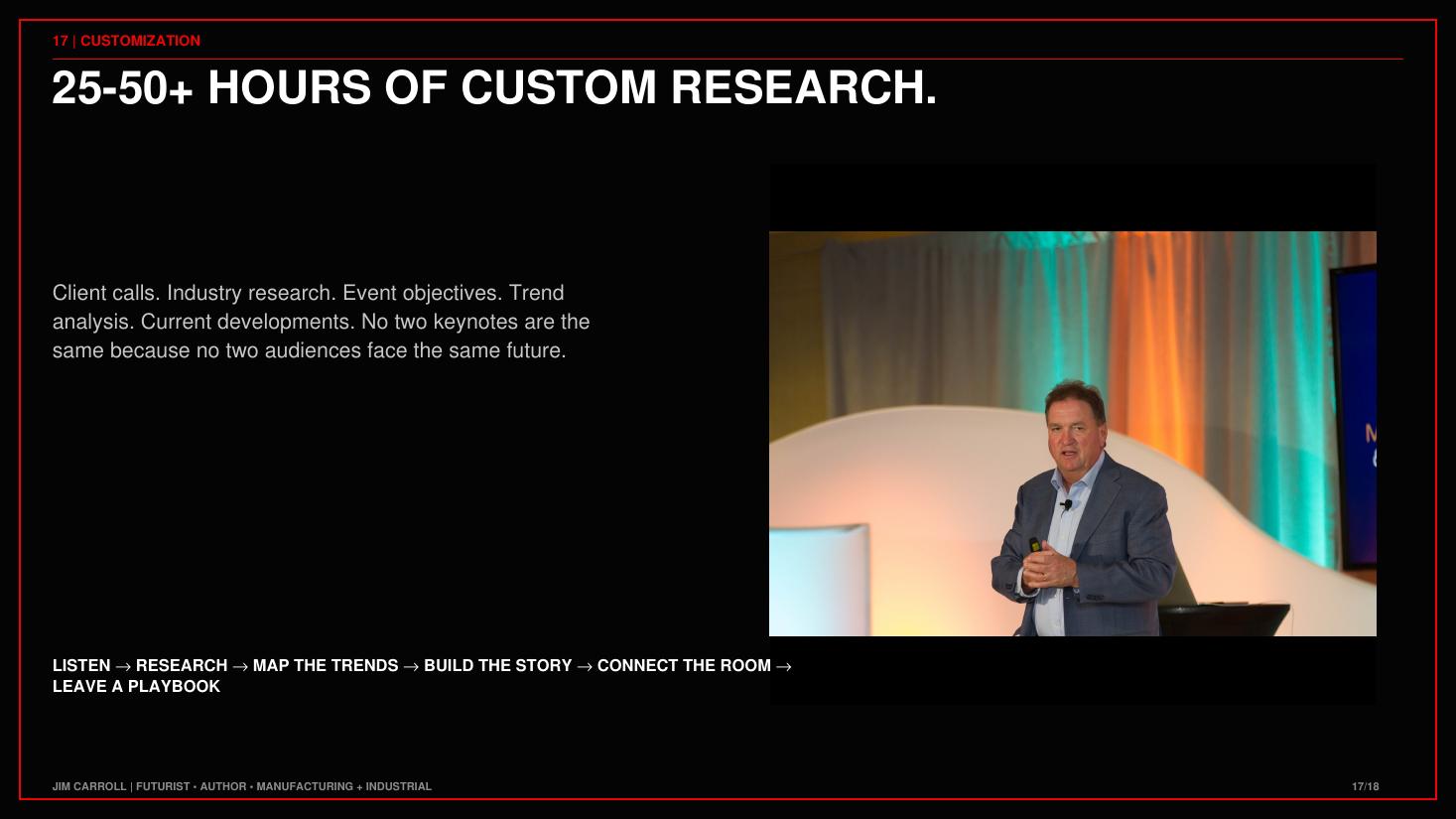
If you’re in manufacturing or industrial operations and want the full picture — the digital-twin factory, the mass-customization shift, the rise of product-as-a-service — grab the free guide, no form required: download the PDF here.
And if you’re planning an event for a room full of manufacturing or industrial leaders — let’s talk.
The 26 Principles, Revisited — #8: Velocity Alignment — What I Said, and What’s Actually Happening
Part of my “26 Principles, Revisited” series — checking my own math, nine months into the year I predicted.
The greatest risk today isn’t the speed of change: it’s your failure to pick up your pace.

Day 8’s argument: speed used to be a differentiator; now it’s the baseline requirement for existing at all. Five-year roadmaps were already a joke by the time I wrote this.
Since then, the external clock kept accelerating — the same five-frontier-model-releases-in-five-weeks I mentioned back in Principle #1 is a Velocity Alignment story just as much as a Temporal Literacy one. Organizations still running annual planning cycles aren’t just falling behind once anymore. They’re getting lapped multiple times inside a single planning cycle.
Verdict: Nailed it — the baseline moved up again, right on schedule.
Next up: Principle #9, Aim Higher — revisited.
How Innovation Happens — Lesson #1: Make Big Bets, Not Small Hedges
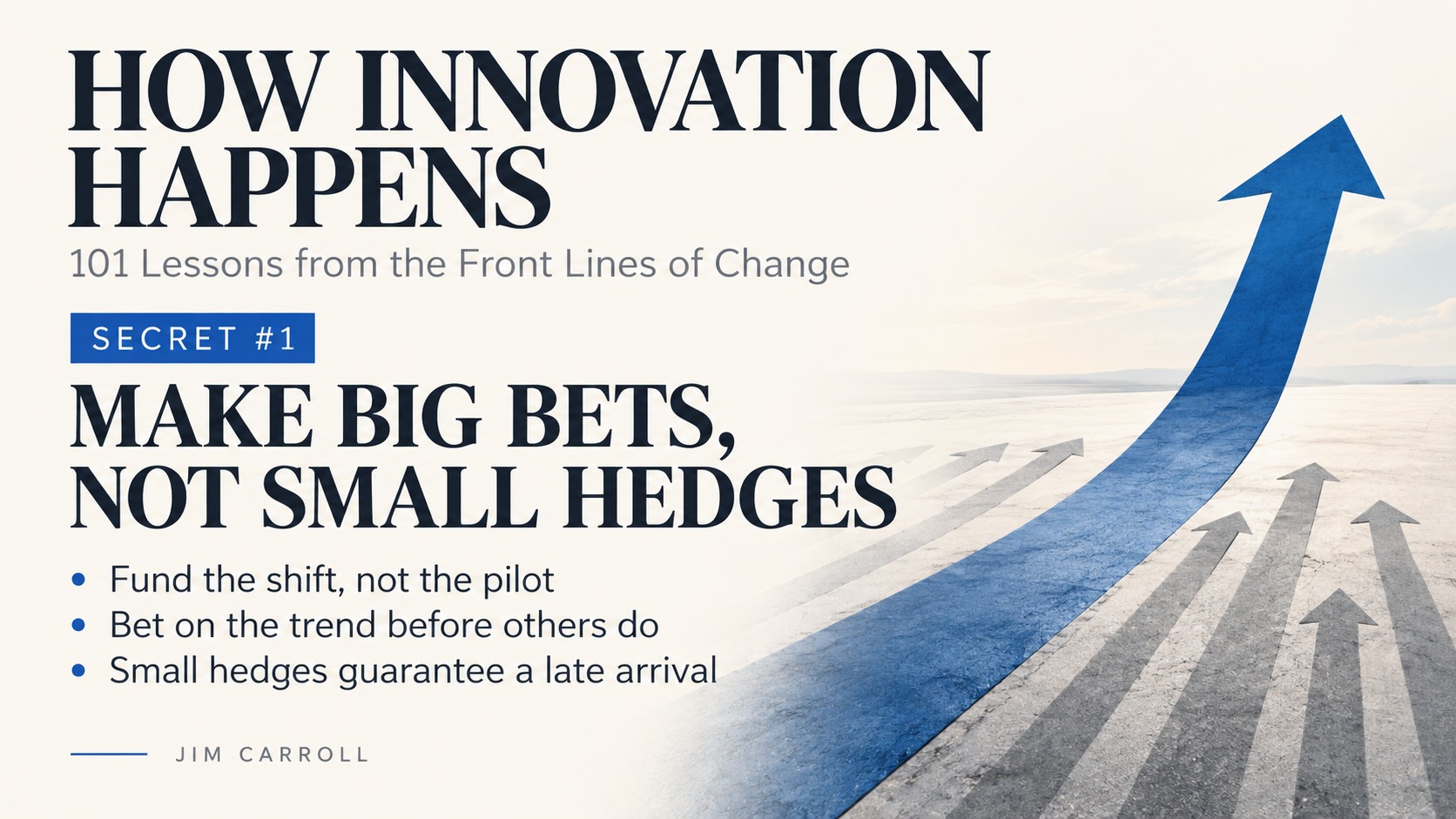
I’ve been covering the link between future trends and innovation strategies for 30+ years. I went back through my blog posts, stretching to 2002, to dig out the nuggets of innovation insight I’ve discovered along the way. This series revisits those stories, tests what still holds up, and turns them into practical lessons for what comes next.
“Innovative organizations make big bets.”
I’ve had the privilege, over the years, of watching what separates genuinely innovative organizations from the ones just going through the motions: clients like National Australia Bank, Diners Club, H.J. Heinz, Nestlé. The pattern isn’t subtle: the innovative ones commit at scale. They don’t nibble at the edges of a trend, they make a big bet on its scope and size, then innovate at a furious pace to keep up.
One financial services client saw mobile banking coming and didn’t pilot it quietly in a corner. They made an across-the-board bet on it, knowing it would mean serious business-model disruption along the way. Another realized how much social networking was reshaping their brand exposure and boosted total marketing spend by 20% on the strength of that one insight, redirecting existing budget on top of it.
Small hedges feel safe. They also guarantee you arrive at the future late, and underpowered, right behind everyone who bet big and got there first.
So what can you learn from this? Don’t think small. Make the bet big enough to matter. Here are three questions to put on the table.
Action Items:
- Pick one trend your organization has been “monitoring” for over a year without committing real budget to it. Make the bet this quarter.
- Audit your last three innovation investments. Were they sized to actually matter, or sized to be easily defensible if they failed?
- Ask your leadership team directly: what’s the biggest bet we’re afraid to make right now, and what’s actually stopping us?
Explore the full How Innovation Happens series.
Real-World Examples
These researched examples show the lesson at work in the real world.
Neste: €1.22 billion invested before renewable diesel had a mass market
In 2007, the Finnish oil refiner Neste announced a €550 million renewable-diesel refinery in Singapore. The next year it committed another €670 million to a comparable plant in Rotterdam. The easy decision would have been to keep experimenting at its existing Finnish refinery and wait for customers to appear.
Instead, Neste funded world-scale production before demand was established. Both plants were operating by 2011. The company had not simply added a greener product to its catalogue; it had committed industrial-scale capital, new facilities and its future technical expertise to a different energy market.
In a later retrospective, a senior Neste executive acknowledged that there were very few customers in sight when the early investments began. The strategy was not without complications: feedstock sustainability, changing government incentives and uneven demand have all required adaptation.
But by 2025 Neste reported approximately 5.5 million tonnes of annual renewable-products capacity. The important distinction is that its investment helped create the scale needed to serve an emerging market, rather than waiting for that market to feel safe.
Why it matters: The lesson: a serious strategic bet commits real capital and capabilities before the outcome is assured, while leaving room to adapt as the market develops.
Sources:
Mercado Libre: An online marketplace bets on physical logistics
Latin America’s Mercado Libre could have remained a marketplace connecting buyers and sellers while leaving delivery entirely to established carriers. Instead, it made a more demanding bet: it would help build and coordinate the logistics infrastructure required to make online shopping dependable across a fragmented region.
In 2017, its Brazilian Mercado Envios operation opened a 17,000-square-metre fulfilment centre in Louveira to handle storage, packing, shipping and post-sale service for marketplace merchants. It was a commitment to warehouses, operational systems and delivery performance, not merely another software feature. The facility expanded to approximately 51,000 square metres the next year.
The larger network still relies heavily on third-party delivery partners; the innovation was taking responsibility for orchestrating the entire experience. By 2024, Mercado Envios handled 1.8 billion items and 49% were delivered the same or following day.
That year, Mercado Libre opened another ten fulfilment centres. The company chose to invest beyond the boundaries of its original digital business because the future of that business depended on solving a physical problem at scale.
Why it matters: The lesson: sometimes the big bet is building a capability your industry normally outsources, because the customer experience cannot improve without it.
Sources:
A Brighter Future Starts With Better Habits
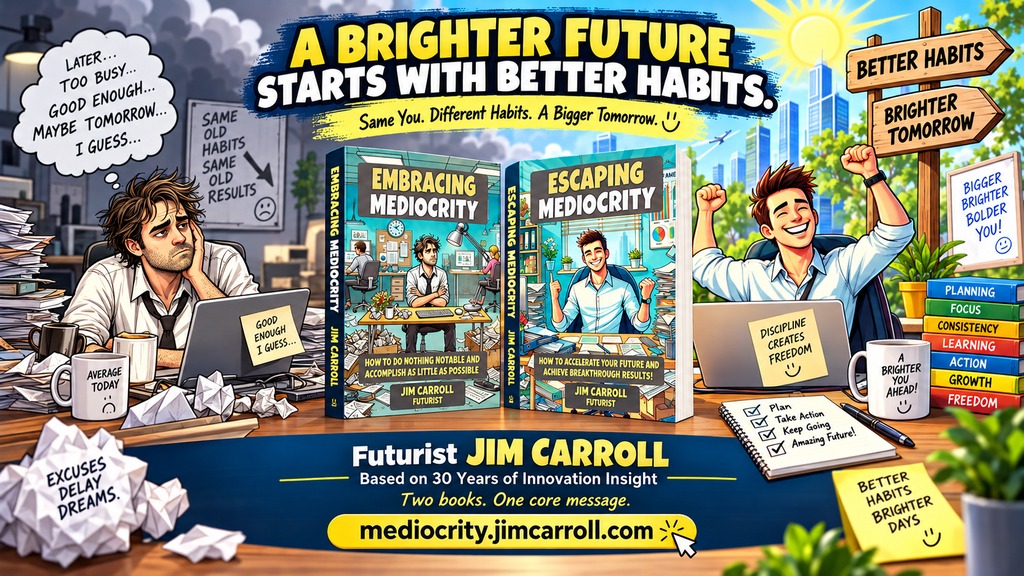
Same you. Different habits. A bigger tomorrow. It’s a small shift, and it changes everything.
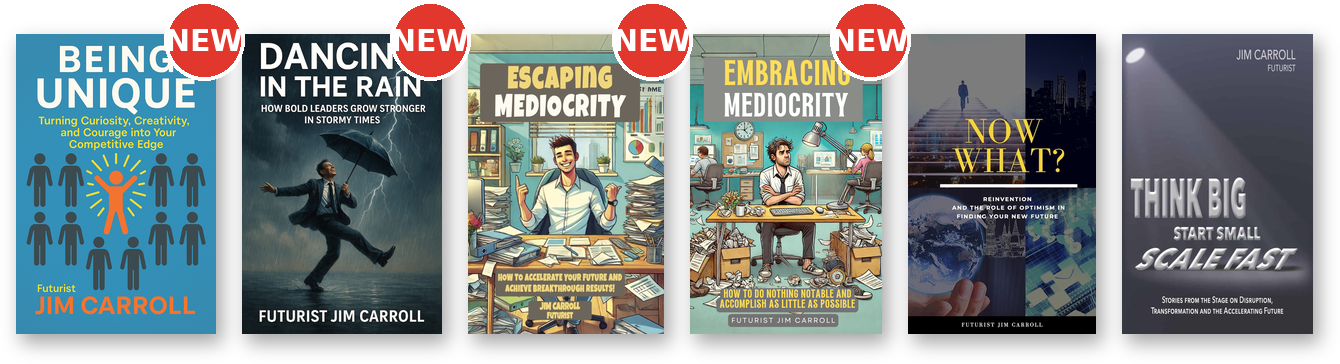
Embracing Mediocrity and Escaping Mediocrity are companion books built on thirty years of insight into what makes innovative teams and leaders work, and they make an unusually fun pair for a teambuilding session or a personal reset. Grab both, laugh a little, and get moving at mediocrity.jimcarroll.com
The Future, Sector by Sector — Insurance: Insurance Stopped Pricing the Past
Eighth stop: insurance.jimcarroll.com is live, with a companion PDF — The Future of Insurance.
The way I frame this sector: insurance is moving from pricing the past to architecting risk. For more than three decades I’ve worked with insurers, reinsurers, brokers, actuaries and corporate risk leaders on a single, uncomfortable problem — the velocity and complexity of risk is now outrunning the models built to understand it.
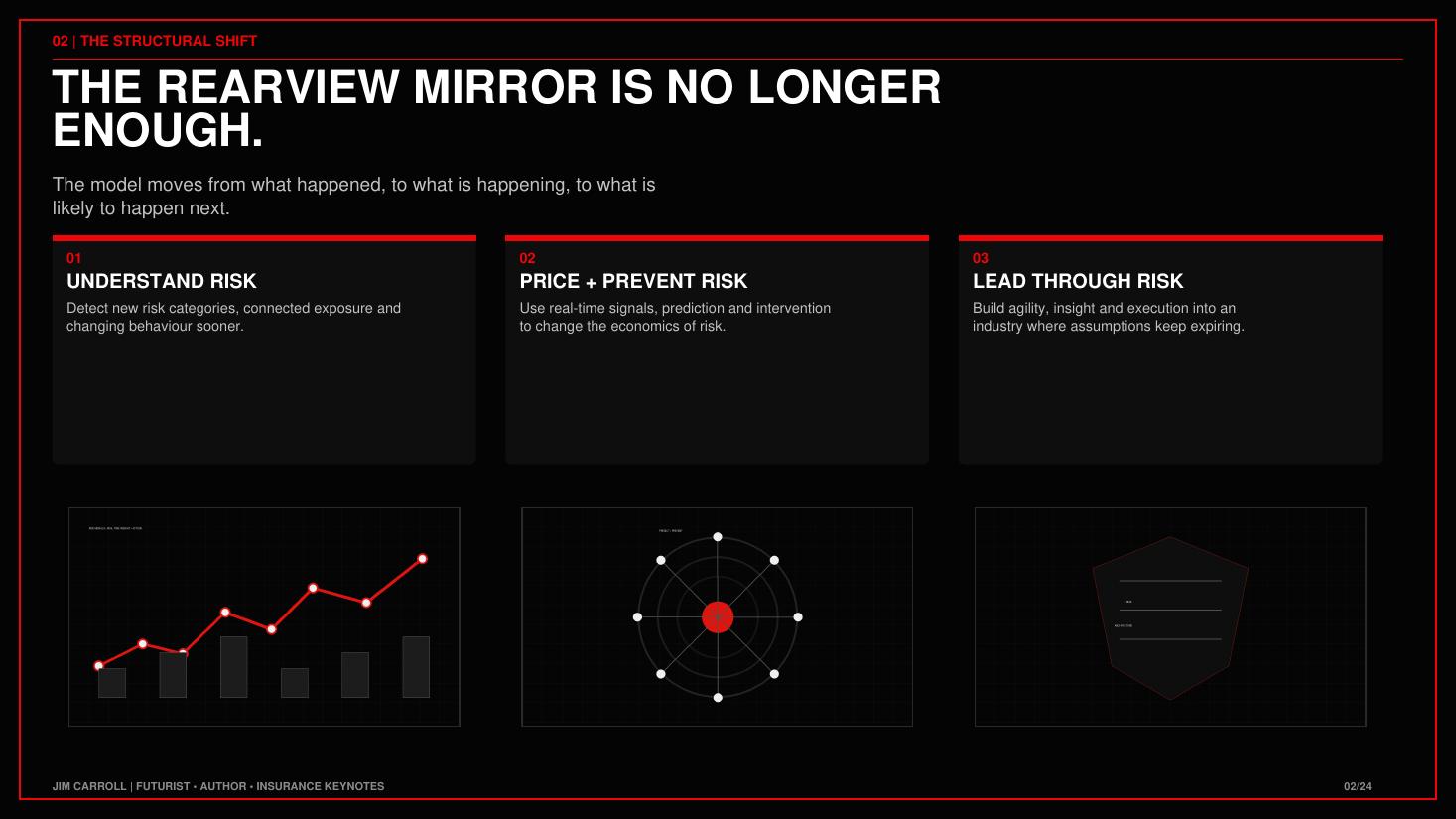
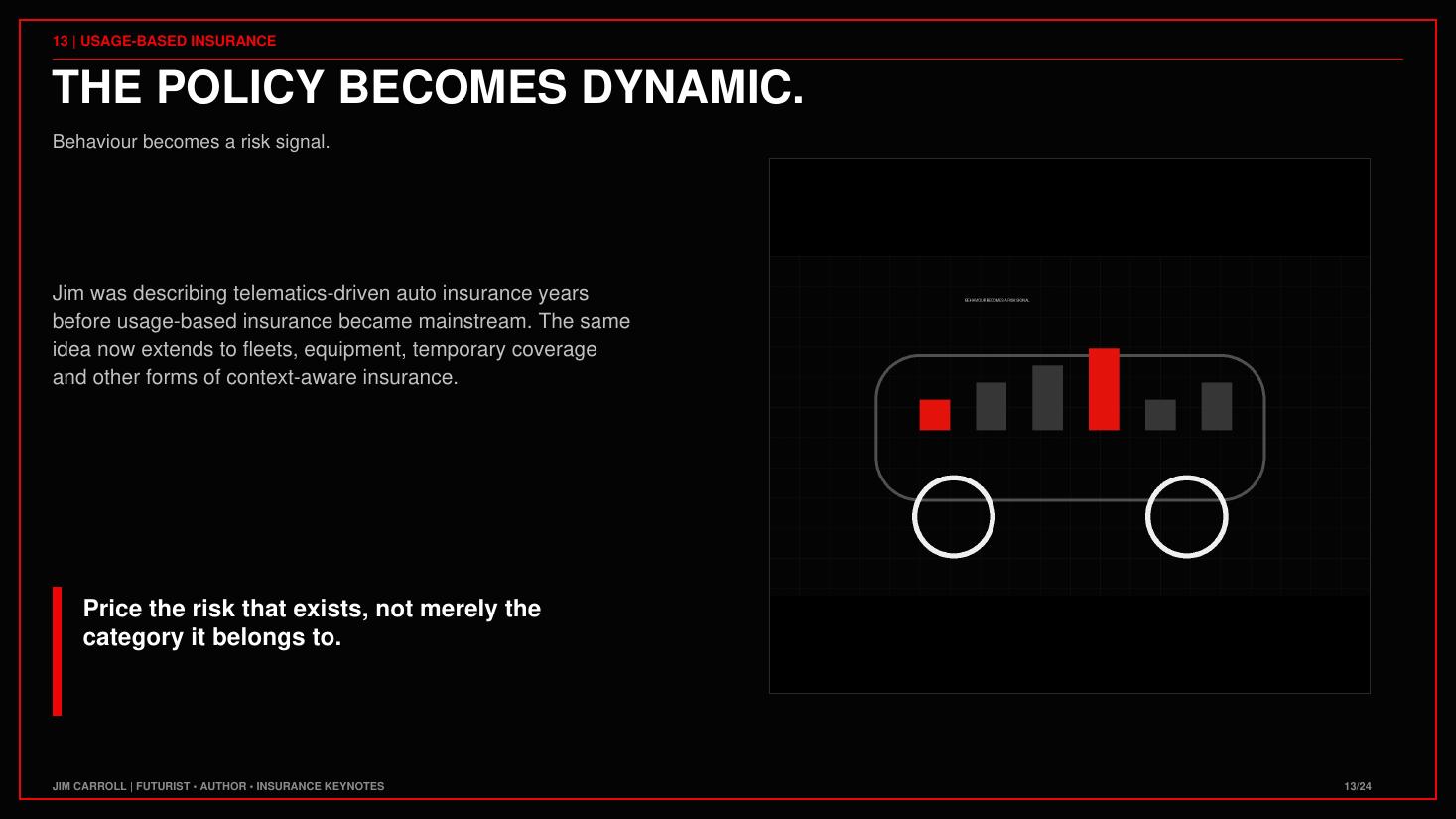
Underwriting and claims are being reshaped by AI moving from a back-office efficiency tool into the core of how risk itself gets assessed and priced. That’s the heart of what I call real-time insurance: a shift away from historical actuarial models, built on years of past claims data, toward continuous risk assessment that updates as conditions actually change — climate, cyber, health, behavior, all moving faster than an annual renewal cycle can track.
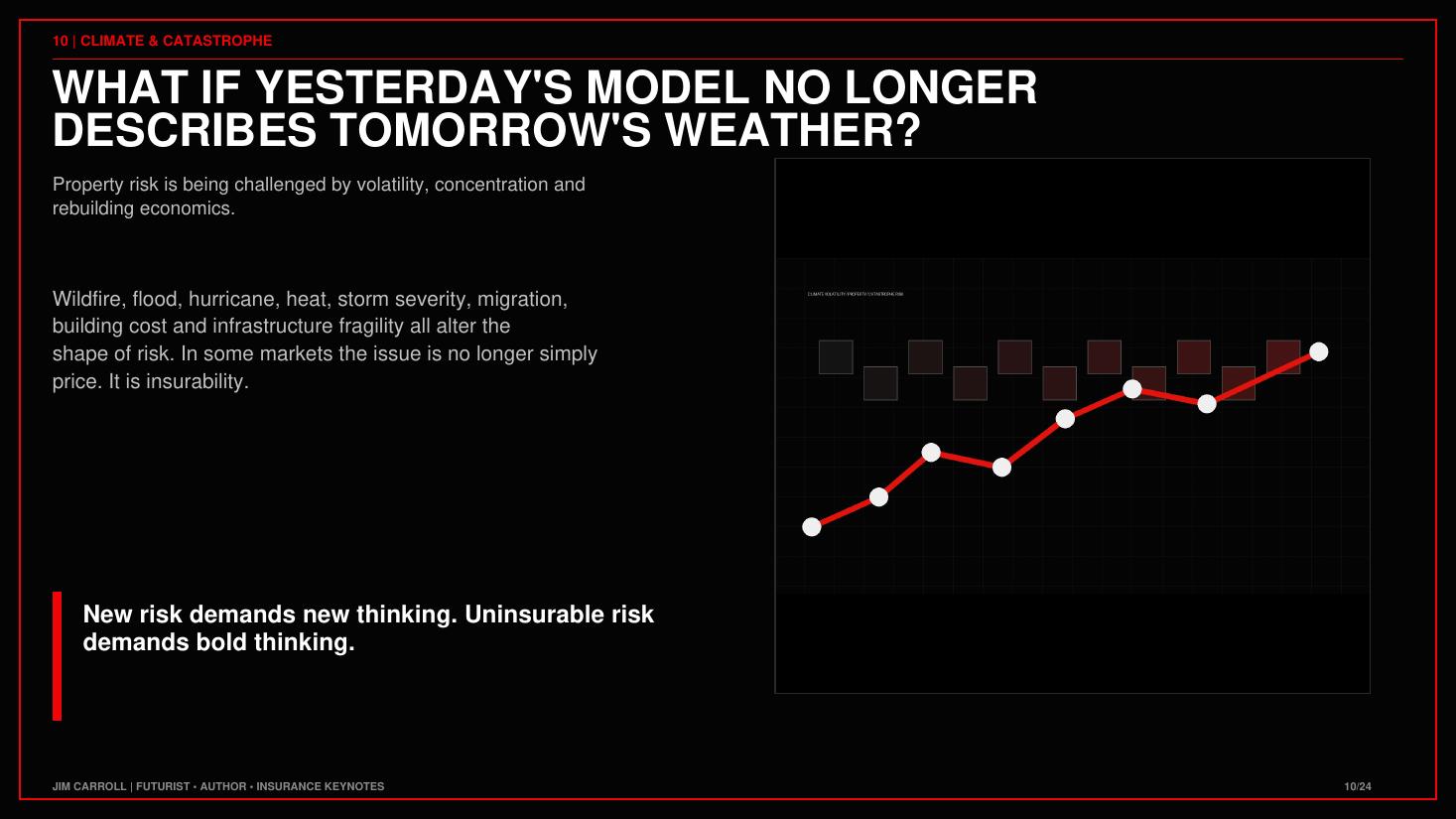
The risk itself is accelerating, not just the tools used to price it. Climate volatility, cyber exposure and interconnected global supply chains are creating risk profiles that didn’t exist when most of the industry’s foundational models were built. That’s the provocation behind the future of risk: what happens to an industry built on historical pattern-matching when the patterns stop holding?
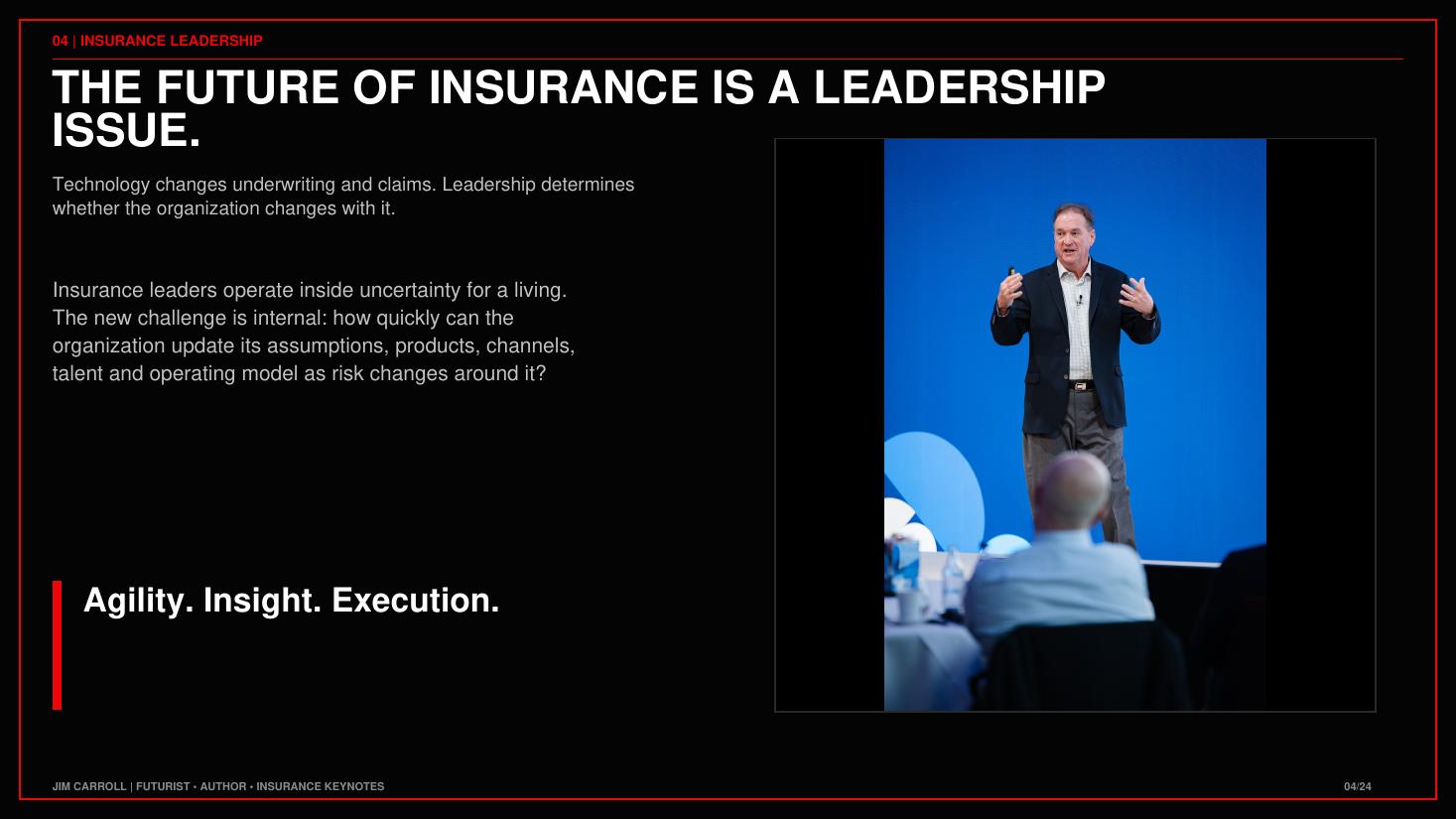
None of this eliminates the human role — it redefines it. The future of the agent and broker isn’t about competing with direct, digital channels on price; it’s about reinventing what human judgment and relationship are actually worth when the transactional part of the business gets automated out from under it.
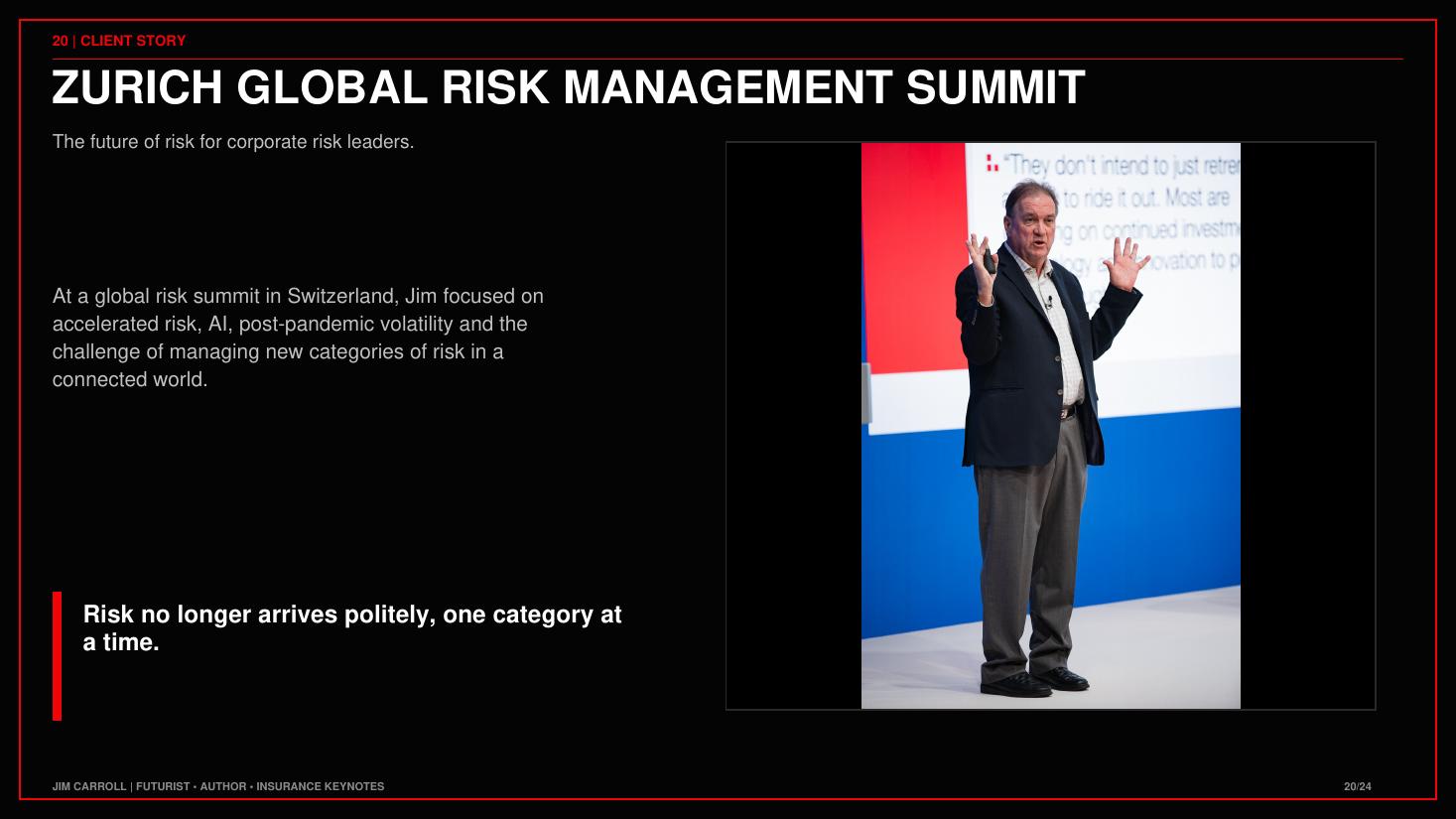
I’ve carried this into rooms with Chubb, Zurich, Hartford, FM Global, New York Life, Sun Life, Manulife, MetLife, Cigna, LIMRA, the Insurance Institute of Canada, and closed-door C-suite sessions with leaders from Allianz, AIG, Travelers, AXA, Allstate, Liberty Mutual, State Farm, Progressive and Lloyd’s of London — P&C, life, health and reinsurance, top to bottom.
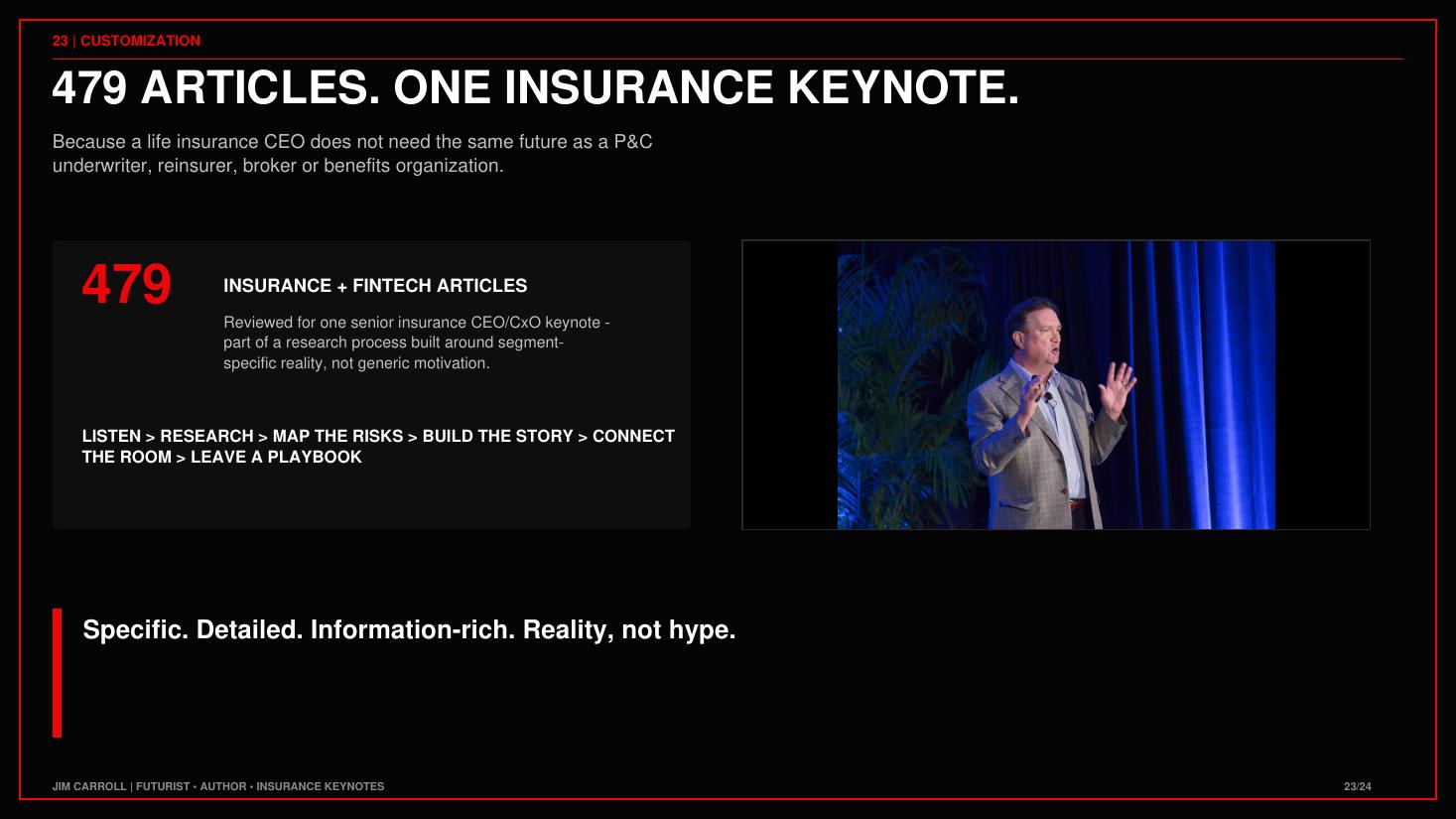
If you’re in insurance, reinsurance, brokerage or corporate risk and want the full picture — the real-time underwriting shift, the accelerating risk landscape, the reinvented role of the agent — grab the free guide, no form required: download the PDF here.
And if you’re planning an event for a room full of insurance or risk leaders — let’s talk.


GET IN TOUCH
Jim's Facebook page
You'll find Jim's latest videos on Youtube
Mastodon. What's on Jim's mind? Check his feed!
LinkedIn - reach out to Jim for a professional connection!
Flickr! Get inspired! A massive archive of all of Jim's daily inspirational quotes!
Instagram - the home for Jim's motivational mind!