The question is no longer just what your people know. It's how quickly your organization can learn what comes next.
When I addressed the WorldSkills Leaders Forum in São Paulo, I looked out at an audience of educators, employers, government officials and labour leaders and challenged them to rethink something that had defined careers for generations: the idea that you could learn a trade or profession, establish your expertise, and depend on much of that knowledge for the rest of your working life.
That was becoming an increasingly dangerous assumption. And as we head into 2027, it is even more so.
The remarkable thing is that I'd been exploring the same issue long before that keynote. In my book Surviving the Information Age, originally published in 1997, I wrote about the collapse of the career-for-life model and the necessity of continually reinventing your capabilities. In a chapter rather provocatively titled Careers End, I explained that I needed to keep changing both myself and my skills just to stay ahead. That was before smartphones, generative AI and most of the tools now transforming work.
The technology was different. The underlying leadership challenge was already there: success increasingly depends not just on possessing knowledge, but on continually renewing it.
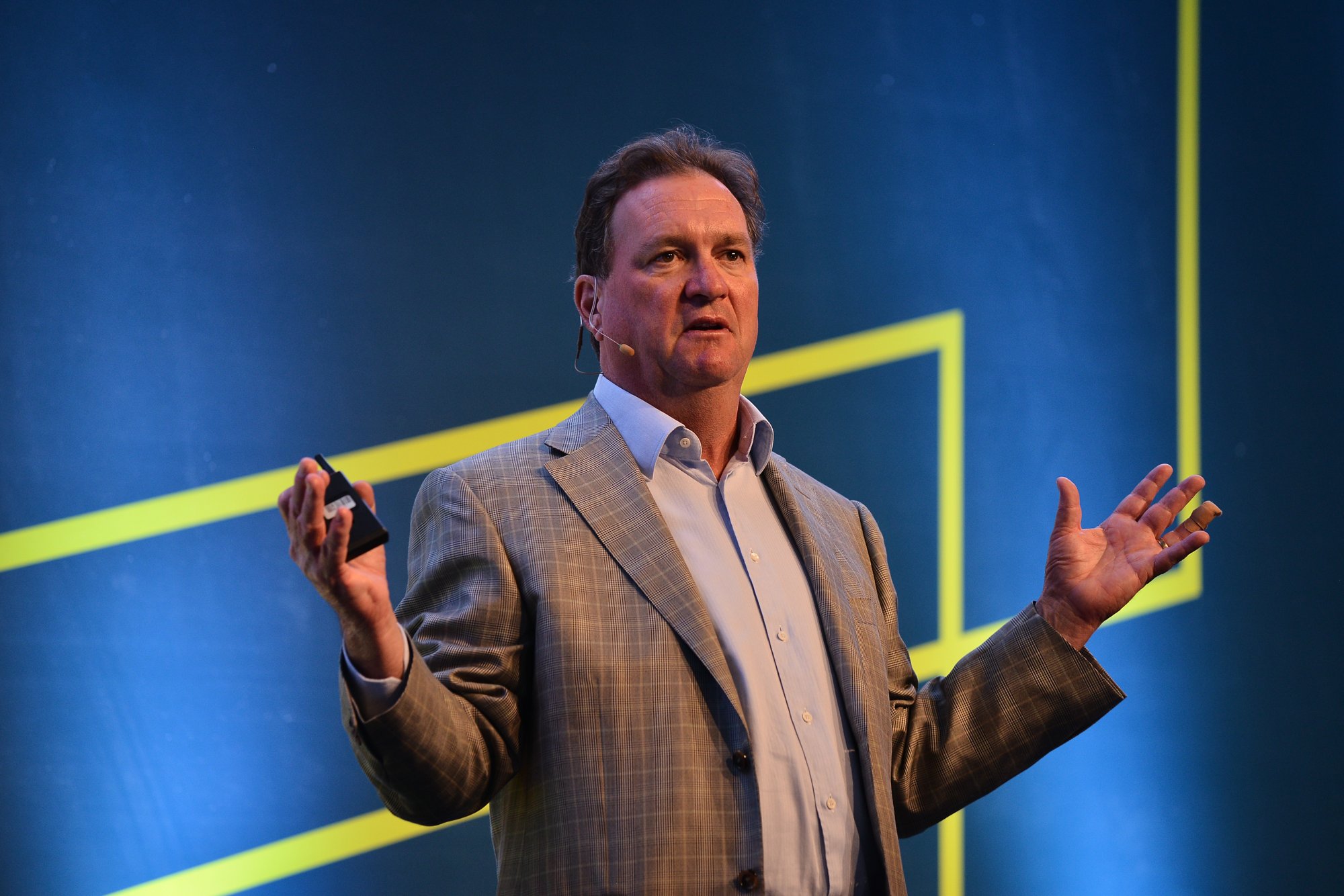
At the WorldSkills Leaders Forum in São Paulo, exploring why skills and learning models must adapt to continuous change.
Why does the half-life of a skill matter to a leader?
Think of skills half-life as a useful metaphor, not a stopwatch. Certain procedures, tools and technical capabilities lose relevance quickly; sound judgment, industry experience, customer empathy and foundational knowledge may remain valuable for decades. The point is not that every skill expires after a fixed number of years. The point is that many organizations still operate as if people can be trained occasionally and then remain fully prepared.
In my WorldSkills keynote case study, I explored the implications for emerging jobs, digital fluency, human-machine work and continuous learning. WorldSkills' own account of the keynote documents the challenge I put before an international audience. The issue wasn't simply updating a course syllabus. It was whether people and institutions could learn and adapt fast enough to keep pace with change.
And this is certainly not an AI-only issue. I've seen skills demands change in manufacturing, healthcare, financial services, construction and professional services as new equipment, customer expectations, regulations and business models emerge. AI adds urgency, but it didn't invent the problem.
The World Economic Forum's Future of Jobs Report 2025 estimates that 39% of workers' existing skill sets will be transformed or become outdated over the 2025–2030 period; 63% of employers identify skills gaps as a significant obstacle to transformation. These are surveyed expectations, not a universal rate at which individual skills expire. Still, they reinforce the scale of the challenge.
The bigger question for leadership is this: If your business changes next quarter, how quickly can your people change with it?
I was writing about the knowledgeable organization before we had today's tools
One of the chapters in Surviving the Information Age is called The Knowledgeable Organization. I argued that the competitive advantage of the future would come from the ability to capture, share and apply knowledge across an organization—not simply store documents or buy technology. In You Must Discover Your Own Magic, I described learning how to find reliable information at the moment I needed it, rather than assuming that everything important had to be learned in advance.
That early thinking evolved through What's Your Skills Capital? and my writing about 21st-century skills. The themes kept returning: shorter knowledge cycles, flexible careers, the growing value of expertise networks, and learning that happens in the flow of work.
It's tempting to think the answer is another corporate training portal. But a library of courses doesn't solve the problem if people can't find the right expertise when a customer, machine or process presents an unfamiliar challenge.
Here's a better question: Does your organization know what it already knows—and can someone find that expertise when they need it?
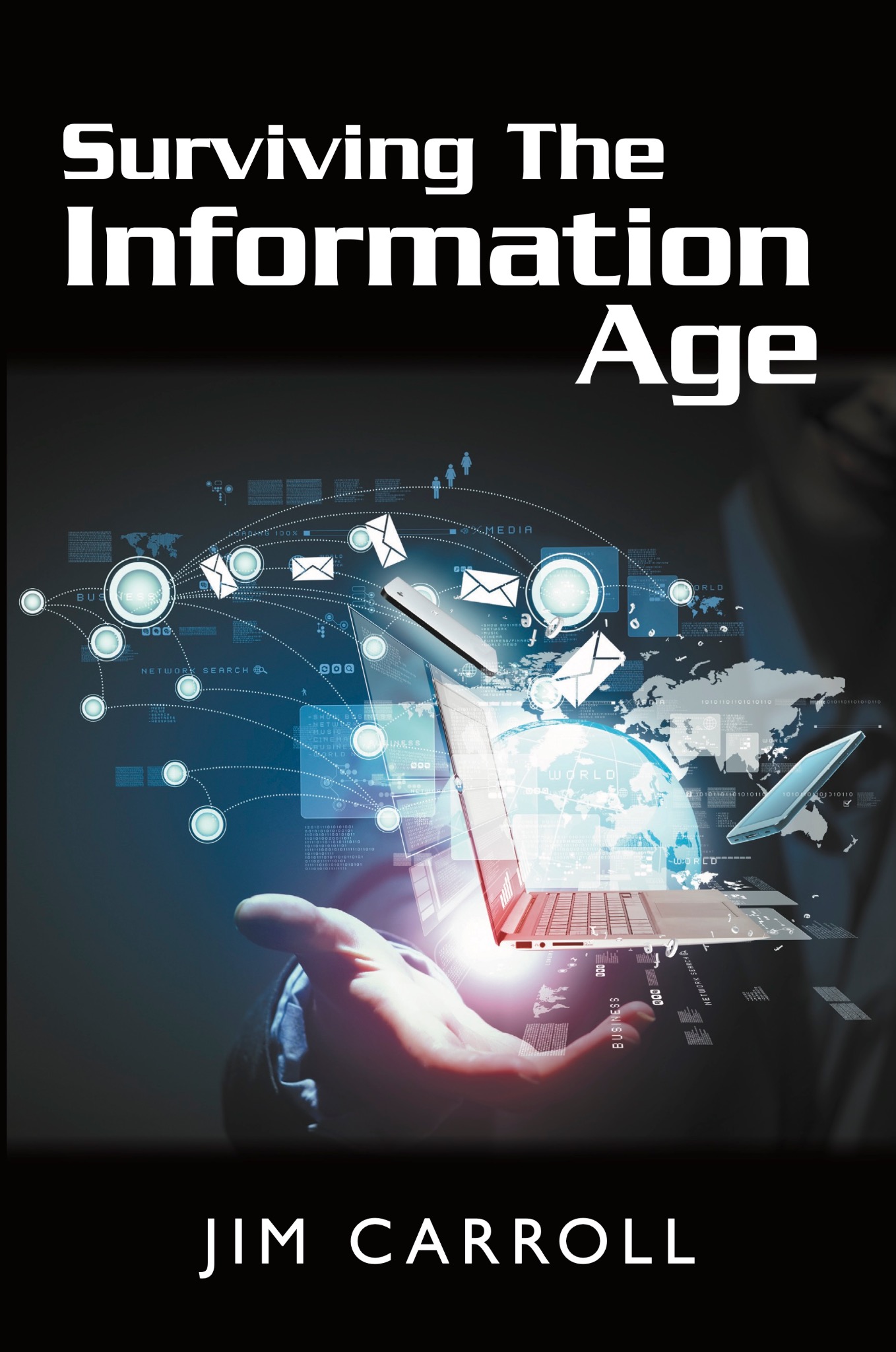
The cover of Surviving the Information Age, first published in 1997, in which Jim Carroll explored career reinvention and the knowledgeable organization.
The recruitment problem is really a learning problem
When I spoke at the E-Recruitment Congress in Ostend, Belgium, I challenged recruiters to think beyond filling existing job descriptions. The future of work was becoming more fluid, with new combinations of skills, emerging roles and a far more just-in-time workforce.
The original E-Recruitment keynote report and case study trace those themes. I even opened the presentation with a bit of stage trickery: the audience initially saw what looked like a virtual appearance before the staging revealed that I was actually there.
The point wasn't that conventional recruiting was dead. It was that hiring for a static job description is a difficult strategy when the work itself keeps changing. In some situations, the most valuable response may be to upgrade the capabilities of people already inside the organization, complement them with outside expertise, and teach teams how to learn together.
That's especially important with today's cost pressures and tight labour markets. Finding somebody who already knows everything you need is often unrealistic. Building the capacity to develop the next skill may be the more economical choice.

At the E-Recruitment Congress in Ostend, Belgium, discussing emerging jobs, skills and a changing workforce. Cropped from the genuine event photograph embedded in Jim Carroll’s Dropbox case-study graphic.
What should you do now—and into 2027?
I wouldn't begin with an enormous retraining initiative. I'd begin with five practical moves that tell you whether learning is actually making the organization more capable.
1. Identify three roles whose work is changing. Bring their managers and frontline employees together for a 90-minute review. Which tasks are new? Which tools or regulations have changed? What knowledge still matters enormously? Record the gaps rather than assuming whole jobs are becoming obsolete.
2. Map the expertise you already have. Find the people who can solve recurring problems, coach others or explain a complex system. Make that knowledge easier to locate through a simple directory, scheduled peer sessions or a searchable collection of proven answers. You may have more capability than your job descriptions reveal.
3. Make one learning opportunity available at the moment of need. Pick a recurring task where employees often get stuck. Test a short, trusted guide, a peer expert, or a supervised demonstration while the work is happening. Measure whether people can complete the task more confidently or correctly—not whether they clicked through a course.
4. Look outside the organization. Join relevant technical and professional communities, and build relationships with WorldSkills participants, colleges, industry associations, vendors or specialized practitioners. Find out what early adopters are learning before committing to expensive technology or training programs.
5. Measure renewed capability. Choose a specific task and compare the outcome before and after a small learning intervention: errors, turnaround time, rework, independence or customer satisfaction. If it works, expand it. If it doesn't, change the approach.
This is what I mean when I say Think Big, Start Small, Scale Fast. The goal isn't to persuade employees to consume more training. It's to create a workplace where acquiring useful knowledge becomes part of how work gets done.
The leadership lesson for 2027
When I wrote Surviving the Information Age, I was concerned that people could become casualties of change because they were afraid to learn. At WorldSkills, the question had grown into an institutional challenge. At E-Recruitment, it had become a question of how to find and develop the capabilities organizations would need next.
In 2027, those threads converge. You can keep recruiting for yesterday's ideal employee, or you can build an organization able to develop tomorrow's capabilities from the talent, experience and partnerships it already has.
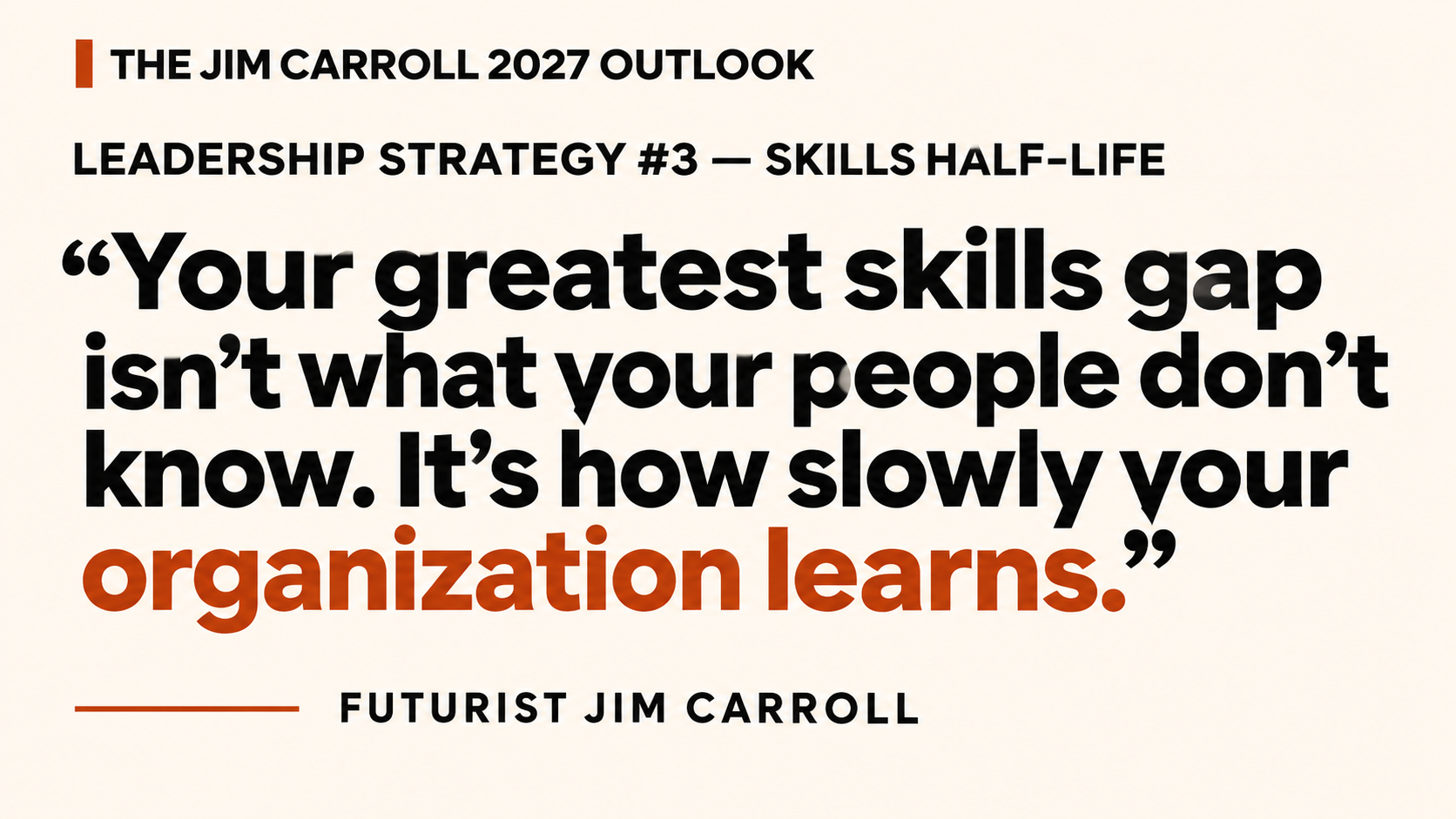
Your greatest skills gap isn't what your people don't know. It's how slowly your organization learns.
It's what happens to your industry. And what you do next.
— Futurist Jim Carroll
From my writing and keynote archive
- Surviving the Information Age — original book, 1997 (book PDF and cover supplied with this publishing package)
- WorldSkills Leaders Forum — keynote case study
- WorldSkills — independent report of the keynote
- E-Recruitment Congress — keynote report
- What's Your Skills Capital?