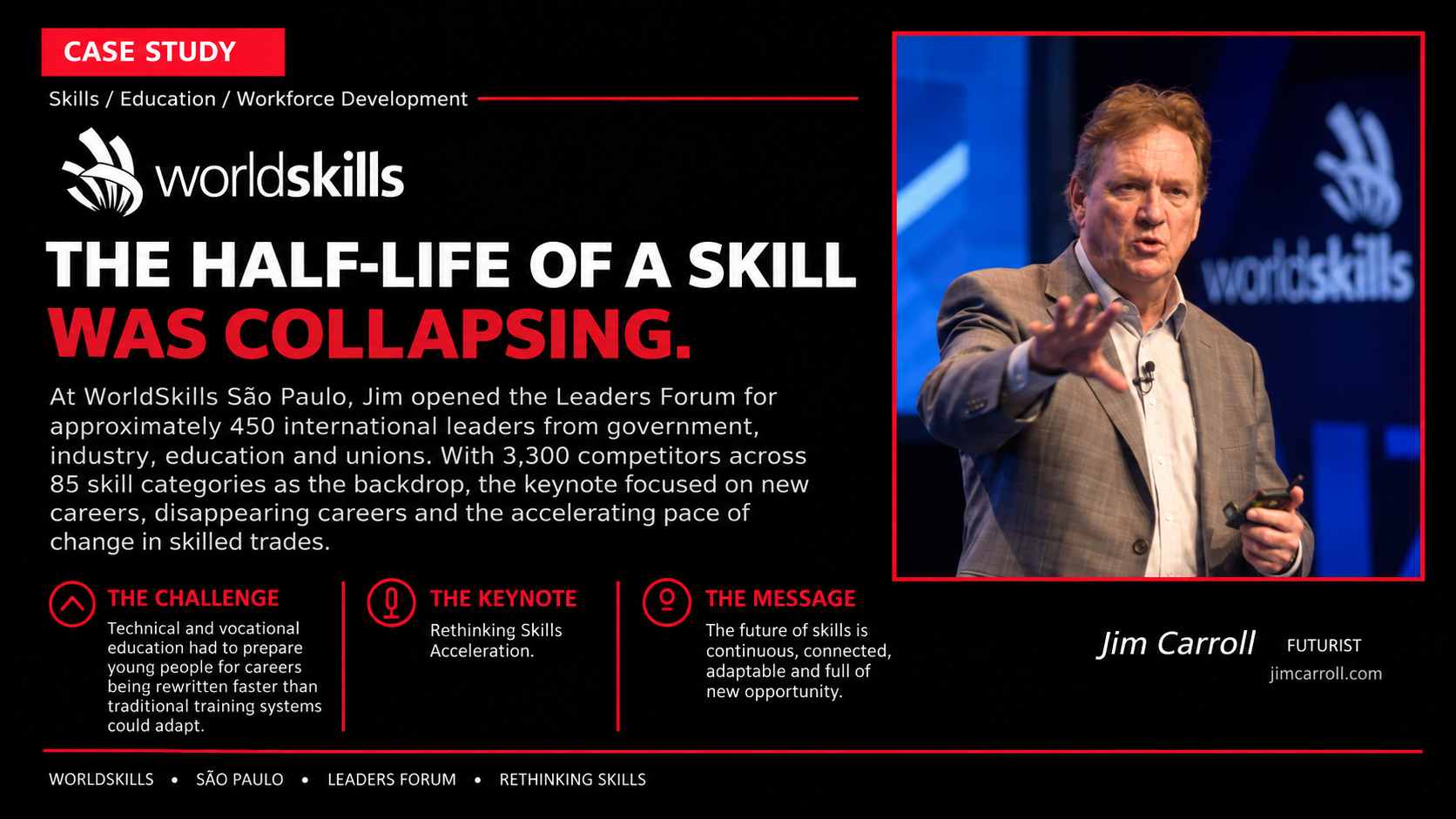
For WorldSkills, Jim Carroll explored one of the defining themes of the modern economy: the half-life of a skill is shrinking. The keynote addressed how rapid technological change is reshaping skills, jobs and the need for continuous learning.
The Challenge: Skill development systems must prepare people for faster knowledge cycles, emerging careers and more fluid workforce expectations.
The Keynote: “The Half-Life of a Skill.”
The Message: The future belongs to people and institutions that can learn, adapt and reskill continuously.
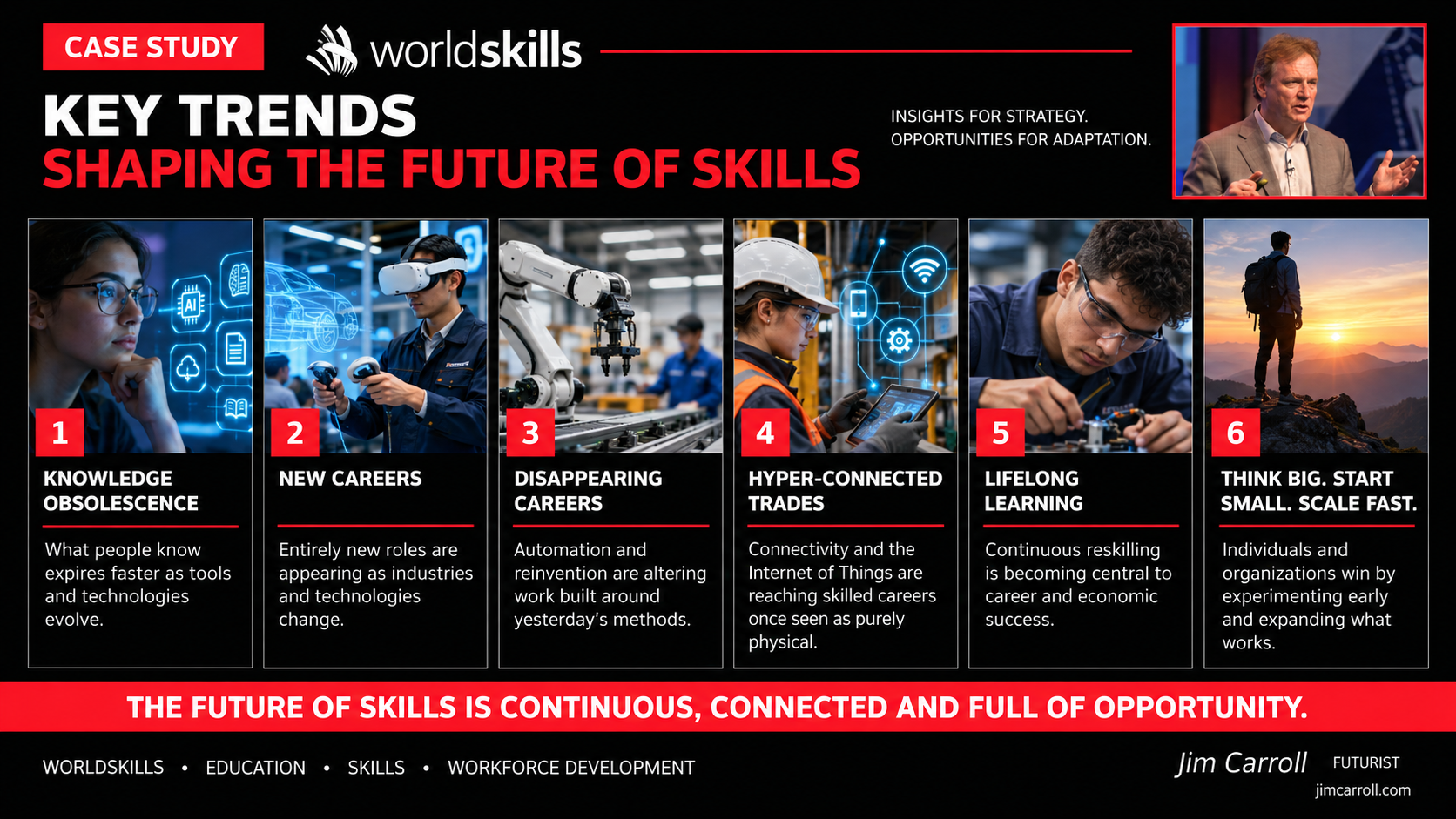
Six Trends Shaping the Future of Skills
- Shrinking Skill Lifecycles. Knowledge becomes outdated faster than in previous generations.
- Emerging Job Categories. New roles continue to appear as technology opens new possibilities.
- Digital Capability. More professions now require some level of software, data or AI fluency.
- Human + Machine Work. Skills increasingly involve working alongside intelligent systems.
- Continuous Learning Models. Education and training must become more ongoing and flexible.
- Resilience Through Adaptability. The most valuable skill may be the capacity to keep learning.
The WorldSkills keynote highlighted that skills strategy is now a speed issue. Future readiness depends on how quickly people can grow into what comes next.
Explore more keynote case studies.