Three forecasts: power becomes a property advantage, machines become new users of space, and building intelligence matters to the people financing it.
I've spent decades speaking to people who design, own, finance, build and operate commercial facilities. At BOMEX, I challenged commercial-property managers to rethink their assumptions about tenants and physical assets as shopping and technology moved in different directions. At an IAMC gathering, the audience was corporate and industrial real estate leaders dealing with longer-term decisions about property and infrastructure. For Chain Store Age's X/SPECS event, I explored the future of store design, construction and facilities. And for the Global Cold Chain Alliance and CEBA, the questions involved refrigerated warehouses and increasingly sophisticated buildings that have to operate reliably around the clock.
Different facilities, different economics—but a common realization.
A building is no longer valuable only because of where it sits, who leases it or how many square feet it contains. Its capabilities are becoming part of the value proposition.
As we approach 2027, three developments illustrate why. None applies identically to every office, warehouse, shop or industrial property. But each deserves a closer look by owners, developers, facility managers, lenders and investors.
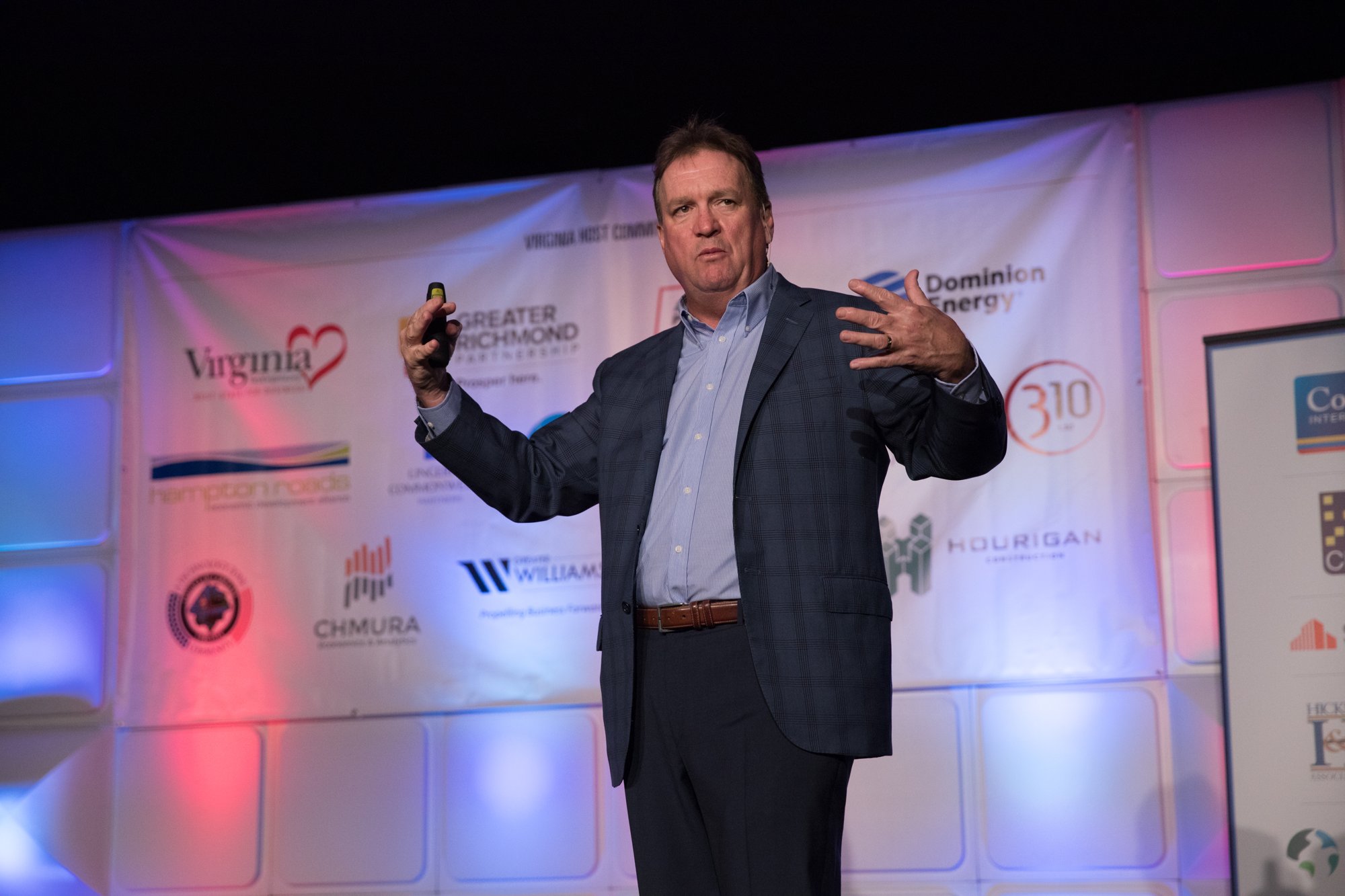
At an IAMC gathering of corporate and industrial real-estate leaders, examining long-term property and facilities decisions.
1. Buildings get valued on kilowatts before square feet
A property with plenty of space but inadequate electricity may be less useful to a prospective operator than a smaller site with a reliable, expandable power connection. That sounds like a technical detail—until a tenant needs intensive computing, vehicle charging, electrified heating, refrigeration or highly automated operations.
For data-centre projects, power availability is already a critical site-selection constraint. CBRE's North America Data Center Trends research identifies power and infrastructure delivery timelines as major influences on location, leasing and pricing. JLL has described available power as a growing driver of commercial-property value. That's evidence about particular property markets, not proof that kilowatts now determine the value of every commercial building.
It also connects to a much older thread in my own work. In my writing on the emerging smart energy infrastructure and engagements with energy and building-technology organizations such as Itron, I explored how the grid, data and building operations were becoming interdependent. For an owner of industrial or logistics facilities, the practical implication is straightforward: power access may increasingly influence which tenants your property can accommodate.
What should you ask? How much usable electrical capacity does the building have today? Can the utility actually deliver additional capacity, at what cost, and on what timeline? Could a prospective tenant's requirements make those constraints decisive?
The important question isn't what the electrical panel says on paper. It's what the infrastructure can reliably support.
2. The best tenant in the building is a machine
That's a deliberately provocative prediction. Robots don't sign leases, and most office buildings aren't about to become server farms. The real story is that more commercial space is being designed—or reconsidered—around machines, automated processes and infrastructure-intensive operations rather than conventional desk-bound occupancy.
I've seen that transformation from the inside of several industries. At the Global Cold Chain Alliance, I explored smarter refrigerated warehouses, intelligent monitoring and automation. For cold storage, the facility is not simply somewhere to place goods. Its refrigeration, monitoring, energy use and operational reliability are fundamental to the service being sold.
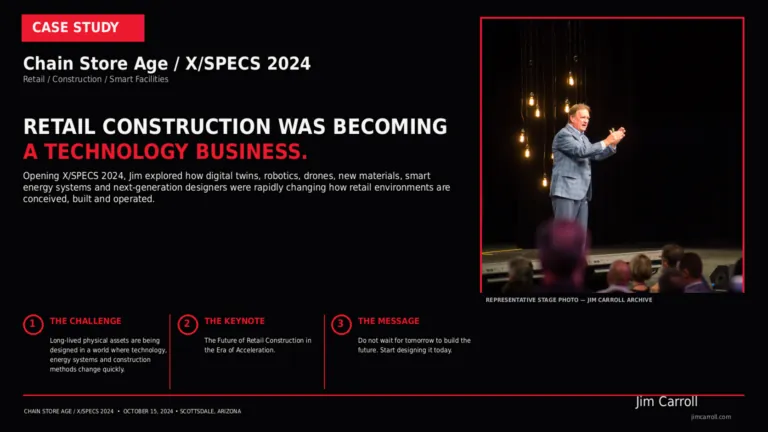
The same shift appeared in my work at Chain Store Age's X/SPECS event, where store planners and facilities leaders were examining connected energy, automation, digital twins and new construction methods. And at CEBA, the discussion concerned the future of advanced building infrastructure.
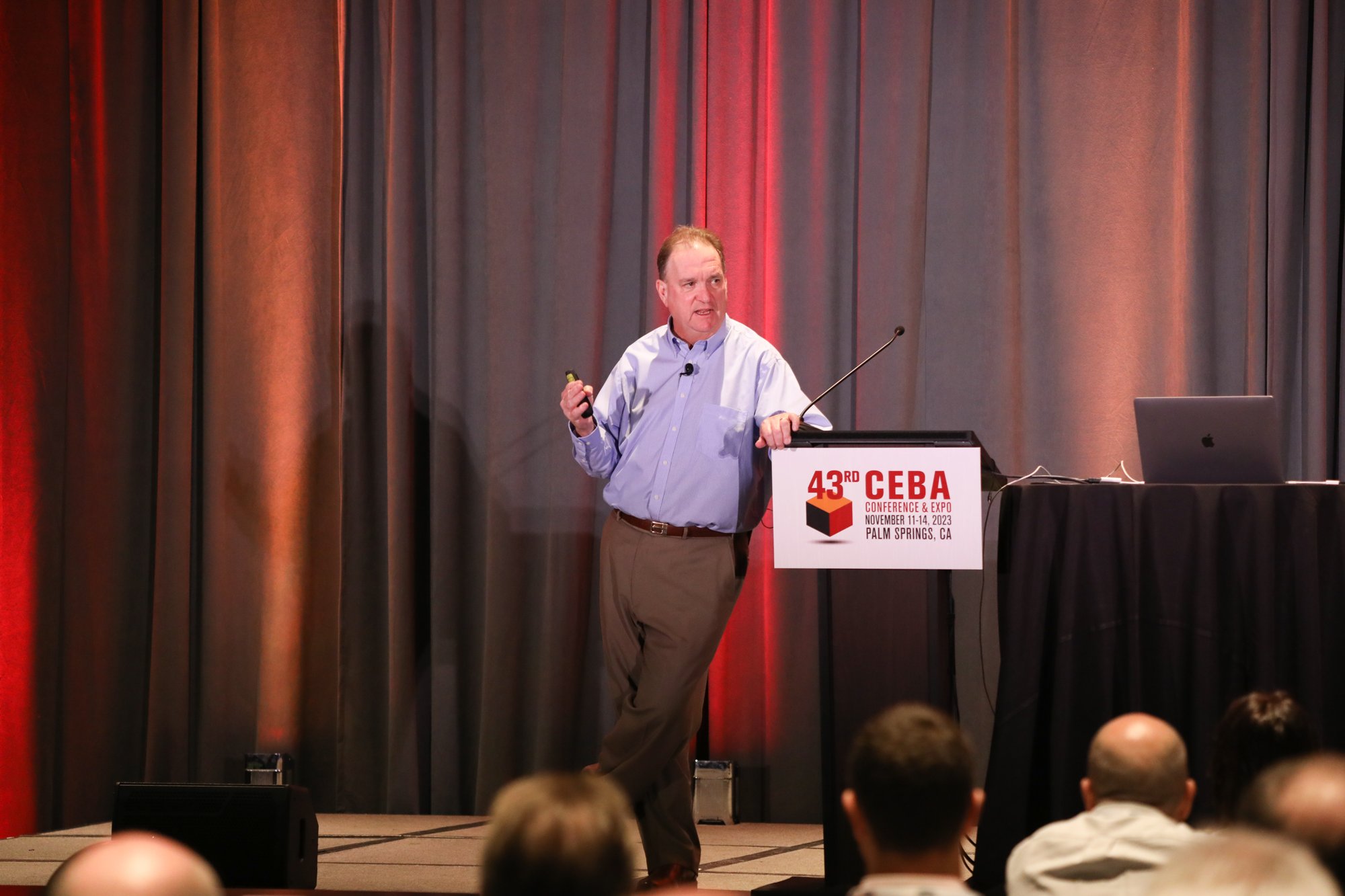
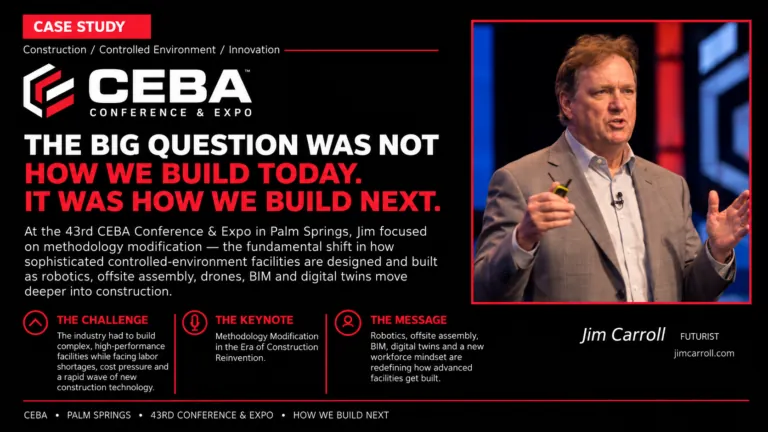
At the CEBA Conference & Expo in Palm Springs, exploring the future of advanced facilities and infrastructure.
My forecast for 2027 isn't that every vacant shop will attract a robot tenant. It's that the possible uses of certain commercial assets will increasingly depend on their infrastructure and operational capabilities, sometimes in ways that conventional leasing categories don't capture.
Could an underused industrial property support a temperature-controlled operation, specialized logistics, battery storage or an automated process? Possibly. But conversion feasibility depends on zoning, structural loads, cooling, fire safety, grid connections, permits and economics. Sometimes the land or utility connection is the real asset; the existing building is not.
Before commissioning an expensive redevelopment plan, start with a basic feasibility screen. Identify the site's physical limits, speak to experienced engineers and local authorities, and compare realistic alternative-use income against ordinary leasing or sale.
3. The building that can't report on itself can't be financed
Again, the headline is stronger than the literal near-term reality. Buildings without comprehensive sensor systems will continue to obtain financing. But the direction is clear: lenders, insurers, investors and major tenants increasingly want evidence about operational performance, energy use, building condition and physical risks.
That should sound familiar to anyone who has followed the evolution of connected buildings. In my GE Lighting work, I explored the idea of building systems becoming connected and more intelligent. In work touching on risk and infrastructure with other clients, the discussion extended to what happens when a building's hidden systems become central to its operational and financial performance.
For the cold chain, monitoring temperature isn't a fashionable smart-building feature: it can be a matter of quality and compliance. For an insurer, electrical and fire-protection systems matter to exposure. For a lender, the ability to document actual building condition and operating costs can affect confidence in the underlying asset.
The underlying development is not simply installing more sensors. It's turning scattered information into credible, usable evidence about the building. Some jurisdictions and property types face formal energy-reporting requirements; others are being asked for better information by counterparties even without a broad legal mandate.
An owner should ask: If a lender, insurer or major tenant requested reliable records of electricity consumption, maintenance, equipment condition and significant risks tomorrow, how quickly could we deliver them? Would the information be consistent and independently understandable?
A sensible first step might be better records, regular audits and well-maintained meters—not a grand digital-twin initiative.
What should you do now—and into 2027?
Commercial property owners are dealing with financing costs, uncertain tenant demand, construction inflation, retrofit expenses and operational pressures. Most can't justify speculative reinvention. But they can investigate what is changing without spending a fortune.
1. Audit the power position of your most important assets. Document utility service, peak demand, available capacity, major equipment limitations, upgrade cost and realistic timelines. Don't rely on unverified assumptions about what a prospective tenant could obtain.
2. Screen one underused property for alternative uses. List the physical and regulatory constraints before exploring new operators or technologies. Ask what the site could plausibly accommodate and compare that with the cost and risks of conversion. A quick rejection of an impractical idea is useful learning too.
3. Create a basic building-information dossier. Assemble energy bills, metering, maintenance history, capital-replacement needs, inspections and relevant resilience or risk assessments. Identify what's missing or unreliable. Make it easy for your property team—and a future lender or insurer—to understand the facts.
4. Talk to the people whose requirements will shape value. Ask utilities, prospective tenants, brokers, insurers, lenders and planning officials what is changing. There may be valuable information available well before a formal project is warranted.
5. Run one modest readiness experiment. Commission a targeted electrical-capacity review, improve a reporting process, test an energy-monitoring workflow or assess a specific redevelopment scenario. Only scale once the economics and demand support it.
My consistent advice has always been to understand the future, get involved in it, and prepare to take advantage of it. You don't need to transform your entire property portfolio this year. You do need to understand which assumptions about its value might be changing.
The bigger real estate story for 2027
The question I raised years ago with commercial-property and facilities audiences has become more urgent: what happens when a physical asset designed to last for decades has to operate in a world of rapidly changing technologies and business models?
Power availability, automated operations and reliable building information won't rewrite every property market at once. But they will influence where some of tomorrow's demand goes—and which properties are prepared to capture it.
The future value of a building may depend less on how much space it has—and more on what that space can do.
It's what happens to your industry. And what you do next.
— Futurist Jim Carroll