- 011982
The first connection
I began going online in 1982, long before anyone would have described the Internet as an everyday utility. Back then, getting connected could feel like a puzzle. There were command lines, early services and networks whose names now sound like artifacts from another civilization. What mattered wasn't the elegance of the interface. It was the realization that information, ideas and people could move in ways that were not constrained by geography or the conventional structures of the day.
I didn't know where that experience would lead. No one did. But I had seen something that would shape the rest of my working life: technology changes much more than a tool. It changes what people believe is possible, and eventually it changes how entire industries operate. That became a pattern I would look for over and over again.
On the recordMilestones — my first twenty years online before the blogging anniversary ↗
- 02The 1980s
Learning to explain change
My early career began in the world of accounting and business. By the 1980s I was immersed in the arrival of personal computers and early electronic communications, helping organizations understand how technology could change established work. I was involved in business computing and network rollouts while the vocabulary of the digital future was still unfamiliar to many decision-makers.
I also began to discover the power of explaining complicated technology in plain language. A radio segment called Micro Minute was one early opportunity to translate the unfamiliar into something useful. Looking back, this was the beginning of the work I still do: connect an emerging capability to the decisions a person or an organization needs to make.
The technology changed. That mission did not.
On the recordPublic biography and career history ↗
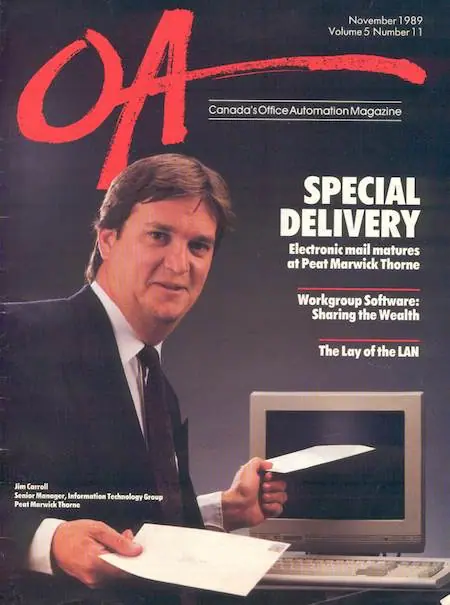
On the cover of Office Automation, November 1989 - 031990
Leaving the expected path
In 1990, I stepped away from the conventional professional route to build an independent technology consulting business. It was not a move made with a complete map of what would happen next. It was a decision to follow a world that seemed to be changing too quickly for the old path to contain it.
There were organizations trying to make sense of networks, information systems, electronic mail and the commercial promise of connectivity. I found that the most valuable part of the conversation was not usually a technical specification. It was helping people understand what would change in the way their company, customers and employees worked.
That idea—understand the technology, but focus on its consequence—would eventually become the heart of my keynote work.
On the recordCareer chronology ↗
- 041993–1994
Eight weeks that changed the direction of everything
In late 1993, the Internet was suddenly becoming a question everyone wanted answered. It was still difficult to use and even more difficult to explain. My friend Rick Broadhead and I believed there was an opportunity to make the emerging online world understandable to ordinary people and businesses.
We wrote The Canadian Internet Handbook in an extraordinarily compressed period. Christa played a central role in turning the manuscript into a publishable book—editing, designing and preparing the pages in a way that moved at the speed of the idea itself. By early 1994 the book was at the printer; by that summer it had reached the top of a Canadian bestseller list.
What followed was a remarkable publishing and media journey. But the lesson was larger than one book. We had responded to a fast-moving trend by working at the pace the moment required. The future wasn't asking us to wait until the process became comfortable.
On the recordMy 2014 retrospective on the Handbook ↗1994 contemporary profile, *The Computer Paper* ↗
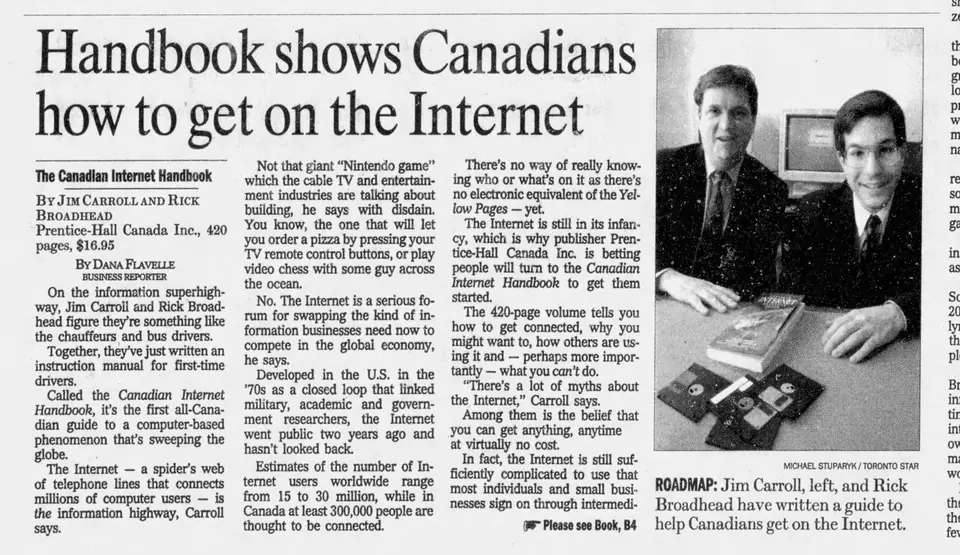
The Toronto Star, March 6, 1994 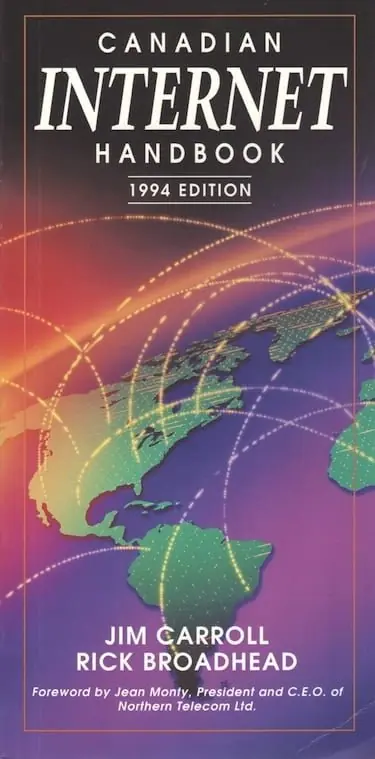
Canadian Internet Handbook, 1994 edition - 05The 1990s
From explaining the Internet to explaining its consequences
The Handbook led to more books, columns, interviews and programs about the emerging digital world. We explored what networks would mean for business, health, finance, commerce and everyday life. It was a period when many industries were discovering that the Internet was not another office accessory. It was going to alter their distribution, customer relationships and operating assumptions.
I learned that it was often easier to demonstrate a technology than to help people grasp the scale of its consequences. An executive might understand email perfectly and still underestimate the business model changes that connectivity would unleash. That gap between understanding a tool and understanding the future became an enduring focus of my research.
It also pushed me toward an increasingly important realization: there was no single 'technology future.' There were different futures for every industry, each shaped by its customers, assets, regulations, talent and timing.
On the recordHistorical publications and career overview ↗
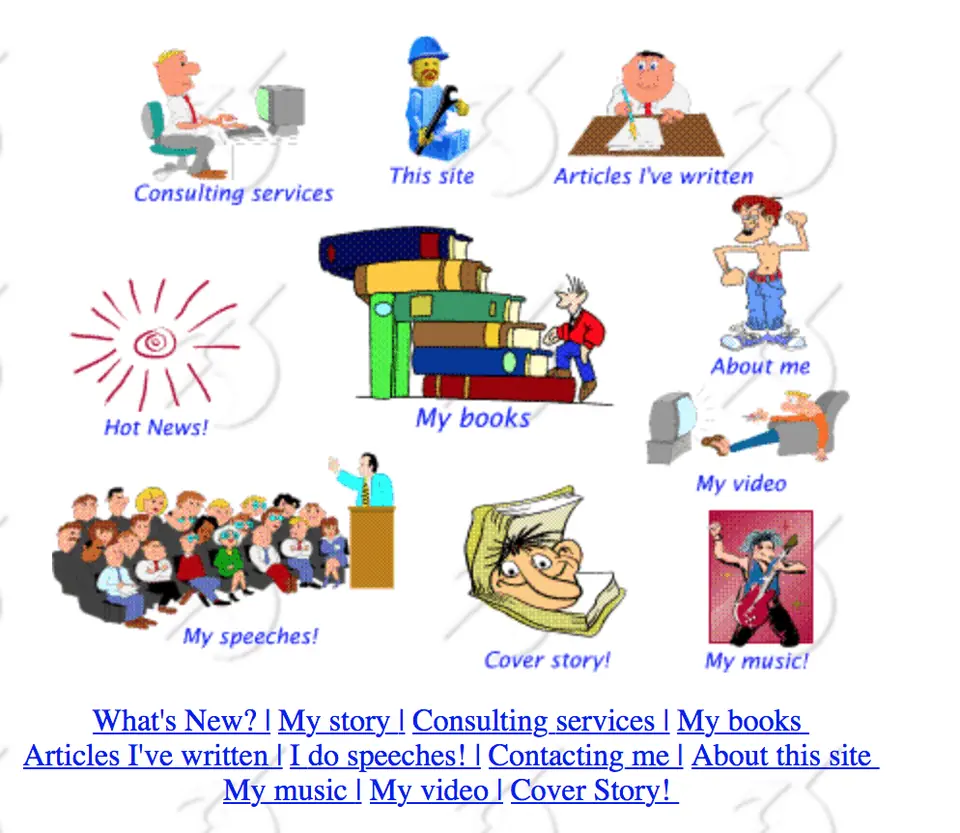
jimcarroll.com, 1995 - 062002
The blog becomes a public record of thinking out loud
On October 26, 2002, I began using blogging software on my website. By then I had already spent years writing online and explaining how networks were changing the world. But a blog made something different possible: a continuous public record of ideas, forecasts, observations and lessons from the stage.
In 2022 I went back through the archive to mark that twenty-year anniversary. I found that the first day contained several experimental posts, including material that no longer survived every website migration. That was a reminder that digital history can be surprisingly fragile. If you want a record of what someone actually thought at the time, you have to make the effort to preserve it.
Over the years that archive has become more than a collection of old articles. It is a way to ask an important question: what did I say would happen, and what happened next?
On the recordMilestones ↗One surviving October 2002 post ↗
- 07The 2000s and 2010s
The stage becomes a working laboratory
As my career evolved, speaking to business audiences became central to the work. I was no longer simply being asked what a new technology did. Leaders wanted to know how it would change their industry, their strategy and the decisions they were struggling to make.
That pushed me deeper into research and customization. A manufacturing keynote could not be the same presentation as one for healthcare, agriculture or financial services. The technologies might overlap, but the implications were different. I learned to build from the reality of the audience outward: what they make, how they compete, where their assumptions are aging and how change creates both risk and opportunity.
The stage also became a way to test ideas. A sharp question from a client, a skeptical executive or an unexpected connection between industries could become the beginning of the next article or the next forecast. The keynote ended; the research continued.
On the recordCase-study archive ↗2019 highlight reel ↗
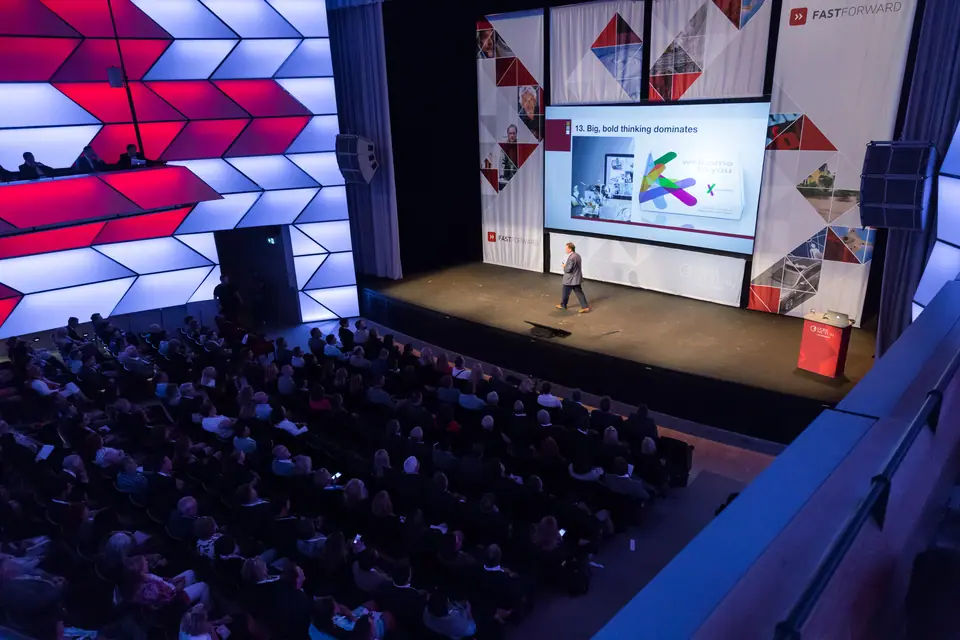
Gore Mutual Fast Forward · Toronto, 2017 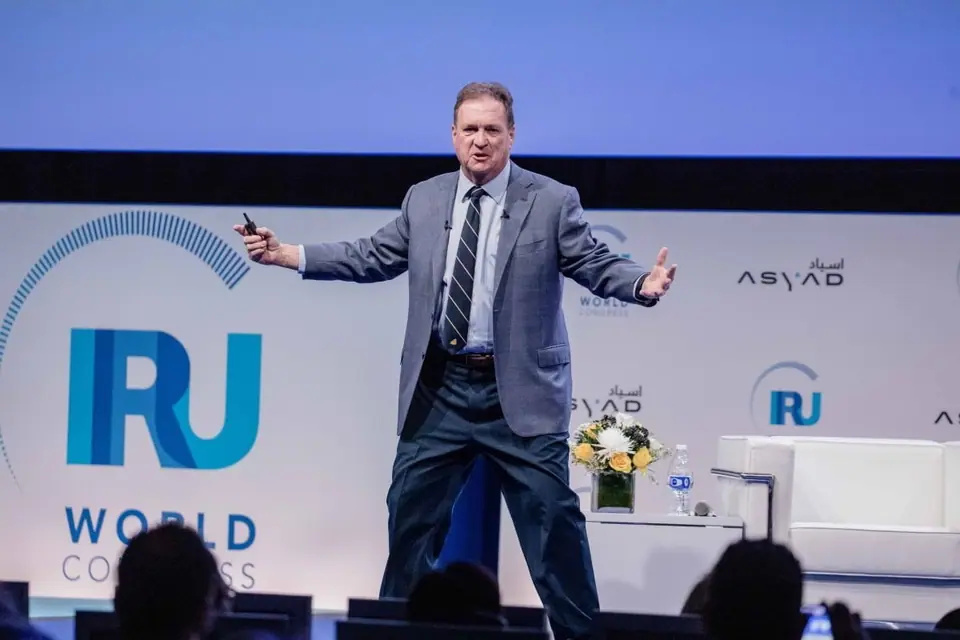
IRU World Congress · Muscat, Oman 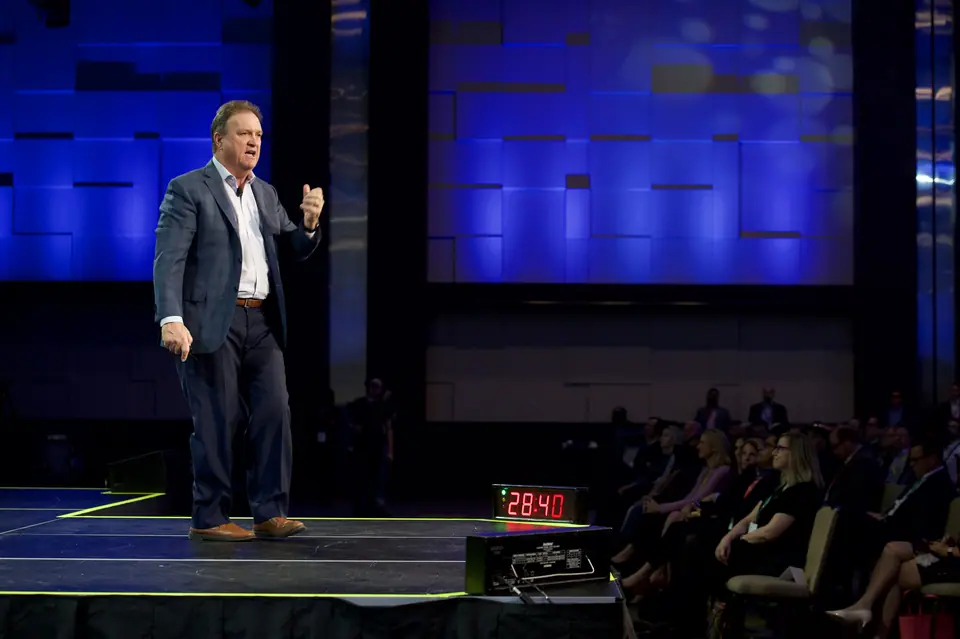
Microsoft Canada FutureNow · Toronto, 2019 - 082016
A new daily writing rhythm
In 2016, I began a new regular series that became my Daily Inspiration. It started as a relatively simple idea: share a short thought that could help someone look at the day, and at tomorrow, with a different perspective.
Over time, those short pieces developed their own themes: resilience, courage, creativity, leadership, innovation, curiosity and the willingness to move forward when the future is uncertain. They also became part of a larger publishing discipline. The keynote stage offered one way to explore big ideas; a short daily reflection offered another.
What surprised me was how the two forms strengthened one another. The archive of long predictions and case studies gave substance to the short thoughts. The daily writing, in turn, forced me to keep asking what mattered enough to say clearly.
On the recordDaily Inspiration ↗Daily Inspiration archive hub ↗
- 092020
When the stages disappeared
In 2020, the live events world changed abruptly. For someone whose work had depended for years on being in a room with an audience, that was not a small operational adjustment. It required rethinking the entire method of delivery.
I built a sophisticated home broadcast environment and learned how to make the virtual experience more than a webcam substitute for a stage. The work involved production, visual storytelling, interaction, rehearsals and a new understanding of what an online audience actually needs. It was not the first time a technology change forced me to reconsider how I worked. It was simply a particularly dramatic one.
The experience reinforced a principle I had been discussing for years: reinvention becomes easier when you see it as part of the job rather than an exception to the plan.
On the recordHow to Create an Incredible Virtual Keynote ↗
- 102024–2026
Research becomes more important, not less
As AI, robotics, digital infrastructure and scientific acceleration came to dominate the discussion, I kept returning to the same question: what does this mean for the audience? The answer is rarely a generic list of megatrends. A utility has very different responsibilities from a manufacturer, a hospital, a dealership or a bank.
That is why the case studies matter. They show the practical work behind a keynote—the research, the industry's real constraints, the language of its people and the choices its leaders face. In 2026 I also returned to older predictions through a Trends Scorecard series. I wanted to look back honestly: where did I spot the direction correctly, where did timing surprise me and what does that record teach us about what comes next?
The value of a futurist's work isn't just a confident statement about tomorrow. It's a documented record of having thought seriously about change for a very long time.
On the recordTrends Scorecard: The Final Verdict ↗What Goes Into a Highly Customized Keynote? ↗
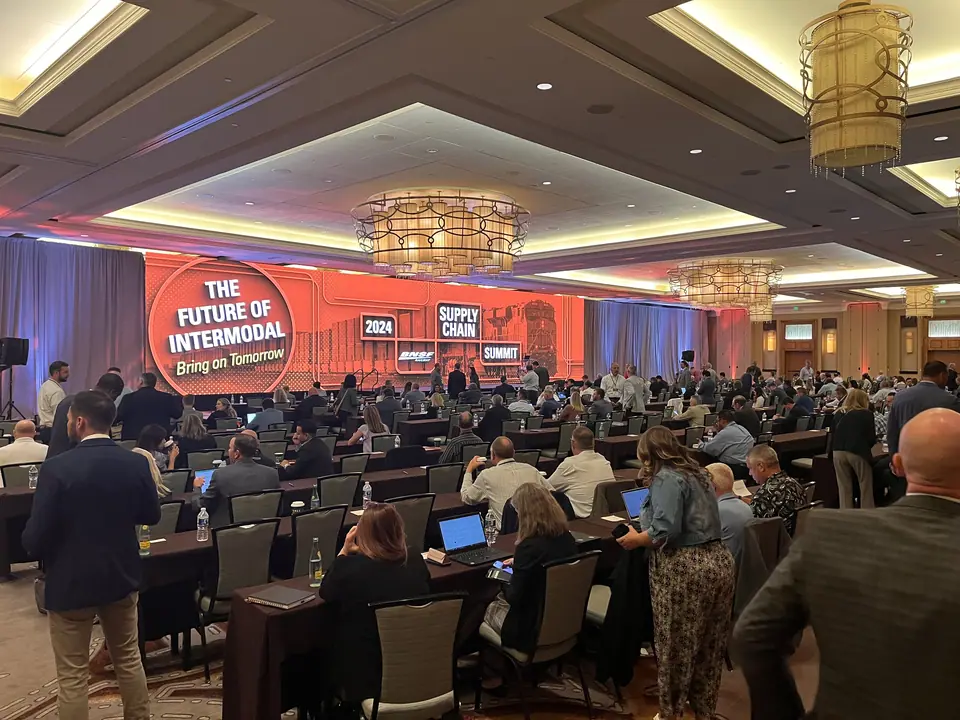
BNSF Railway Supply Chain Summit, 2024 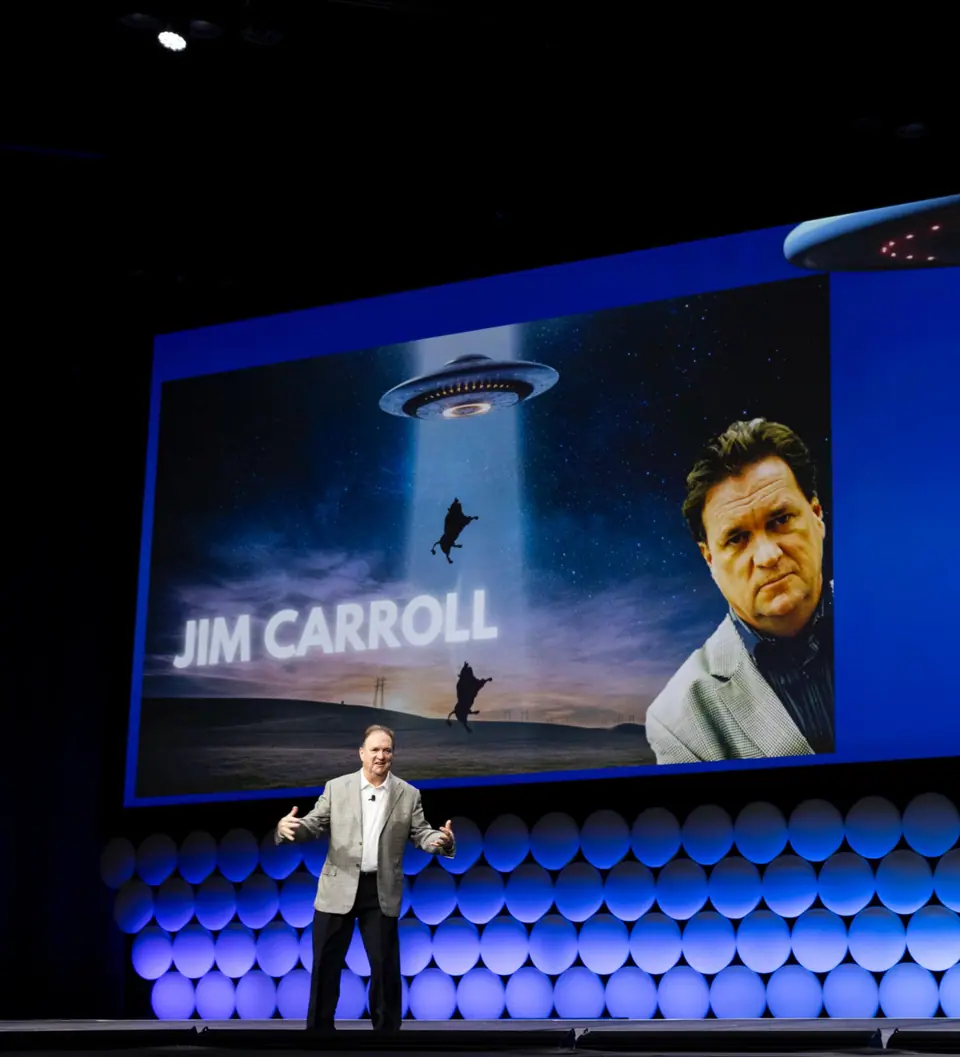
CattleCon 2024 · Orlando - 11November 2026
Preserving the past on a platform built for what's next
In November 2026, JimCarroll.com moved from its longstanding WordPress foundation to EmDash. To a casual visitor, a website redesign might seem like a fresh set of pages and a new navigation menu. For me, the real task was preserving more than two decades of accumulated work while making it easier to explore.
Thousands of articles, hundreds of case-study links, old forecasts, videos, book history and new industry research are not clutter to be discarded in the name of simplicity. They are the evidence behind the promise that my work is researched, relevant and actionable. The new site is a way to connect that history to the choices leaders face next.
I don't know what the next forty years of technology will look like. I know they won't look like the last forty. That is precisely why the work remains fascinating.
What comes next
The future doesn't belong to people who can recite yesterday's assumptions.
It belongs to people willing to recognize when those assumptions stop working. That's what I've spent my career helping organizations do—and why every keynote begins with the industry, the audience and the decisions that matter to them.