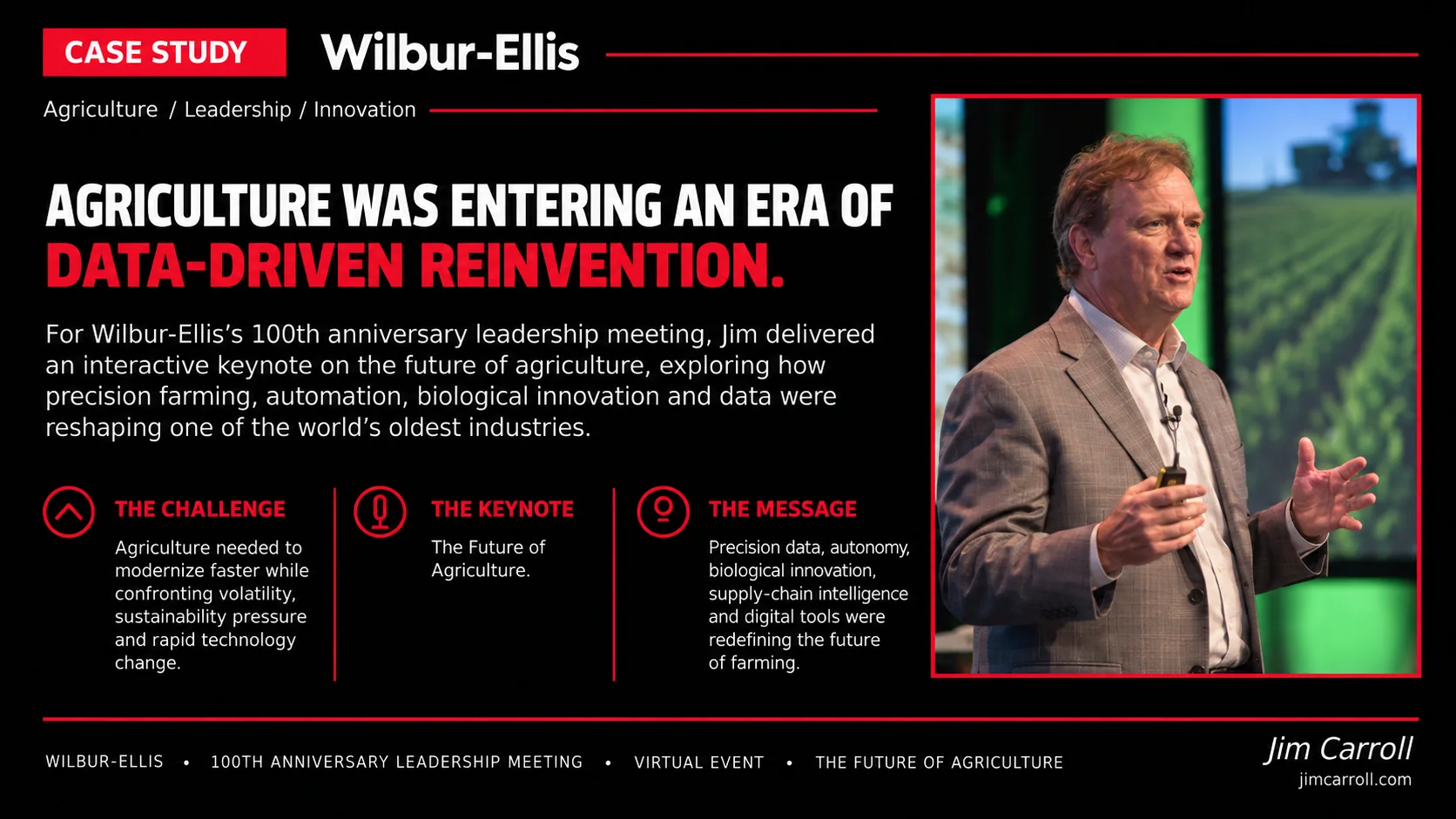
For Wilbur Ellis, Jim Carroll explored how agriculture was being reshaped by accelerating innovation, precision systems, new science and a more volatile operating environment. The keynote focused on the reality that the future of agriculture is arriving faster than legacy assumptions were built to handle.
The Challenge: Agriculture leaders faced a convergence of pressure points: faster technology cycles, changing customer expectations, sustainability demands and the need to think beyond traditional operating models.
The Keynote: “The Future of Agriculture Innovation.”
The Message: The organizations that will lead agriculture forward are those that treat acceleration as a strategy issue, not just a technology issue.
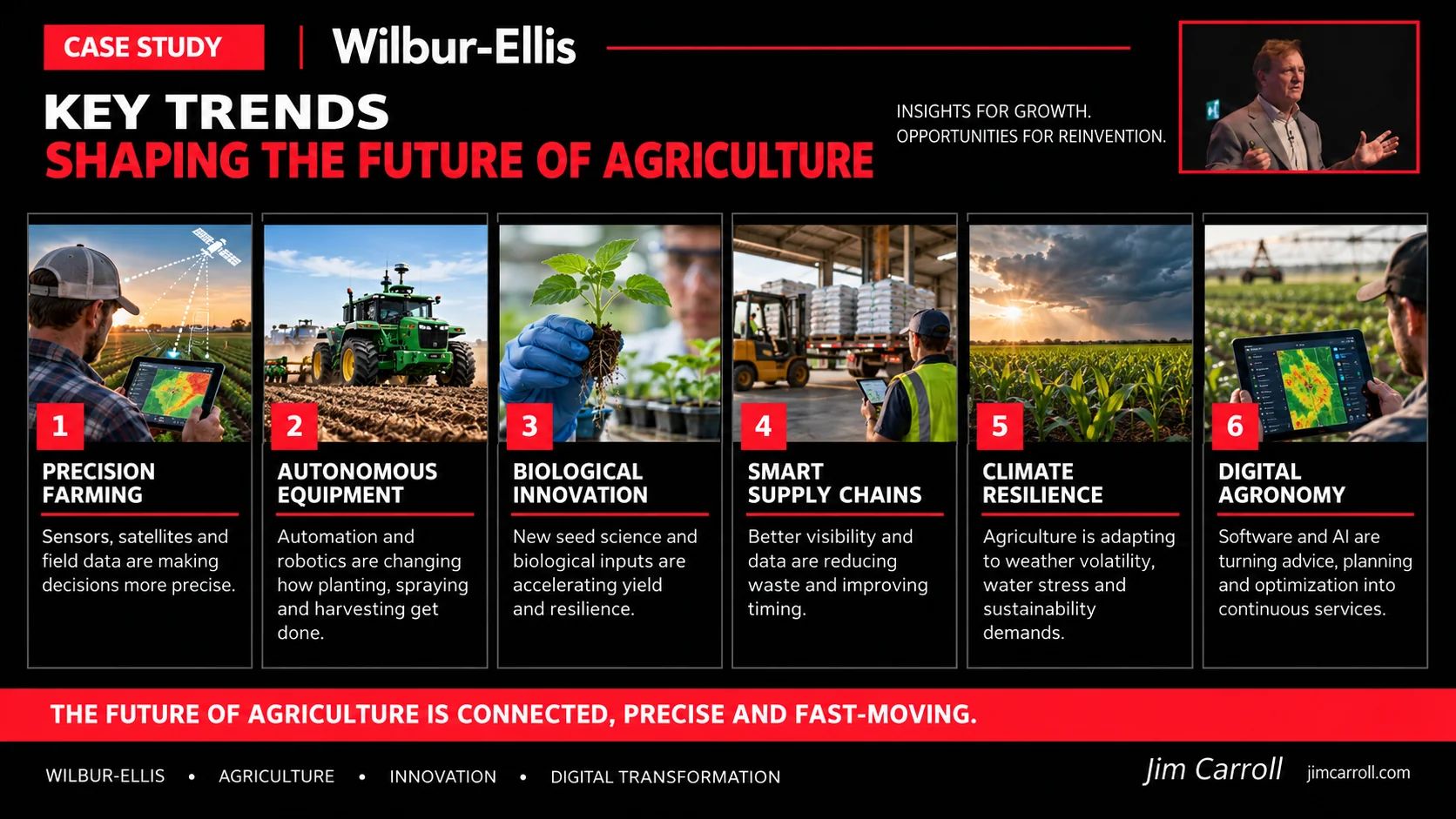
Six Trends Shaping the Future of Agriculture
- Connected Agriculture. Sensors, platforms and field data are making operations more visible and more intelligent.
- Automation. Machinery, robotics and autonomous systems are expanding capability and reducing friction in field operations.
- Precision Science. Better data and better tools are improving timing, inputs, yield and decision quality.
- Biological Innovation. New science in crops, inputs and agricultural systems is redefining performance and resilience.
- Supply Chain Reinvention. Agriculture increasingly depends on faster, smarter and more connected value chains.
- Sustainability at Scale. Environmental performance is now tied directly to efficiency, innovation and long-term competitiveness.
The Wilbur Ellis session underscored a simple idea: agriculture is no longer evolving at a traditional pace. It is being pulled forward by connected technology, faster science and the need for more agile decision-making.
Explore more keynote case studies.