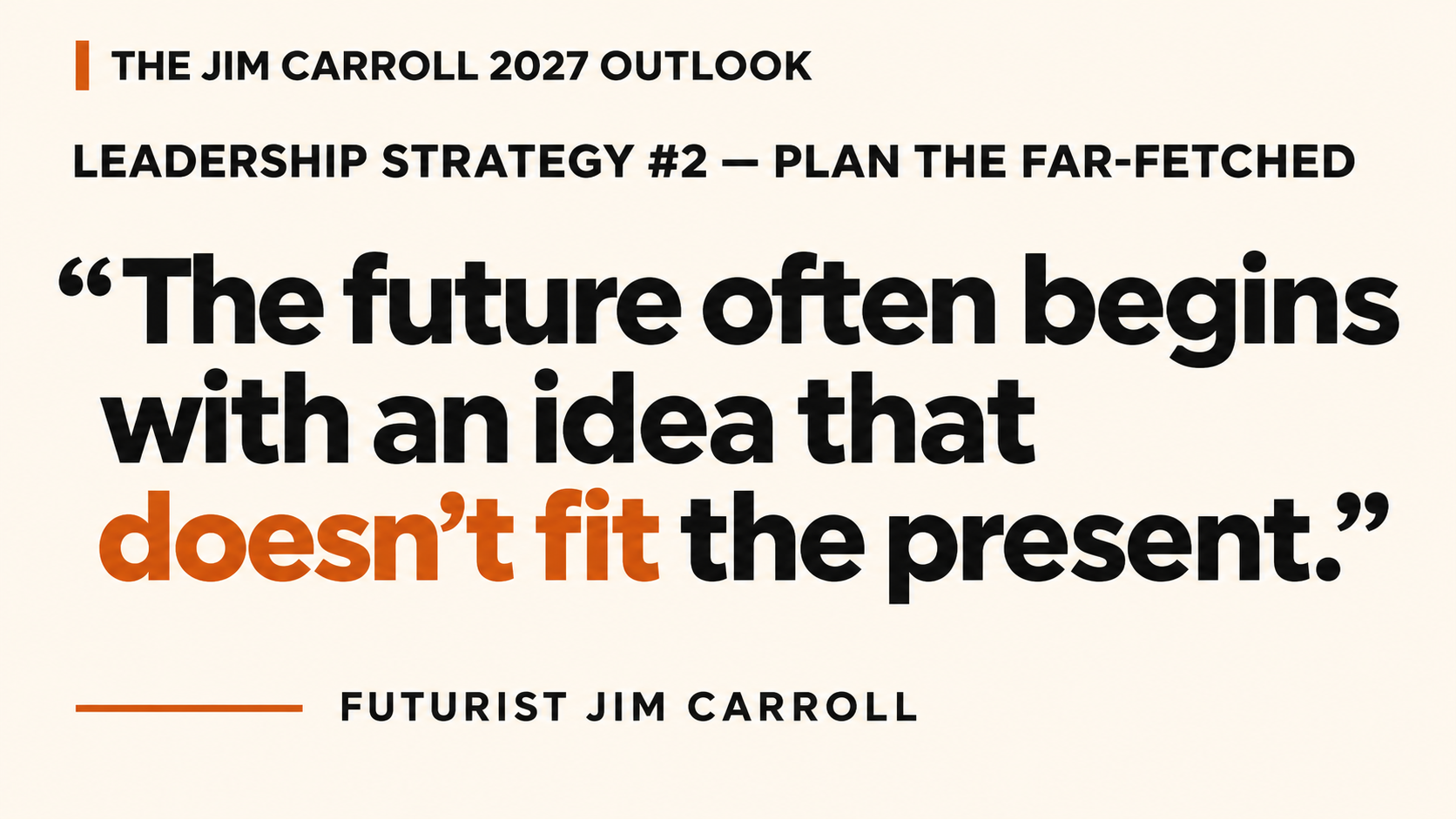
The future often begins with an idea that doesn't fit the present.
I once stood in a strategy meeting at DaimlerChrysler headquarters in Stuttgart and suggested that one of the automotive industry's most important future competitors might come from Silicon Valley. I called the scenario the GoogleCar: a technology company assembling partners, expertise and software to challenge the way cars were designed, sold and used.
Some of the executives laughed.
I wasn't suggesting that I knew precisely what Google would build, or when. I was asking a more important question: what happens when a competitor arrives from a direction your industry hasn't learned to watch? Years later, software-defined vehicles, electric-car newcomers and technology-led mobility companies made that a question the automotive industry could no longer ignore. I've written about that original Stuttgart conversation and the resistance it encountered.
That experience is one reason I've spent so much of my career asking leaders to plan the far-fetched. Not because every wild idea will come true. Most won't. But because dismissing a possibility simply because it doesn't fit today's assumptions can leave an organization entirely unprepared when the rules begin to change.
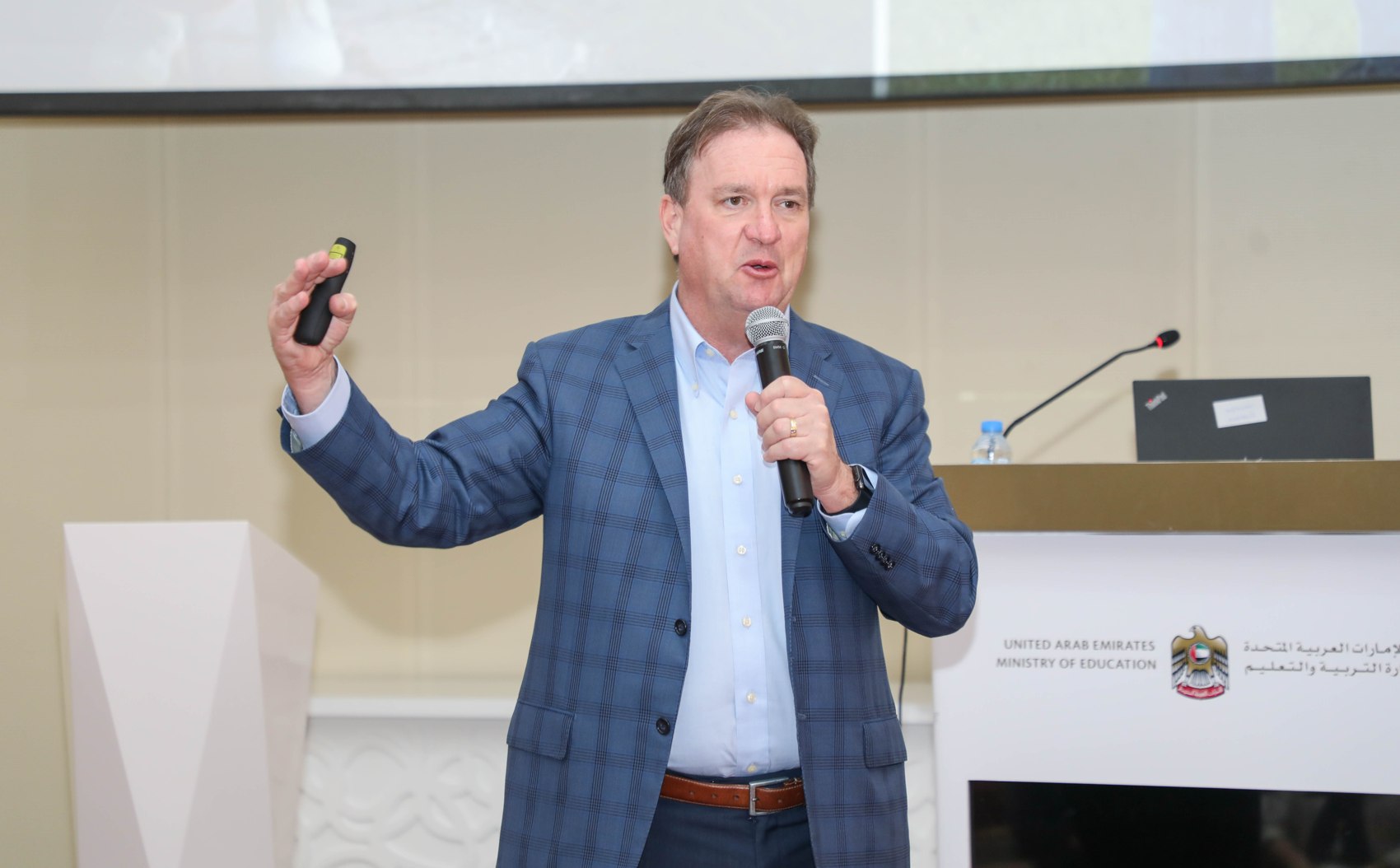
Speaking at a Dubai education event, challenging leaders to examine emerging possibilities beyond conventional assumptions.
Yesterday's far-fetched idea can become tomorrow's ordinary habit
Consider television. In an early book about the Internet's future, written with Rick Broadhead, we described a world in which televisions could retrieve programming from the Internet. That sounded unlikely when conventional broadcasting and cable distribution defined how almost everyone watched. Today, streaming is so routine that the original question almost seems quaint. I've revisited the original passage in my essay Crazy!.
Or consider banking. Preparing for a keynote for the Texas Credit Union League, I wrote about a South African service that put banking into a customer's pocket and a Turkish bank pursuing mobile access across thousands of phone models. These were early signs of a future in which banking was becoming something you did, rather than a place you went. You can still read that original mobile-banking commentary.
That thinking continued in my work with financial-services organizations. At Finastra, I explored how fintech and digital platforms were challenging community banking; at Jenius Bank, the discussion moved further toward banking delivered as software. Neither client photograph proves that the original idea was dismissed. The engagements demonstrate how the industry conversation evolved as the possibilities became practical.
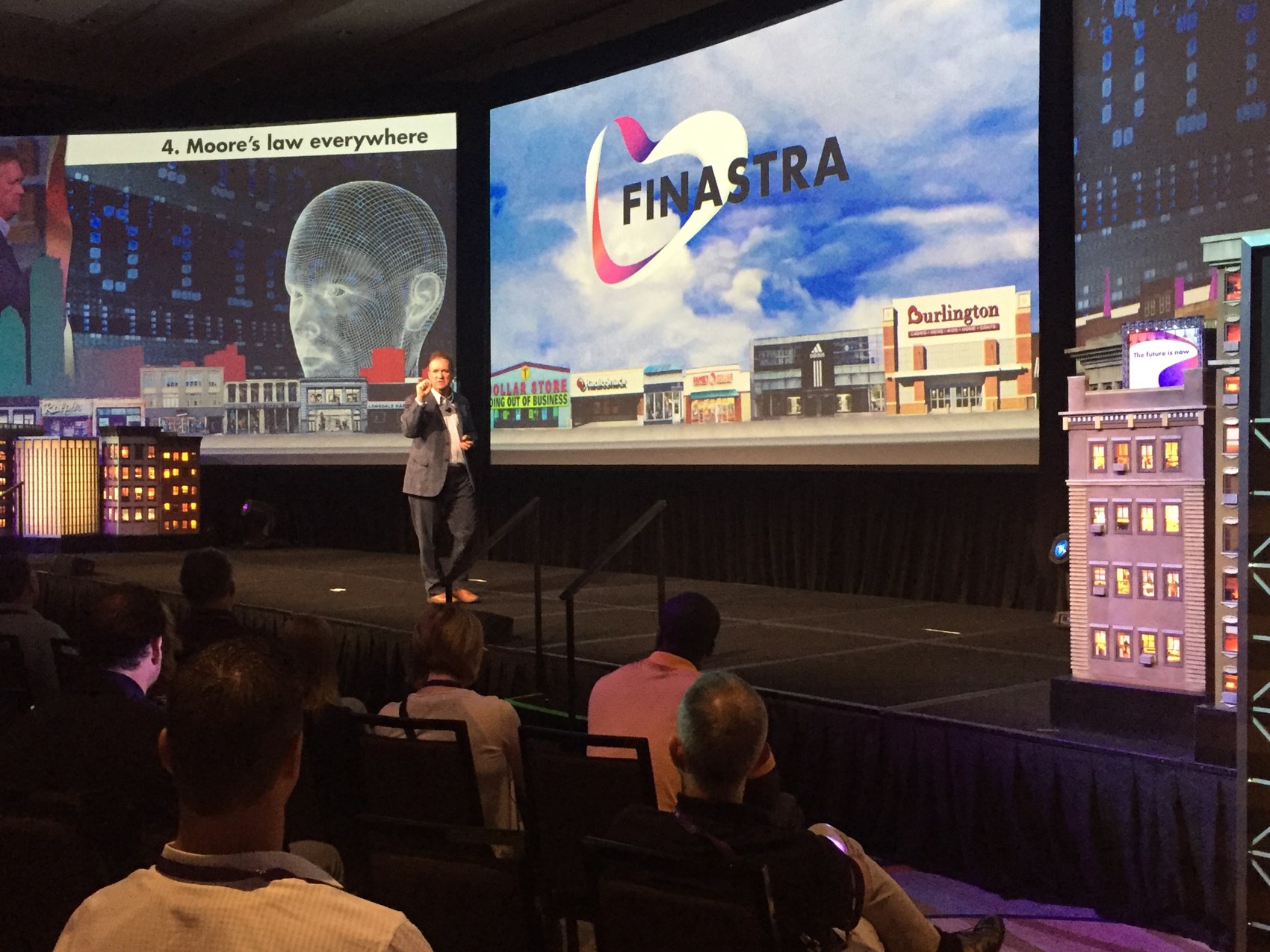
At Finastra, exploring how fintech and software-driven business models were reshaping banking.
Insurance tells a similar story. I've long written about the possibility of pricing certain risks using more information about actual behaviour instead of relying solely on broad historical averages. That idea has since appeared in forms such as wellness-linked life insurance and telematics-based auto insurance, although privacy, fairness, regulation and commercial viability remain important constraints. I explored the wider implications of data and changing customer relationships in my LIMRA keynote, and have discussed shifting risk assumptions with organizations including Zurich Insurance and Gore Mutual. My insurance retrospective traces the longer development of this idea.
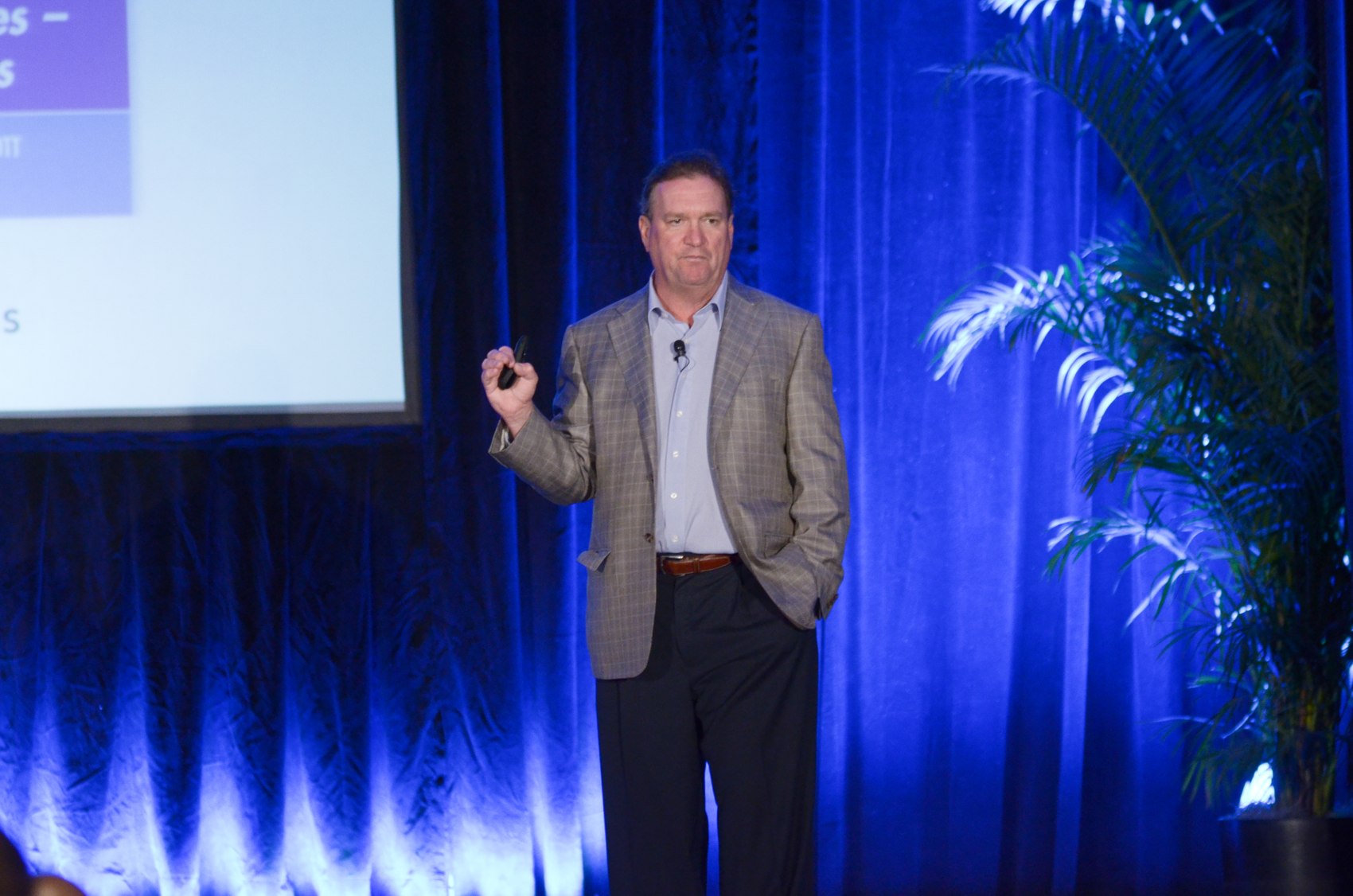
Addressing LIMRA on the future of insurance, digital disruption and changing customer expectations.
These are not stories about being able to forecast every detail. They are stories about recognizing the direction of change before the accepted business model makes room for it. And they're a reminder that timing matters: some early ideas mature quickly, some take decades, and some remain impractical.
Why do leaders dismiss the far-fetched?
At the World Government Summit in Dubai, I challenged an international audience to think about how quickly the distance between science fiction and reality can collapse. But the harder challenge isn't merely recognizing that technology is accelerating. It's building the capacity to consider a possibility that makes today's organization uncomfortable. That keynote case study captures the underlying argument.
Here's where my book Being Unique: Why the Rebels, the Odd Ones Out, and the Crazy Ones Always Win! connects directly to the leadership issue.
In the book, I revisit Oblio, the round-headed boy in a world that expects everyone to have a pointed head. Because he doesn't fit the accepted model, he's treated as an outsider. Yet the very experience of being different helps him see value and possibilities that the conformists overlook.
Every organization has a version of that Pointed Village: comfortable assumptions, familiar competitors, processes that reward agreement, and people who are quietly encouraged not to ask awkward questions. Somewhere there's an Oblio whose idea doesn't fit. The risk is that the organization dismisses the person before examining the possibility.
In Being Unique, I argue that being different isn't simply a personality quirk; it can be a way of getting to the future faster. I also return to a distinction I've used for years: organizations need not just Masters of Business Administration, but Masters of Business Imagination. We need the discipline to operate today's business—and the imagination to question whether that business will work tomorrow.
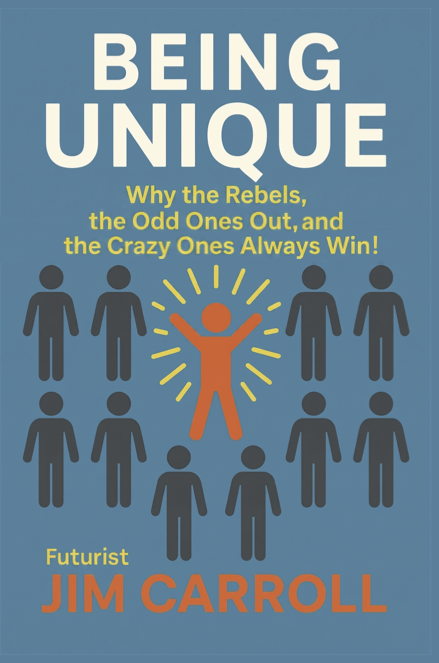
Being Unique: Why the Rebels, the Odd Ones Out, and the Crazy Ones Always Win! — Website · Amazon US · Amazon Canada
The book is available at unique.jimcarroll.com, on Amazon.com and Amazon.ca. The Amazon links search for the paperback by ISBN.
What should leaders actually do now — and into 2027?
Most organizations can't afford to chase every speculative technology. Budgets are tight, people are stretched, markets are volatile, and many emerging ideas simply aren't ready. Planning for the far-fetched is not permission to make reckless bets. It is a disciplined way to avoid being blindsided.
1. Find three ideas your organization has already dismissed. Ask your team what has been labeled impossible, impractical or irrelevant. For each, write down why. Is the barrier technological, regulatory or economic—or is it simply the way you've always done business?
2. Identify a real signal that would change your mind. Choose one unlikely scenario and specify what evidence would make it worth revisiting: a measurable cost decline, a credible working demonstration, an early customer request or a new regulatory pathway. Review those signals regularly instead of endlessly debating a prediction.
3. Spend time with people who don't share your assumptions. Talk with startups, researchers, customers on the margins of your market, and people who've recently arrived from another industry. Find your organization's Oblio. Give the uncomfortable idea a fair hearing without automatically giving it a budget.
4. Calculate the cost of being surprised. If a far-fetched scenario did become viable, what would you lose by waiting—customers, skills, service capacity, a distribution relationship? Estimate the exposure. Then consider modest preparations that preserve options without committing major capital.
5. Run one inexpensive learning exercise. Set a small budget and a short deadline to investigate one possibility. Visit a lab, evaluate a prototype, interview an early adopter or test a workflow. End with a decision: monitor, investigate further, try a limited pilot or set the idea aside—with reasons.
What should success look like? Not a list of crazy predictions that all came true. A better measure is whether your team spots signals sooner, challenges assumptions more intelligently and makes better decisions with less wasted time and money.
The real leadership lesson
I've spent decades watching audiences react to ideas that don't fit their current world. Sometimes they were right to be skeptical. Sometimes the skepticism was simply an expression of organizational comfort. The important skill is learning to tell the difference.
In 2027, leaders won't be rewarded for believing everything. They'll be rewarded for creating organizations curious enough to investigate the unexpected and disciplined enough to know when—or whether—to act.
The future often begins with an idea that doesn't fit the present.
And that's why it's worth planning for it.
It's what happens to your industry. And what you do next.
— Futurist Jim Carroll