
Next up in my sector-by-sector tour of where the world is actually headed: construction.jimcarroll.com is live, with a companion PDF — The Future of Construction & Infrastructure.
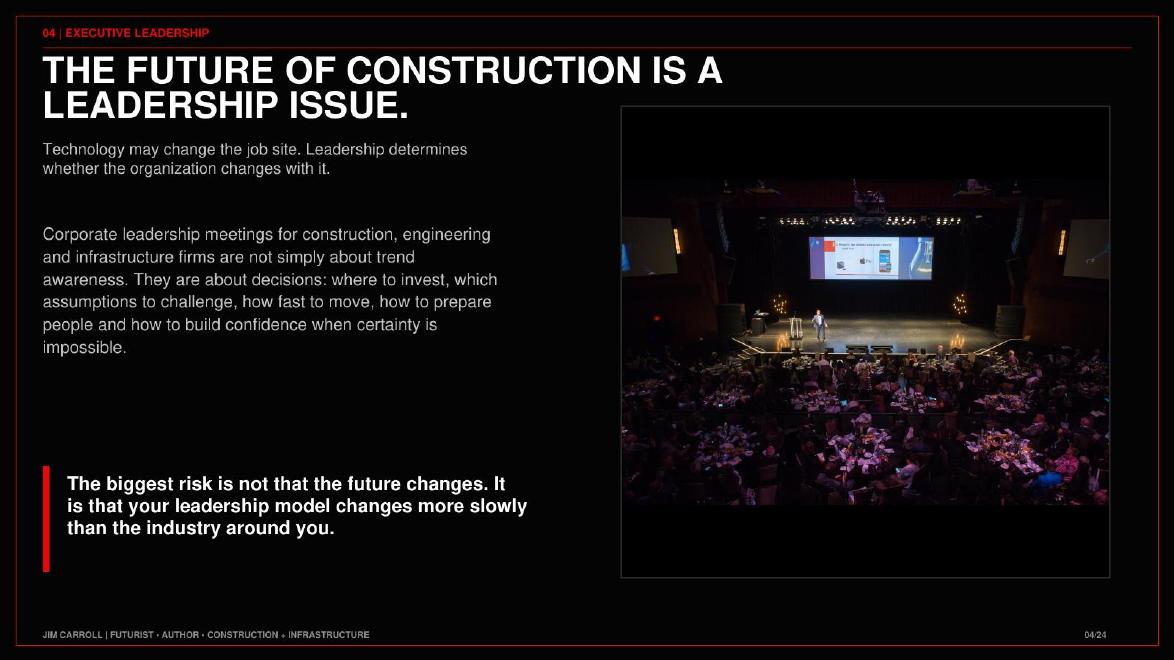
I’ve spent more than three decades in rooms with contractors, engineering firms, building-system companies, equipment manufacturers and public infrastructure agencies. The one constant: everyone assumes construction is the industry that changes last. It isn’t anymore.
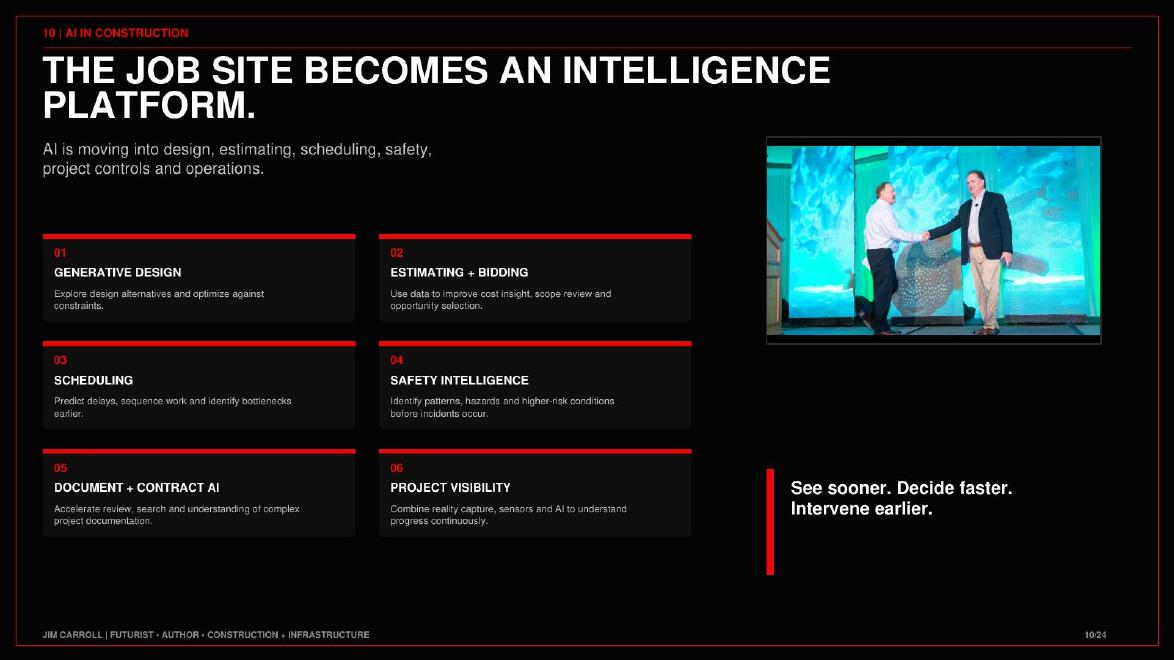
Generative design, estimating, scheduling, risk prediction, contract analysis and safety insight are all moving into AI-driven project management — not as a pilot project, but as how the work gets planned. Meanwhile the drawing itself is changing shape: digital twins are turning static 2D plans into living 4D models that stay useful from groundbreaking through decades of operation, not just through handover.
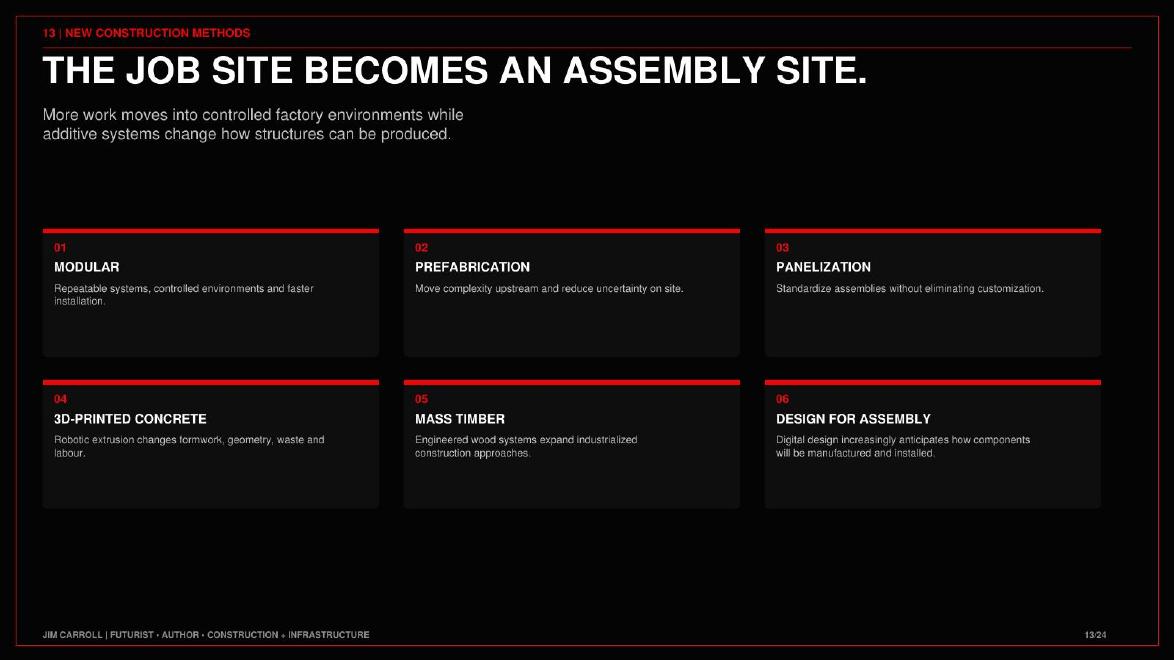
On the job site itself, autonomous earthmoving, robotic layout, drones, machine vision and paving automation are pulling more of the physical work into remote and automated operation. And a growing share of “construction” is quietly relocating — off-site and modular methods are shifting work from the muddy field to the controlled factory floor, trading unpredictability for speed, quality and repeatability. Additive construction takes that a step further: 3D-printed concrete and robotic extrusion are expanding what can physically be built, and how fast.
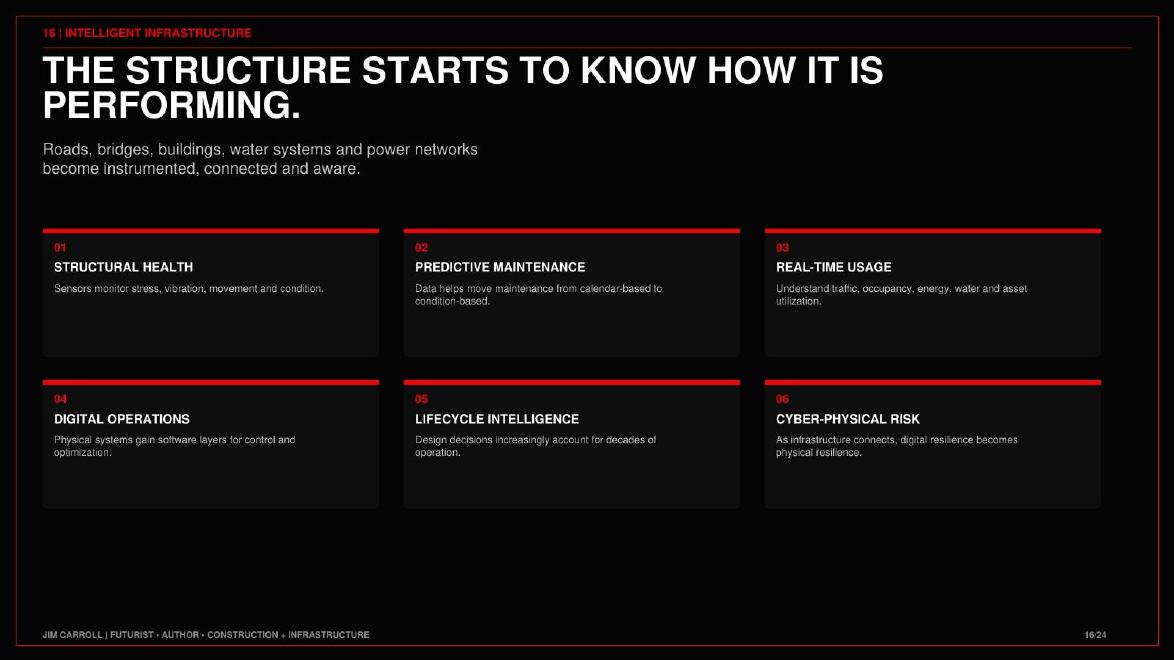
The materials underneath all of this are changing too. Self-healing concrete, carbon-negative materials, solar glass, composites, smart coatings and embedded sensors are turning the building itself into an active, sensing system — not just a passive structure waiting to fail.
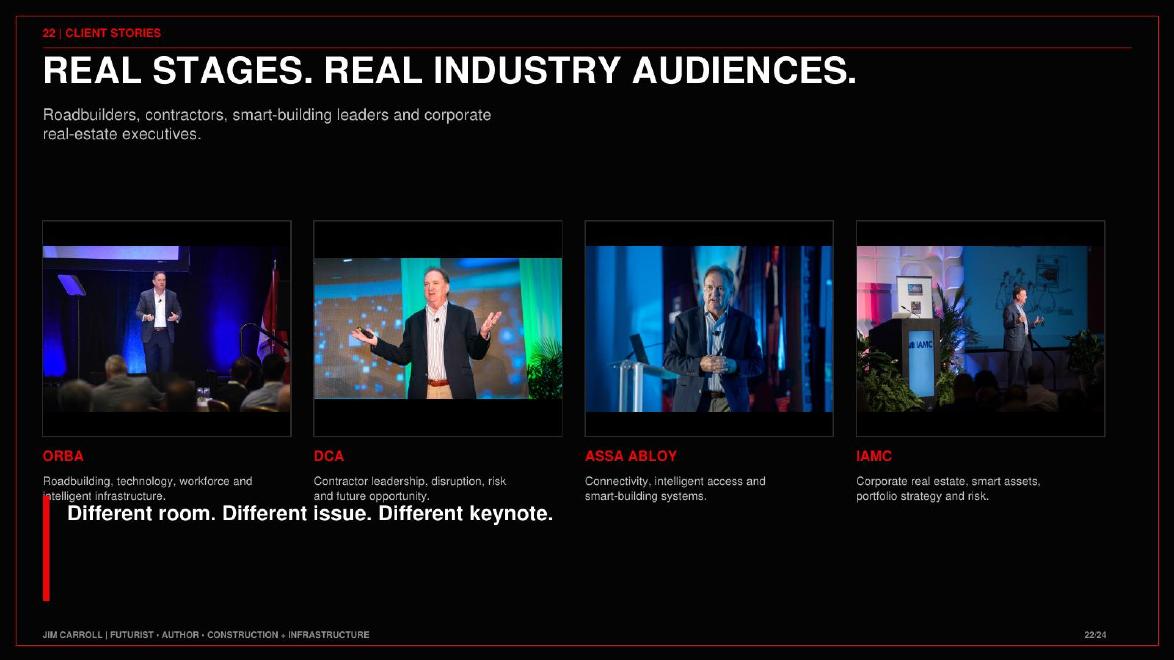
I’ve carried this message into rooms ranging from Kiewit and Alberici to the Canadian Construction Association and Ontario Road Builders, from Black & Veatch and the U.S. Army Corps of Engineers to Caterpillar, Parker Hannifin and WEFTEC’s water and wastewater community, and building-systems leaders like Trane, Lennox and Assa Abloy. Every one of those rooms needed a different angle on the same underlying acceleration.
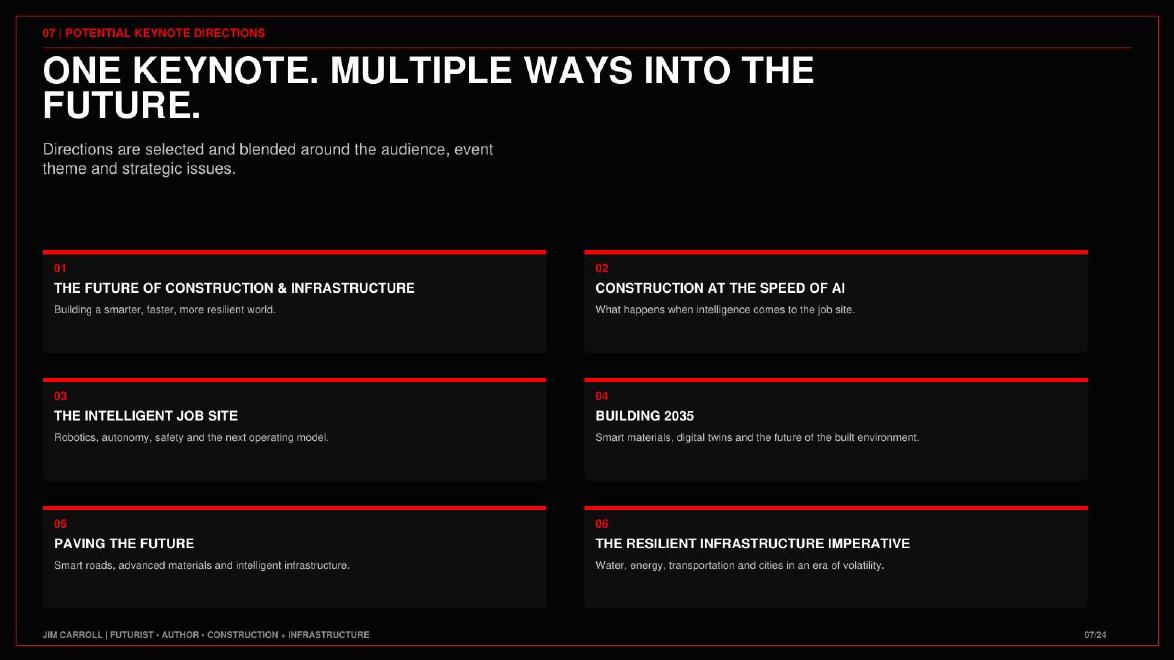
The site lays out six keynote directions — from Construction at the Speed of AI to The Intelligent Job Site to The Resilient Infrastructure Imperative — because water, energy, transportation and cities all now have to be built for volatility, not just for spec.
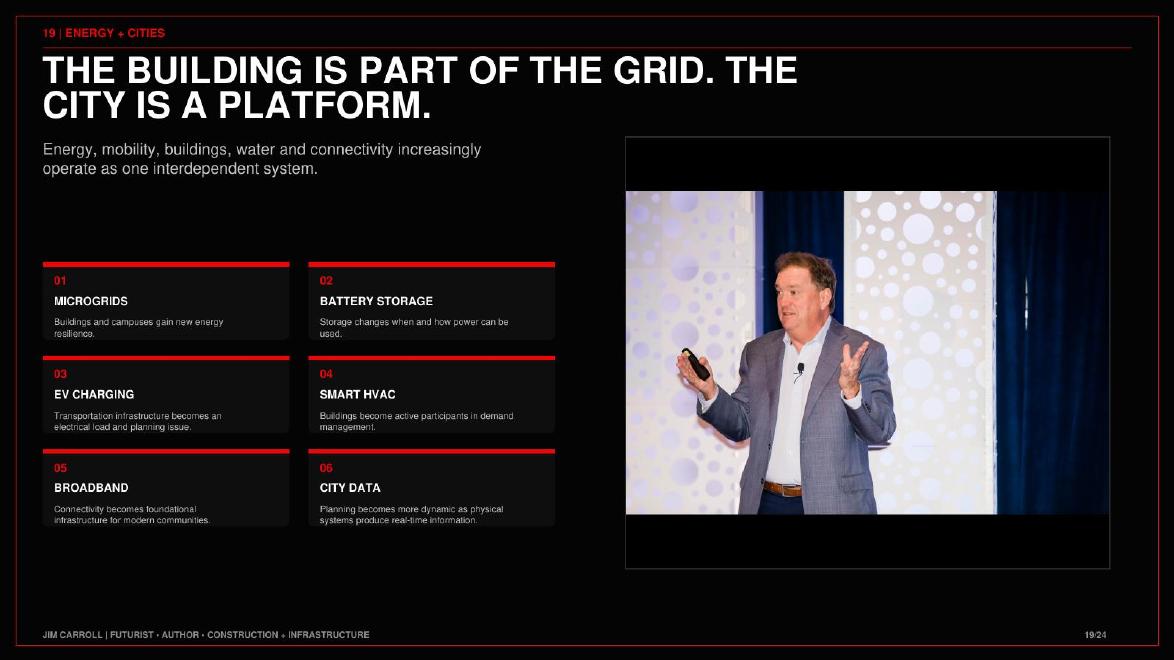
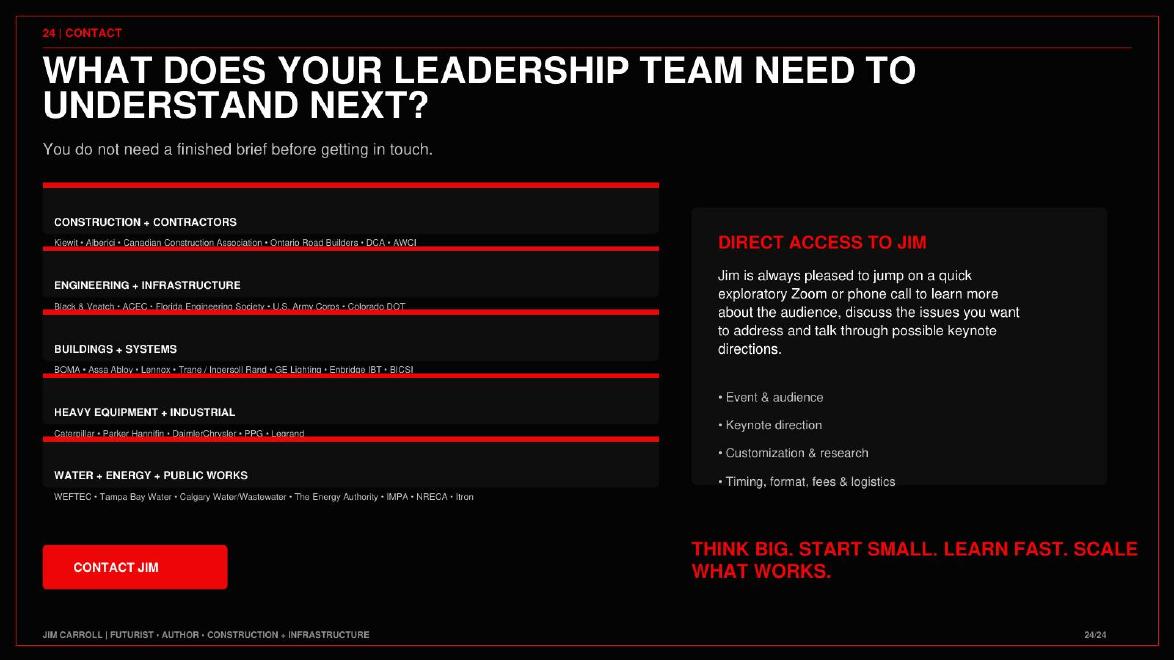
If you’re in construction, engineering, infrastructure or the built environment and want the full picture — the robotics, the materials science, the digital twins, the resilience question nobody’s pricing in yet — grab the free guide, no form required: download the PDF here.
And if you’re planning an event for a room full of builders, engineers or infrastructure leaders — let’s talk.



GET IN TOUCH
Jim's Facebook page
You'll find Jim's latest videos on Youtube
Mastodon. What's on Jim's mind? Check his feed!
LinkedIn - reach out to Jim for a professional connection!
Flickr! Get inspired! A massive archive of all of Jim's daily inspirational quotes!
Instagram - the home for Jim's motivational mind!