A companion series to the original 26 Principles of Exponential Growth — checking my own math, principle by principle, nine months in.
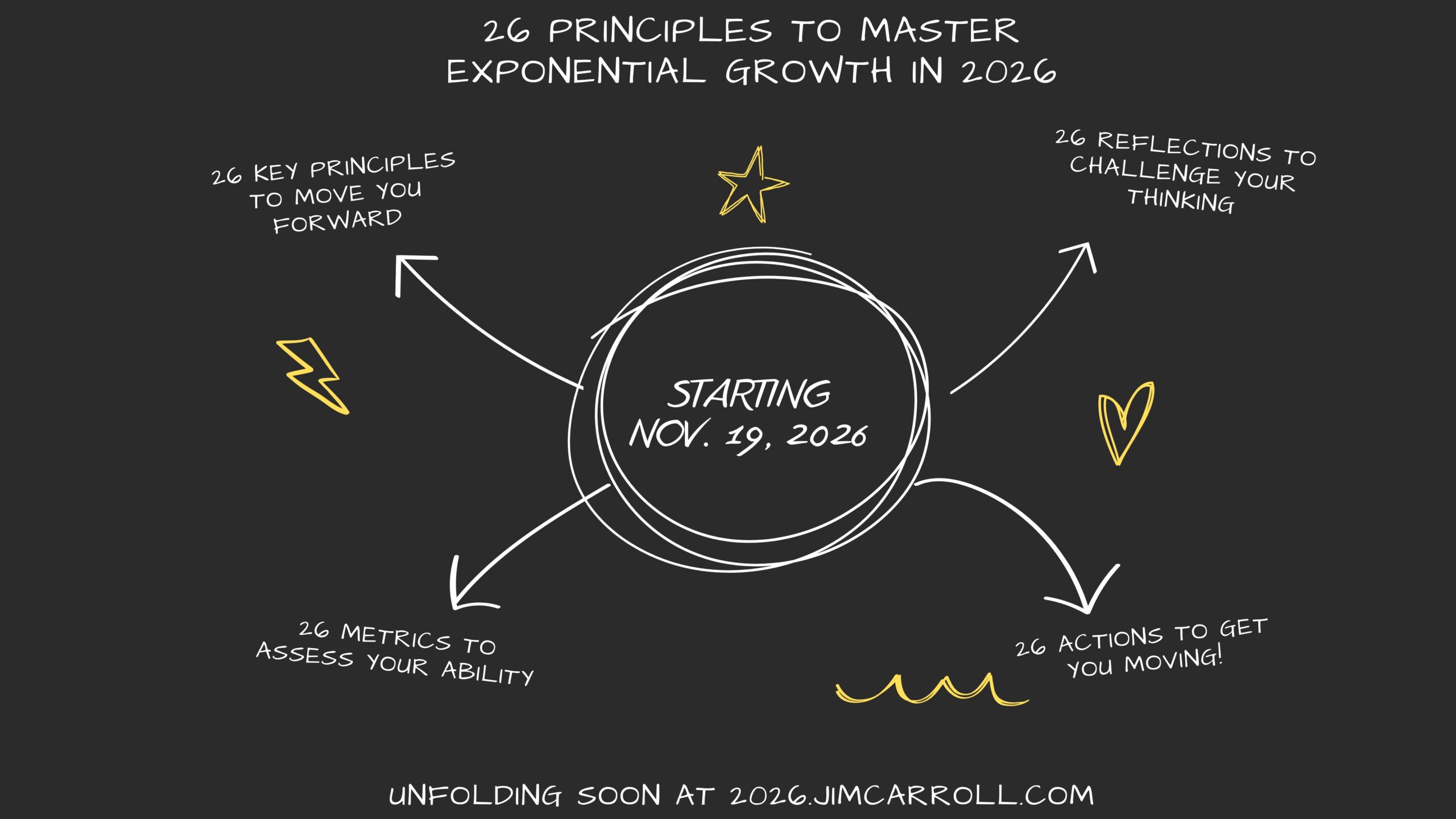
Nine months ago, I sat down to write my annual end-of-year series — 26 Principles of Exponential Growth: Mastering 2026. Twenty-six days, twenty-six disciplines, one framework: a Discipline to master, a Self-Reflection Question to ask, a Metric to track it, an Action to take right now.
The whole thing was built on one idea, borrowed from an old story about a king, a chessboard, and a very stubborn inventor of chess: exponential growth looks like nothing for a while, and then it looks like everything. Rice on a chessboard starts as a handful. By square sixty-four, it’s a mountain the size of Everest.
I wrote those 26 principles as a bet on where the mountain was headed.
So now that we’re three-quarters through the year the series was written for, it’s time to do what I just finished doing with my 30 Megatrends — go back through every single one and ask the only question that matters: what actually happened?
Starting today, I’m running a companion piece to each principle — same 26, same order, same discipline — but with a short, honest “where we are now” attached. Did the mindset hold up? Did the world move faster than even I expected, or did some of this age badly? No cherry-picking, no victory laps I haven’t earned.
One caveat up front: I’m not redoing this daily. It’ll run weekdays only, so figure five-plus weeks to get through all 26. Consider it a slower burn than the original sprint — fitting, maybe, for a series about pacing yourself against acceleration.
First up tomorrow: Principle #1, Temporal Literacy. Given what’s happened with AI model releases alone since I wrote it, I think you’ll agree — the lag I warned you about didn’t shrink. It got worse.